
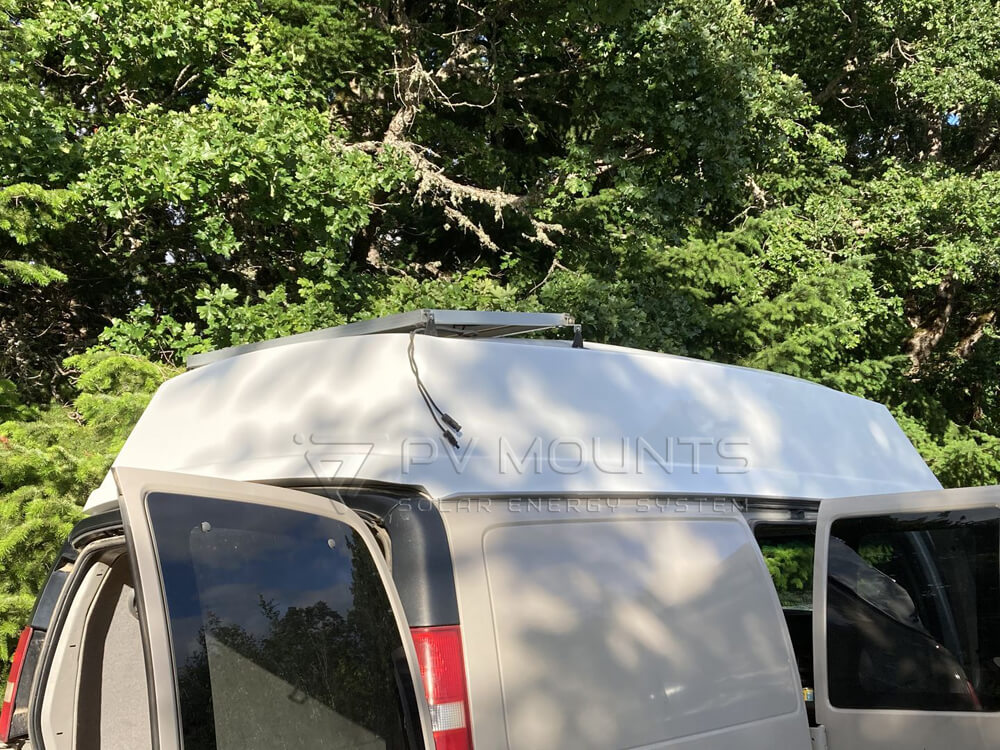
For professional RV solar buyers, compatibility is often more important than price.
A mounting system may perform well on a flat motorhome roof but fail prematurely on a curved campervan or marine surface due to vibration, uneven load distribution, or waterproofing problems.
According to the RV Industry Association (RVIA), more than 11 million U.S. households own RVs, covering multiple vehicle types and roof structures. This creates major differences in solar mounting requirements across the market.
Over several years of highway travel and outdoor exposure, even small compatibility issues may gradually affect mounting stability and waterproof reliability.
1.Why Compatibility Matters in Mobile Solar Systems
RV and marine roofs are rarely standardized.
For example:
| التطبيق | Common Roof Type |
|---|---|
| Campervan | Ribbed metal roof |
| Motorhome | Fiberglass or sandwich roof |
| Caravan | Aluminum or composite roof |
| Boat / Yacht | Curved fiberglass surface |
Different roof structures create different mounting challenges.
According to multiple RV installer discussions, poor roof compatibility is one of the most common causes of:
- Loose solar panels
- Waterproofing failures
- Uneven load distribution
- Installation difficulty
- Long-term vibration problems
2.Different Roof Structures Create Different Installation Challenges
☀️Flat Roof RVs
Flat RV roofs are commonly found on:
- Class A motorhomes
- Box campers/Box RVs
- Utility trailers
- Truck campers
- Flat-top trailers
- Utility vehicles
These roofs are typically easier for rigid solar panel installation because they provide stable bracket contact and more even load distribution. Z brackets are commonly used on flat RV roofs because they provide rigid mechanical support.
Real Installation Example
Many North American RV installers use aluminum Z brackets on flat EPDM or TPO roofs because rigid mounting provides strong panel support during highway travel.
For example, a 200W rigid solar panel usually weighs around 12–15 kg. During highway driving above 100 km/h, wind uplift and vibration may significantly increase stress around mounting points if bracket spacing is insufficient.
This is why installers often recommend at least 4 mounting points per panel for highway applications.
☀️Curved Campervan Roofs
Curved roofs are common on:
- Mercedes Sprinter
- Ford Transit
- VW Crafter
- Caravan roofs(Fiat Ducato camper conversions)
Unlike flat roofs, curved surfaces create uneven mounting pressure.
ABS corner mounts are often preferred for curved roofs because they can distribute stress more evenly across fiberglass or curved surfaces.
Many van conversion builders use aerodynamic ABS mounts to reduce wind resistance during highway travel.
Real-World Problem
In many DIY van conversions, installers attempt to mount rigid aluminum brackets directly onto curved metal roofs without spacers or flexible mounting bases.
Over time, this may create:
- Uneven bracket stress
- Roof flexing
- Sealant separation
- Increased vibration movement
Because of this, many van builders prefer aerodynamic ABS corner mounts, which distribute load more evenly across curved roof surfaces.
☀️Ribbed Van Roofs Require Different Mounting Approaches
Modern campervans often use ribbed sheet metal roofs instead of smooth flat surfaces.
This changes how solar loads transfer into the vehicle structure.
Real Installation Challenge
On ribbed roofs, mounting brackets placed only on raised roof ribs may leave unsupported gaps underneath the bracket base.
During long-distance travel, repeated vibration may gradually increase stress concentration around fastening points.
Professional installers often solve this by using:
- Spacer-supported mounting
- Larger contact surfaces
- Flexible adhesive-assisted mounting systems
to improve stability.
☀️Marine Solar Systems Need Additional Corrosion Protection
Marine solar systems operate in one of the harshest outdoor environments.
According to marine equipment suppliers, salt exposure can significantly accelerate corrosion on untreated steel hardware in coastal environments.
Real-World Marine Example
Boat owners frequently report rust formation on low-grade fasteners within 1–2 years in saltwater applications.
Because of this, professional marine solar systems commonly use:
- SUS304 or SUS316 stainless steel hardware
- UV-resistant ABS materials
- Waterproof cable entry glands
- Corrosion-resistant fasteners
Marine applications also place greater importance on waterproof cable routing because wave impact and moisture exposure are much higher than typical RV conditions.
In a word, ABS mounts are commonly preferred for lightweight aerodynamic applications, while aluminum Z brackets are often selected for rigid structural support.
3.Highway Wind Load Is Often Underestimated
Many RV solar installation failures are not caused by panel weight, but by aerodynamic stress during travel.
At highway speeds above 90–110 km/h, solar panels experience continuous airflow pressure and vibration cycles.
Real Engineering Concern
Larger solar panels create higher uplift force during driving.
For example:
- A 100W panel may measure around 1000 × 540 mm
- A 550W residential-sized panel may exceed 2200 mm length
Installing oversized residential panels on lightweight RV roofs may significantly increase vibration stress and roof flexing during travel.
This is why many professional RV builders avoid oversized panels unless additional structural reinforcement is added.
4.Wind Load Differences Between RV and Marine Applications
Highway airflow and marine wind exposure create different aerodynamic conditions.
| التطبيق | Main Stress Factor |
|---|---|
| RV / Campervan | Highway vibration and airflow |
| Marine | Wind uplift and salt exposure |
For example:
- RV solar systems may experience continuous vibration at highway speeds above 90 km/h
- Marine solar systems often experience multidirectional wind pressure during open-water travel
This is why low-profile mounting systems are commonly preferred in both applications.
5. Why “Universal RV Solar Mounts” Often Fail in Real Applications
Some low-cost solar mounting kits advertise universal compatibility.
In practice, RV installers usually choose mounting systems based on:
- Roof material
- Roof curvature
- Vehicle speed exposure
- Structural support area
- Waterproofing requirements
For example:
- Large rigid panels may work well with aluminum Z brackets on flat roofs
- Curved fiberglass roofs may perform better with ABS aerodynamic mounts
Professional installers usually select mounting systems based on vehicle structure instead of using one fixed solution for every project.
Real Buyer Concern
A mounting system designed for flat caravans may not work reliably on curved fiberglass campervan roofs.
Similarly, mounting systems suitable for stationary cabins may fail prematurely under highway vibration conditions.
Because of this, professional buyers increasingly prefer suppliers that understand application-specific installation environments instead of offering only generic hardware.
6. What Professional Buyers Usually Evaluate Before Choosing a Supplier
☀️Roof Compatibility
Can the mounting system adapt to:
Marine surfaces
Flat roofs
Ribbed van roofs
Curved fiberglass roofs
☀️Waterproof Reliability
Can the system support long-term waterproof performance around:
- Mounting points
- Cable entry areas
- Outdoor sealant zones
☀️Vibration Resistance
Can the system handle:
- Highway vibration
- Roof flexing
- Wind uplift
- Long-distance travel conditions
☀️Material Durability
Professional buyers increasingly prefer:
- UV-resistant materials
- Stainless steel fasteners
- Corrosion-resistant hardware
- Outdoor-rated cable protection systems
for long-term maintenance reduction.
7. Practical Recommendation
For mobile solar systems, compatibility should be evaluated based on the actual installation environment — not only product appearance.
A reliable RV or marine solar mounting system should match:
- Roof structure
- Vehicle movement conditions
- Outdoor exposure level
- Waterproof requirements
- Long-term maintenance expectations
In many cases, the best mounting solution is the one specifically designed for the roof type and travel environment rather than the cheapest universal bracket kit.
8. Why Professional RV Solar Installers Work with XIAMEN PV MOUNTS CO., LIMITED
XIAMEN PV MOUNTS CO., LIMITED is a professional China-based manufacturer specializing in RV and marine solar mounting solutions, including aluminum Z brackets, ABS solar mounts, waterproof cable entry systems, and stainless steel mounting hardware.
Unlike generic hardware suppliers, the company focuses on real mobile solar installation environments such as:
- RVs
- Campervans
- Caravans
- Boats
- Yachts
- Off-grid mobile systems
The mounting systems are designed with consideration for:
- Highway vibration
- Outdoor UV exposure
- Roof waterproofing
- مقاومة التآكل
- Long-term travel reliability
With experience serving global solar and RV markets, XIAMEN PV MOUNTS CO., LIMITED provides practical mounting solutions compatible with different roof structures and mobile off-grid applications.
Professional buyers increasingly prefer suppliers that understand real-world installation challenges instead of only providing standard hardware products.
9. خاتمة
Different RV roofs, campervans, caravans, and marine applications require different solar mounting approaches.
Real-world installation conditions — including vibration, wind pressure, roof structure, and outdoor exposure — directly affect long-term system reliability.
Professional buyers increasingly prioritize compatibility, waterproof reliability, and vibration resistance when selecting RV solar mounting suppliers because mobile solar systems operate under far more dynamic conditions than residential rooftop installations.
10.FAQ for RV Solar Mount Kit
Not always. Flat roofs, curved campervan roofs, ribbed van roofs, and marine surfaces often require different mounting approaches for proper load distribution and waterproof reliability.
In many cases, yes. ABS mounts usually provide better surface contact and more even stress distribution on curved roofs compared with rigid metal brackets.
Yes, properly installed aluminum Z brackets are widely used for rigid solar panel mounting on RVs, caravans, and off-grid mobile systems.
Ribbed roofs create uneven mounting surfaces, which may increase vibration stress if brackets are not properly supported.
Some marine-grade mounting components are also suitable for RV applications because they provide strong corrosion resistance and waterproof protection.
Most professional mounting systems are compatible with aluminum, fiberglass, composite, and sheet metal RV roofs.
Yes. Larger panels generally experience higher aerodynamic load and vibration stress during highway driving.
Continuous highway vibration, poor bracket spacing, weak roof support, and improper installation are common causes.
Yes. Proper cable routing and waterproof cable entry protection help reduce long-term roof leak and wiring failure risks.
Professional suppliers usually focus on vibration resistance, roof compatibility, waterproofing performance, and long-term outdoor durability instead of only basic hardware production.
For More relevant articles you might interst in
2). How to Prevent RV Roof Leaks During Solar Panel Installation
3). Z Bracket vs ABS Mount for RV Solar: Which Mounting Solution Is Better for Mobile Off-Grid Systems?
4). Best Waterproof Cable Entry Gland for RV Solar: How to Protect Your Off-Grid Wiring System

 Arabic
  English
  Spanish
  Portuguese
  Russian
  Hungarian
  Romanian
  French