In European solar installations, roof integrity and structural compliance are non-negotiable.
For clay tile and concrete tile roofs, the solar tile roof hook is one of the most critical structural components in the entire mounting system.
A poorly designed or low-quality roof hook can lead to:
- Roof leakage
- Tile cracking
- Corrosion failure
- Structural instability under wind and snow loads
- Non-compliance with EU regulations
This guide explains how to select, verify, and source CE certified solar tile roof hooks for European rooftop projects — with a focus on safety, durability, and fast project delivery.
What Is a Solar Tile Roof Hook?
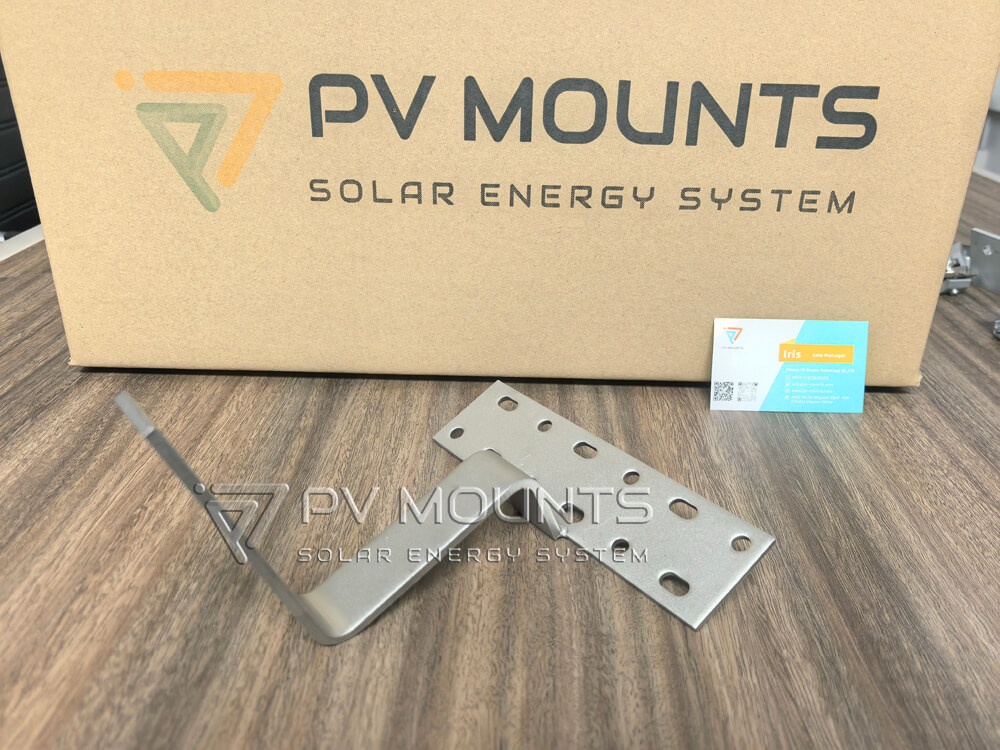
A solar tile roof hook is a stainless steel bracket installed beneath roof tiles and fixed directly to the roof rafter or structural beam. It supports the mounting rail without compromising waterproofing.
In Europe, tile roof hooks are commonly used on:
- Clay tile roofs
- Concrete tile roofs
- Flat tile roofs
- Spanish tile roofs
Unlike metal roof brackets, tile roof hooks must balance three key factors:
- Structural strength
- Waterproof integrity
- Tile compatibility
Why CE Certification Matters in Europe
For European projects, compliance is essential.
Solar mounting components fall under the scope of the Machinery Directive 2006/42/EC and are typically evaluated according to:
- EN ISO 12100 (Risk assessment & safety)
- Eurocode EN 1991-1-3 (Snow load)
- Eurocode EN 1991-1-4 (Wind load)
A CE certified solar roof hook demonstrates that:
- The product meets EU safety requirements
- Risk assessment has been performed
- Manufacturing consistency is controlled
Buyers should always verify:
✔ Certification body
✔ Certificate number
✔ Validity dates
✔ Product scope
✔ Online verification availability
Never rely solely on a CE logo printed on a product page.
Material Selection: Why SUS304 Stainless Steel Is Essential
In Europe — especially coastal areas and humid climates — corrosion resistance determines long-term reliability.
High-quality tile roof hooks should use:
- SUS304 нержавеющая сталь
- Controlled thickness (commonly 4–6 mm depending on design)
- Proper surface finishing
Using lower-grade steel or untreated carbon steel can result in:
- Rust expansion
- Structural weakening
- Roof staining
- Reduced lifespan
For 25+ year solar projects, corrosion resistance is not optional — it is fundamental.
Wind & Snow Load Design Under Eurocode (EN 1991)
Europe has diverse climate conditions:
- High snow loads in Northern Europe
- Strong wind zones in coastal regions
- Mixed environmental stress in Central Europe
A professional solar roof hook manufacturer should support:
- Wind load calculations
- Snow load analysis
- Structural verification per EN 1991
Key engineering considerations include:
- Hook thickness
- Vertical adjustment capacity
- Rafter fixing method
- Screw pull-out strength
- Load distribution to rail system
Without proper structural validation, even a strong-looking hook may fail under extreme conditions.
Waterproofing: The Most Critical Installation Concern
European installers are highly sensitive to roof leakage risk.
A reliable tile roof hook design should:
- Allow tile trimming without excessive cutting
- Maintain natural tile overlap
- Avoid water flow obstruction
- Use proper sealing where required
Best practice installation includes:
- Fixing directly into rafters (not only battens)
- Using certified wood screws
- Maintaining proper flashing alignment
- Avoiding tile stress concentration
Engineering design and installer experience must work together.
Fast Delivery: Why Inventory Matters for European EPC Projects
In fast-moving solar markets, delays in mounting accessories can stop installation.
Many manufacturers operate strictly on production-after-order models with 20–35 day lead times.
However, for standard tile roof hook models, maintaining stock allows:
✔ Dispatch within 1–3 working days
✔ Urgent project support
✔ Replacement part availability
✔ Reduced distributor inventory pressure
For EPC contractors, fast delivery reduces:
- Labor rescheduling costs
- Equipment rental extension
- Project delay penalties
Inventory planning is part of professional supply chain management.
OEM & Custom Tile Roof Hooks for EU Projects
Standard models do not always fit every tile type.
Professional manufacturers should support:
- Custom height adjustment
- Special tile geometry adaptation
- Thickness upgrades
- Logo marking
- Packaging customization
- Project-based structural reinforcement
Engineering collaboration is especially important for:
- Renovation projects
- Historic buildings
- Non-standard tile dimensions
- High wind load zones
Customization ensures compatibility without compromising compliance.
How to Identify a Reliable Solar Tile Roof Hook Manufacturer
Before placing an order, verify:
✔ CE certification with online verification
✔ EN 1991 design understanding
✔ SUS304 material transparency
✔ Real factory production capability
✔ Engineering documentation support
✔ Installation manuals
✔ Stock availability for standard models
A professional supplier should answer technical questions clearly — not just provide a quotation.
Why European Buyers Prefer Stainless Steel Tile Roof Hooks
Compared with aluminum alternatives, stainless steel hooks offer:
- Higher structural rigidity
- Better fatigue resistance
- Superior corrosion performance
- Stronger long-term load stability
While cost may be slightly higher, lifecycle reliability is significantly improved.
Frequently Asked Questions (FAQ)
Are all solar tile roof hooks required to have CE certification?
For products placed on the European market, compliance with relevant EU directives is required. Buyers should request documentation and verify certification validity.
How thick should a solar tile roof hook be?
Typical thickness ranges from 4 mm to 6 mm, depending on load requirements and design. Structural calculations should determine final specifications.
Can tile roof hooks be used in coastal Europe?
Yes — if manufactured from SUS304 stainless steel or higher-grade material with proper corrosion resistance.
What is the typical lifespan of a stainless steel solar roof hook?
When properly installed and manufactured from SUS304, lifespan can match the 25+ year life of the solar system.
How fast can standard models be delivered?
For in-stock models, dispatch within 1–3 working days is achievable.
Заключение
Solar tile roof hooks are structural safety components — not just accessories.
For European rooftop projects, the right product must combine:
✔ CE compliance
✔ EN 1991 structural understanding
✔ SUS304 corrosion resistance
✔ Waterproof-safe design
✔ Reliable stock availability
✔ OEM customization capability
Choosing a professional, compliant manufacturer protects your project timeline, structural safety, and long-term reputation.
If you would like to verify certification, request structural support, or check current stock availability for tile roof hooks, feel free to contact us for technical assistance.



 Russian
  English
  Spanish
  Portuguese
  Hungarian
  Arabic
  Romanian
  French