
1.Introduction
RV and marine solar systems operate under very different conditions from traditional rooftop solar installations.
Unlike fixed buildings, mobile solar applications must handle:
- Constant vibration
Continuous highway vibration can slowly loosen poorly supported mounting systems over time. - Highway wind pressure
- Roof movement during travel
Thin RV roof structures may flex during travel, especially on uneven roads. - Salt exposure in marine environments
Marine installations near coastal environments often experience accelerated corrosion because of salt exposure. - Long-term waterproofing challenges
Because of this, choosing the right RV solar mounting system is not only about fixing solar panels to a surface.
It is about ensuring long-term stability, waterproof performance, and reliable off-grid power during real-world travel conditions.
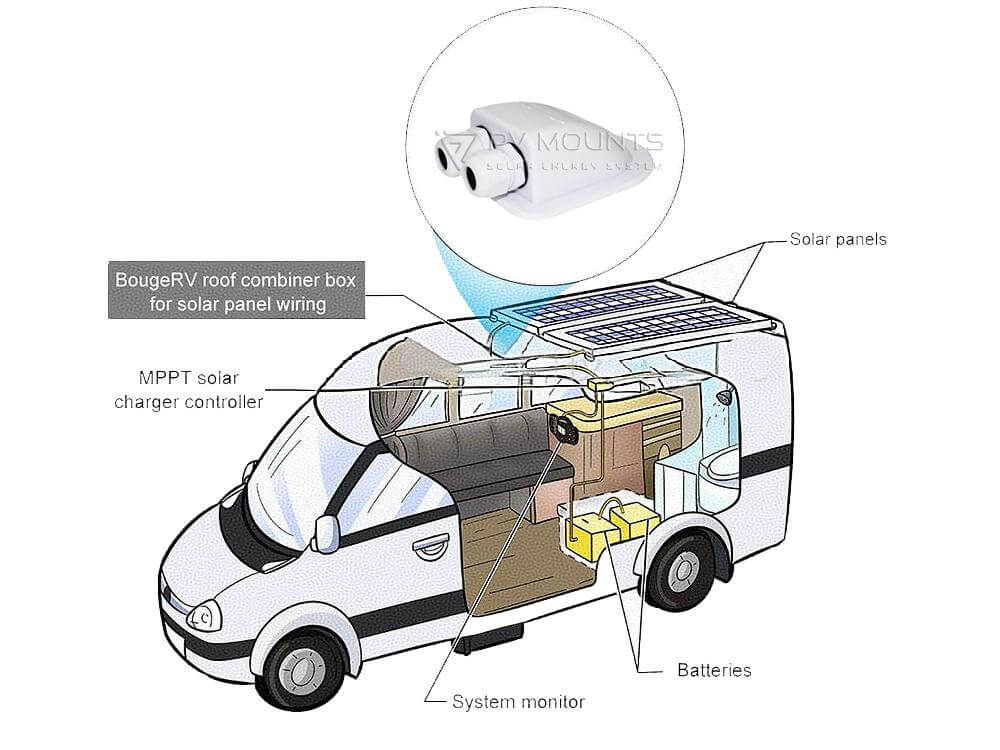
This guide explains how Z brackets, ABS solar mounting kits, and waterproof cable entry solutions are used in RV, campervan, caravan, boat, and yacht solar projects — and what actually matters for long-term reliability.
2.Why Mobile Solar Mounting Requires Different Solutions
Many solar mounting systems designed for buildings are not suitable for vehicles and vessels.
A mobile solar installation experiences:
- Continuous vibration during driving
- Sudden wind uplift at highway speed
- Thermal expansion from outdoor exposure
- Constant movement of cables and fixing points
In marine environments, mounting systems must also resist:
- Saltwater corrosion
- High humidity
- UV degradation
❗A mounting system that performs well on a stationary roof may fail in a moving off-grid environment if waterproofing and structural movement are not properly considered.
3.Common Problems in RV & Marine Solar Installations
Long-term problems in off-grid solar systems are usually caused by installation quality rather than the solar panels themselves.
3.1 Roof Leakage Around Mounting Points
Poor sealing around screws or cable entry holes can gradually allow water intrusion.
This often happens because of:
- Incorrect sealant application
- Weak waterproof materials
- Improper screw positioning
3.2 Loose Solar Panels During Travel
Continuous road vibration can slowly loosen poorly installed mounting systems.
This is especially common when:
- Roof structure is weak
- Brackets are incorrectly spaced
- Oversized panels are used without additional support
3.3 Corrosion in Marine Environments
Standard hardware may corrode quickly in coastal or marine applications.
Salt exposure can damage:
- Fasteners
- Mounting brackets
- Cable fixing points
3.4 Cable Damage from UV & Movement
Exposed solar cables may experience:
- UV aging
- Abrasion during movement
- Water intrusion at entry points
👉 Proper cable routing is often overlooked in RV and marine solar systems.
4.When Z Brackets Are a Practical Solution
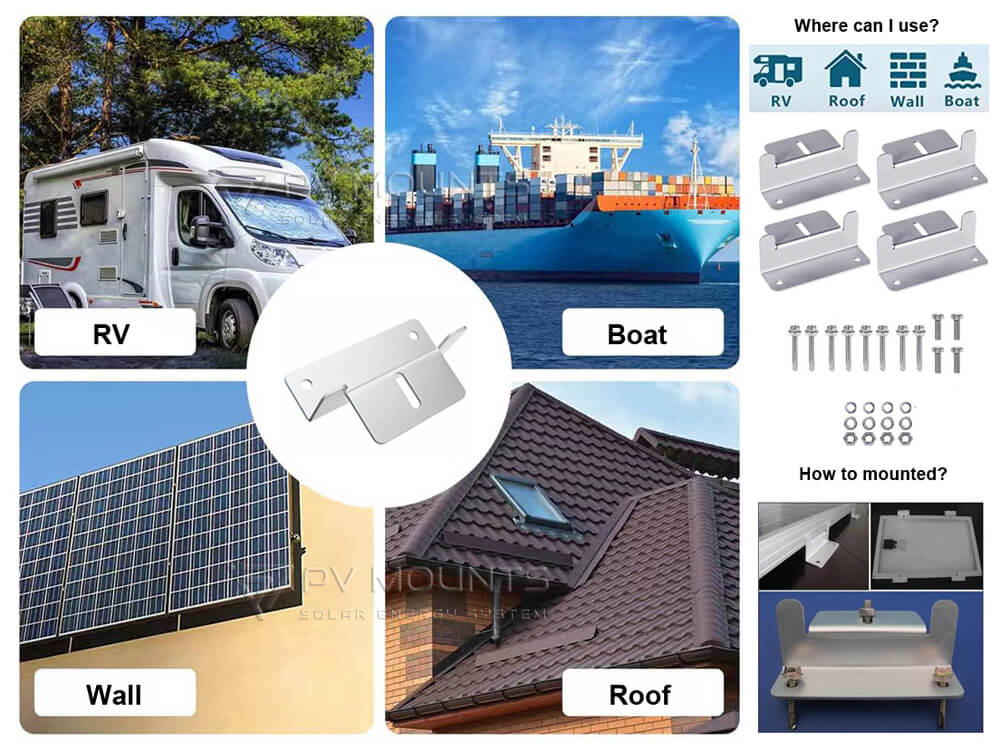
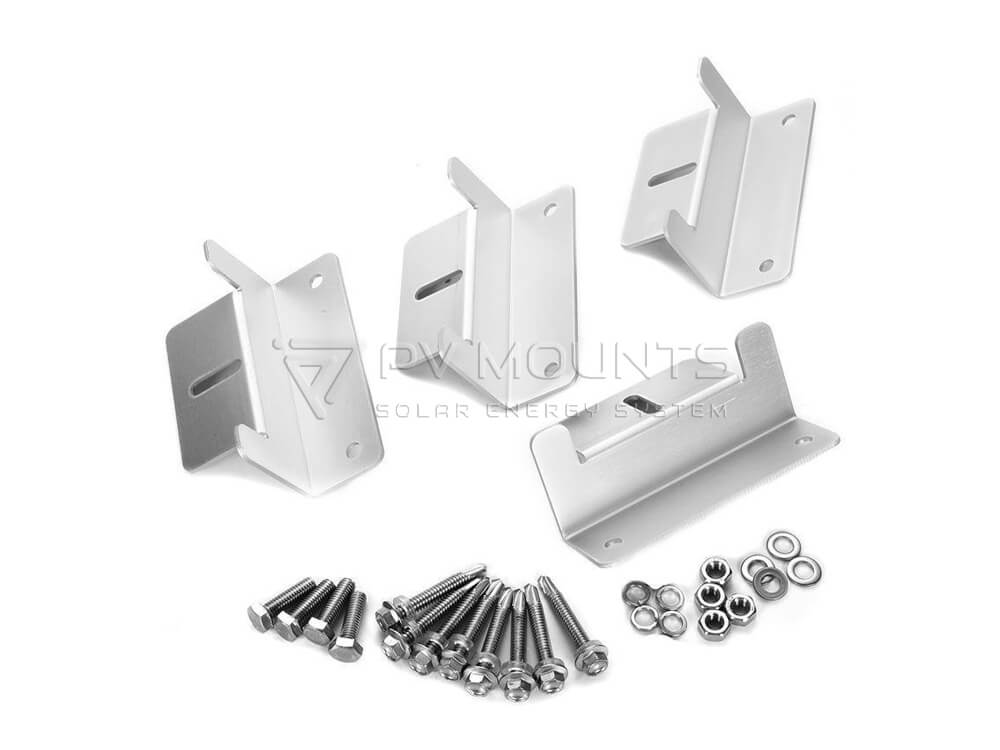
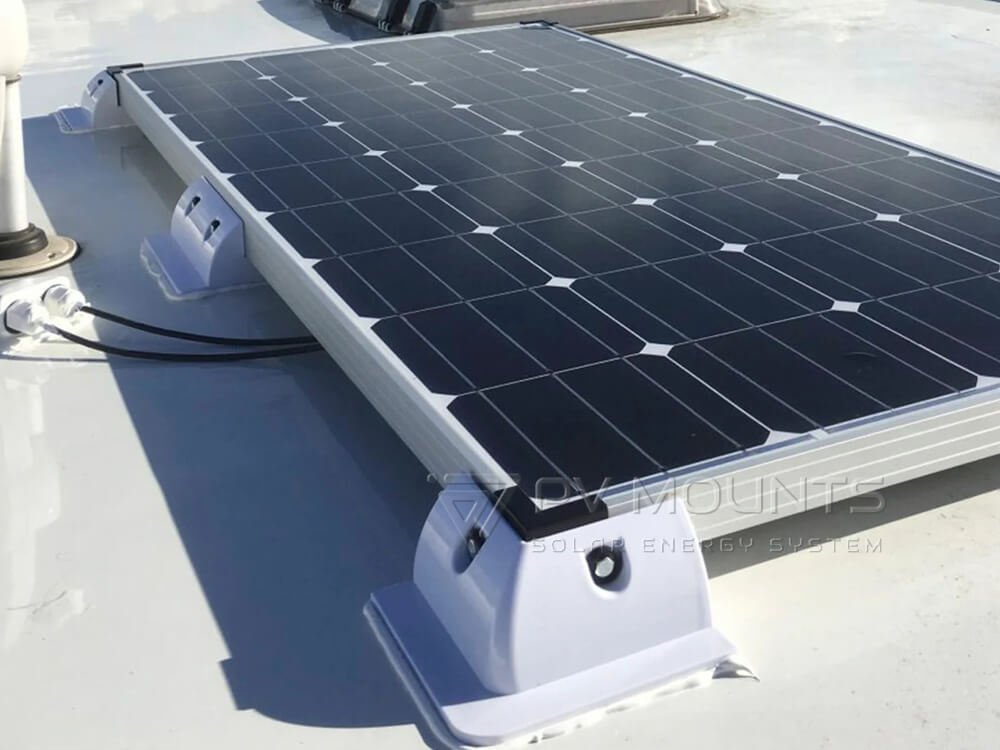
A solar Z bracket for RV installation remains one of the most widely used mounting solutions for:
- RV solar systems
- Camper vans
- Caravans
- Motorhomes
- Small off-grid solar systems
4.1 Why Z Brackets Are Popular
Z brackets are commonly used because they provide:
- Lightweight installation
- Simple fixing structure
- Low-profile mounting
- Compatibility with many solar panels
Most RV solar panel brackets use four brackets per panel, creating a stable mounting structure while minimizing additional roof weight.
4.2 When Z Brackets Work Best
Z brackets are most suitable when:
- The roof surface is relatively flat
- Solar panel size remains moderate
- Lightweight installation is important
- Standard highway travel conditions are expected
4.3 What Actually Causes Z Bracket Failure?
In most cases, the problem is not the bracket itself.
Failure usually comes from:
- Weak roof support
- Poor screw fixing
- Low-quality materials
- Inadequate waterproof sealing
- Excessive vibration over time
❗In mobile solar applications, installation quality matters more than bracket type alone.
5. When ABS Solar Mounting Kits Are a Better Option
ABS solar mounting kits are increasingly used in:
- Marine solar systems
- Campervan conversions
- Premium RV projects
- Yacht solar installations
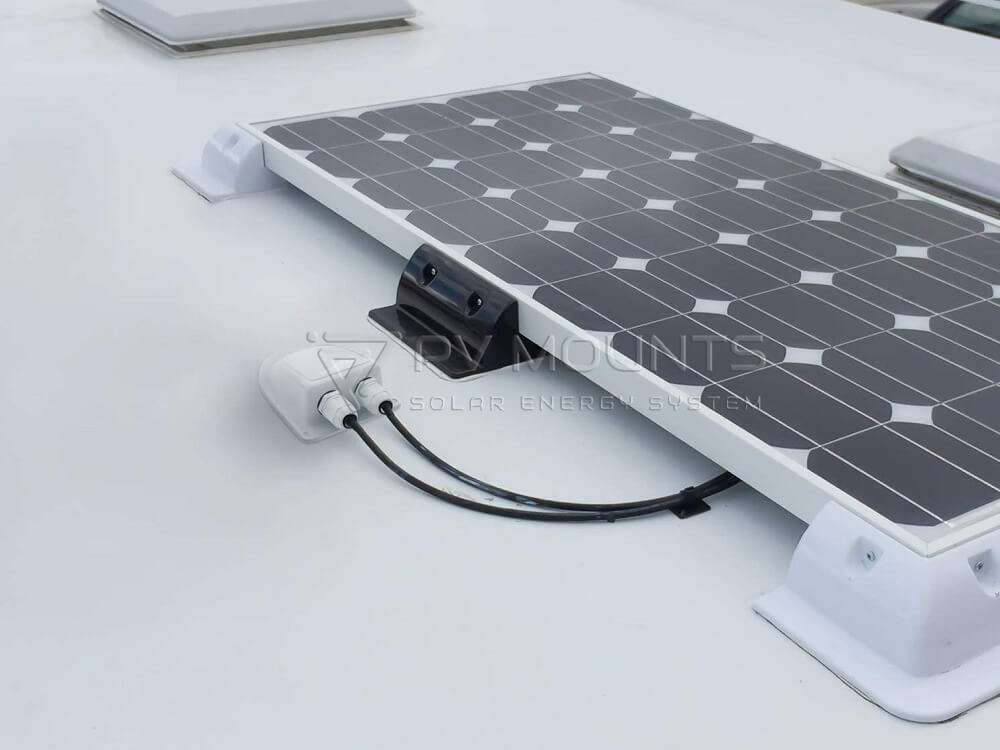
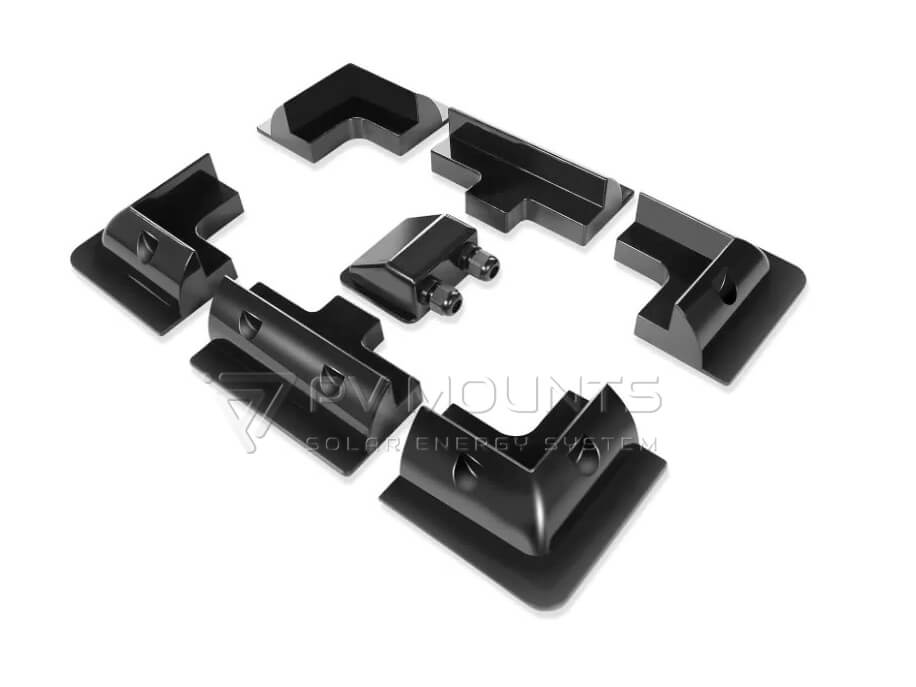
Compared with traditional metal RV solar panel brackets, ABS mounting systems provide:
- Better corrosion resistance
- Smoother aerodynamic shape
- Cleaner appearance
- Integrated waterproof cable routing options
5.1 Why ABS Mounts Work Well in Marine Environments
ABS solar corner mounts for boats are especially useful in environments with:
- Salt exposure
- High humidity
- Frequent rain exposure
Unlike untreated metal components, high-quality ABS materials are resistant to corrosion and weather-related degradation.
5.2 ABS Does Not Eliminate the Need for Proper Installation
Although ABS mounts improve waterproof design and corrosion resistance, long-term reliability still depends on:
- Proper roof preparation
- Correct adhesive or screw fixing
- Waterproof sealing quality
- Correct cable management
6. Waterproofing: The Most Overlooked Part of Mobile Solar Systems
In many RV and marine installations, waterproofing failure causes more problems than the mounting brackets themselves.
6.1 Why Cable Entry Protection Matters
Solar cables entering the RV or boat roof must be protected from:
- Water intrusion
- UV exposure
- Vibration movement
A waterproof cable entry gland helps:
- Seal cable penetration points
- Improve cable organization
- Reduce long-term leakage risk
👉 In many off-grid solar systems, waterproof cable management is just as important as panel fixing strength.
6.2 Common Waterproofing Mistakes
❌ Using Low-Quality Sealant
Cheap sealants may crack over time because of heat and vibration.
❌ Over-tightening Screws
Excessive tightening can damage sealing materials or deform thin roof surfaces.
❌ Poor Cable Routing
Loose or exposed cables can create long-term waterproof and safety problems.
7. Z Bracket vs ABS Mounting Kit: Which Is the Best Solar Mounting System for RV?
| Feature | Z Bracket | ABS Mounting Kit |
|---|---|---|
| Установка | Simple | Simple |
| Вес | Low | Very low |
| Appearance | Industrial | Cleaner |
| Waterproof Cable Entry | Separate solution | Usually integrated |
| Устойчивость к коррозии | Depends on material | Excellent |
| Best Application | RV / caravan | Boat / yacht / premium RV |
Practical insight:
- Z brackets are practical and cost-effective
- ABS systems focus more on waterproofing, appearance, and marine durability
8. Practical Recommendations for Vehicle & Vessel Solar Mounting
8.1 Choose Z Brackets If:
- You want a simple and economical installation
- Your roof surface is relatively flat
- Weight reduction is important
- The system is designed for standard RV travel conditions
8.2. Choose ABS Mounting Kits If:
- The system is used in marine environments
- Corrosion resistance is important
- Waterproof cable routing is a priority
- A cleaner aerodynamic appearance is preferred
8.3 Always Prioritize:
- Proper waterproof sealing
- Corrosion-resistant materials
- Correct cable protection
- Stable structural fixing
It’s very important to choosing the Right RV Solar Mounting Kit.
8.4 Here is application recommended solution provided as belowed:
| Приложение | Recommended Solution |
|---|---|
| Standard RV solar system | Z bracket |
| Caravan & campervan installation | Z bracket or ABS |
| Marine / yacht solar systems | ABS mounting kit |
| High corrosion environment | ABS mount |
| Lightweight budget setup | Z bracket |
| Premium waterproof cable management | ABS + cable entry gland |
❗There is no single “best” mounting system for every mobile solar application.
9. Solar Mounting Solution Comparison
| Mounting Type | Best For | Main Advantage | Main Risk |
|---|---|---|---|
| Z Bracket | RV / caravan | lightweight | poor installation vibration |
| ABS Mount | marine / yacht | коррозионная стойкость | adhesive quality |
| Rail System | large systems | stronger support | higher cost |
10. Real Installation Considerations for Off-Grid Solar Projects
Before selecting a mounting solution, consider:
- Roof material and strength
- Vehicle vibration level
- Travel speed and wind exposure
- Waterproofing requirements
- Marine or coastal exposure
- Future maintenance access
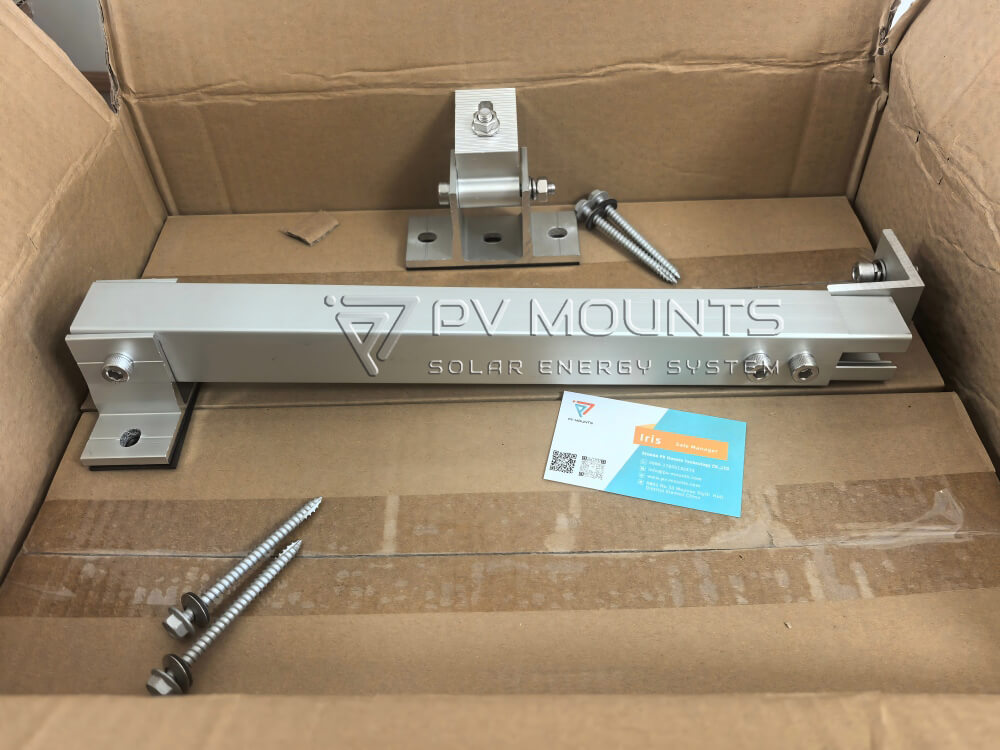
Large solar panels or extreme off-road conditions may require reinforced support or additional rail systems beyond standard Z bracket mounting.

11. Conclusion
RV and marine solar mounting systems must perform under conditions that traditional rooftop solar systems rarely experience.
Long-term reliability depends on much more than simply attaching solar panels to a roof.
Proper installation, waterproofing, vibration resistance, cable protection, and corrosion control all play critical roles in the long-term safety of mobile off-grid solar systems.
Whether you are building an RV solar system, upgrading a campervan, or installing marine solar panels on a yacht or boat by using solar Z brackets for RV projects or ABS mounting kits for marine applications, choosing the right mounting solution helps reduce maintenance problems and improve long-term system durability.
❗In mobile solar applications, reliable installation matters just as much as solar panel performance.
12.FAQ — RV & Marine Solar Mounting Systems
Here are some of the most common questions about RV and marine solar mounting systems:
Yes. High-quality Z brackets are widely used in RV solar systems when properly installed on suitable roof structures with correct waterproof sealing.
In many marine applications, yes. ABS mounting kits provide better corrosion resistance and cleaner waterproof cable routing for marine environments.
Poorly installed systems can loosen over time because of vibration and wind pressure. Proper fixing methods and structural support are important for long-term stability.
Most leaks are caused by improper sealing around mounting points or cable entry holes rather than the solar panels themselves.
A waterproof cable entry gland seals the point where solar cables enter the RV or boat roof, helping prevent water intrusion and cable damage.
Both are commonly used. Z brackets are economical and practical, while ABS mounting systems provide cleaner appearance and improved waterproof cable management.
Yes. Salt exposure and humidity can accelerate corrosion. Corrosion-resistant materials such as anodized aluminum, stainless steel, and UV-resistant ABS are recommended for marine solar systems.
Yes, continuous vibration can affect RV solar mounting systems over time if the installation is weak or improperly supported. During highway driving, RV roofs experience: Road vibration/Wind pressure/Roof flexing/Thermal expansion and contraction. In most cases, vibration problems are caused by installation quality rather than the mounting bracket itself.
Our high-quality mounting systems with proper fixing positions, corrosion-resistant materials, and stable waterproof sealing are designed to withstand normal RV travel conditions.
High-quality RV solar mounting systems typically last 10–25 years depending on material quality, installation, UV exposure, and environmental conditions.
Yes, drilling into an RV roof can be safe when done correctly.
Most professionally installed RV solar systems use mechanical fixing methods because they provide stronger long-term stability than adhesive-only solutions.
Loose solar panels are usually caused by long-term stress rather than a single issue.
Common causes include:
– Continuous highway vibration
– Poor screw fixing
– Weak roof structure
– Incorrect bracket spacing
– Oversized solar panels
– Thermal movement from outdoor temperature changes
In some cases, low-quality sealants or corroded hardware may also reduce mounting stability over time.
Looking for reliable RV or marine solar mounting solutions?
Contact us to find suitable Z brackets, ABS mounting kits, and waterproof cable entry solutions for your off-grid solar projects.

 Russian
  English
  Spanish
  Portuguese
  Hungarian
  Arabic
  Romanian
  French