Metal roofs are widely used for commercial and industrial solar installations due to their durability, large surface area, and relatively simple installation process.
However, choosing the correct mounting system is essential for ensuring structural safety and long-term waterproof performance.
Two of the most common mounting solutions for trapezoidal metal roofs are adjustable tin roof hooks și L-foot solar mounting brackets.
This guide explains the differences between these systems and helps installers determine which option is best for their solar projects.
What Is an Adjustable Tin Roof Hook?
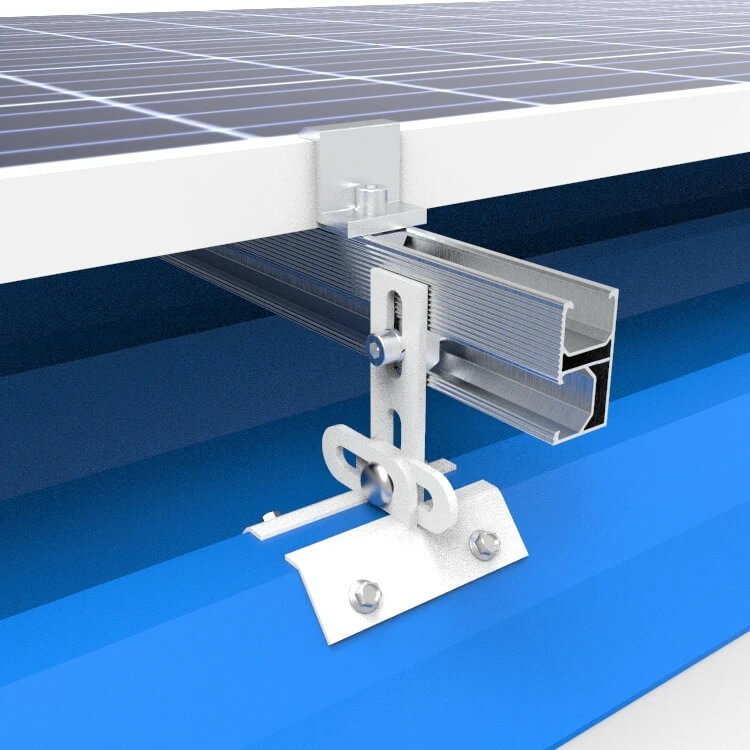
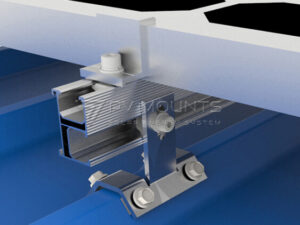
An adjustable tin roof hook is a mounting bracket designed specifically for trapezoidal or corrugated metal roofs.
Unlike fixed brackets, adjustable hooks allow installers to modify the mounting height or angle to match different roof profiles.
Typical characteristics include:
- Adjustable height structure
- Stainless steel or aluminum construction
- Strong mechanical connection to roof purlins
- Compatibility with standard solar mounting rails
These hooks provide greater flexibility when working with different metal roof designs.
What Is an L-Foot Solar Mounting System?
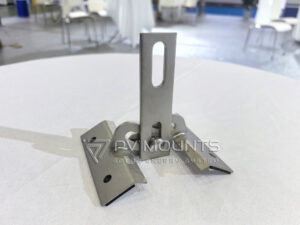
L-foot brackets are one of the most widely used solar mounting solutions for metal roofs.
The L-shaped bracket is fixed to the roof using stainless steel self-drilling screws. Aluminum mounting rails are then attached to the bracket.
Typical components include:
- Aluminum L-foot brackets
- Self-drilling screws with EPDM waterproof washers
- Aluminum mounting rails
- Mid clamps and end clamps
Because of its simple design, the L-foot system is widely used in industrial solar installations.
Key Differences Between Adjustable Tin Roof Hooks and L-Foot Mounting
Although both systems are used on metal roofs, they serve slightly different purposes.
| Feature | Adjustable Tin Roof Hook | L-Foot Mounting |
|---|---|---|
| Installation Flexibility | High (adjustable height) | Limited |
| Roof Profile Compatibility | Works with uneven roof profiles | Best for standard trapezoidal roofs |
| Installation Complexity | Moderate | Simple |
| Structural Connection | Strong | Strong |
| Costuri | Slightly higher | Lower |
Adjustable hooks provide greater flexibility, while L-foot brackets offer simplicity and lower cost.
When to Use Adjustable Tin Roof Hooks
Adjustable tin roof hooks are ideal for installations where the roof profile varies or when additional alignment flexibility is required.
They are commonly used in situations such as:
- Irregular trapezoidal roof profiles
- Roofs with uneven rib heights
- Projects requiring precise rail alignment
- Complex industrial roof structures
The adjustable structure allows installers to maintain consistent rail height even when roof geometry varies.
When L-Foot Mounting Systems Are Preferred
L-foot mounting systems are best suited for simple trapezoidal metal roofs with consistent rib spacing.
These systems are commonly used for:
- Large warehouse solar projects
- Standard industrial roofs
- Cost-sensitive installations
- Fast installation requirements
Because the design is simple, installers can work more quickly when using L-foot brackets.
Engineering Considerations for Metal Roof Solar Systems
Regardless of the mounting method, engineers must consider several structural factors when installing solar panels on metal roofs.
Wind Load Resistance
Metal roofs are lightweight structures, so wind uplift forces must be carefully calculated.
Waterproofing
All penetrations must use EPDM sealing washers or waterproof gaskets to prevent leakage.
Corrosion Protection
Outdoor solar installations require corrosion-resistant materials such as stainless steel and aluminum.
These engineering factors ensure the solar mounting system remains safe and reliable over long-term operation.
Metal Roof Solar Market in Europe
Metal roof solar installations are rapidly growing across Europe due to the expansion of commercial rooftop photovoltaic systems.
Countries with strong industrial solar adoption include Germany, Netherlands, Poland, and France.
These markets demand reliable solar mounting hardware designed for long service life and fast installation.
Which Mounting System Is Better?
Both adjustable tin roof hooks and L-foot mounting systems are widely used in solar installations.
Adjustable tin roof hooks are better when:
- Roof profiles are uneven
- Alignment flexibility is required
- Installers need height adjustment
L-foot mounting systems are better when:
- Roof structures are simple
- Installation speed is important
- Project budgets are tight
Choosing the correct system depends on the specific roof structure and project requirements.
Concluzie
Selecting the right solar mounting solution for metal roofs is essential for ensuring installation efficiency and long-term reliability.
Adjustable tin roof hooks provide flexibility for complex roof profiles, while L-foot mounting systems offer a simple and cost-effective solution for standard trapezoidal roofs.
Understanding these differences helps installers choose the best mounting system for each project.
ÎNTREBĂRI FRECVENTE
Q1: Can adjustable tin roof hooks replace L-foot brackets?
In many cases yes, but L-foot brackets remain the more economical option for standard roofs.
Q2: Do both systems require roof penetration?
Yes. Both systems are typically installed using self-drilling screws fixed into roof purlins.
Q3: Which system installs faster?
L-foot mounting systems generally allow faster installation due to their simpler design.


 Romanian
  English
  Spanish
  Portuguese
  Russian
  Hungarian
  Arabic
  French