
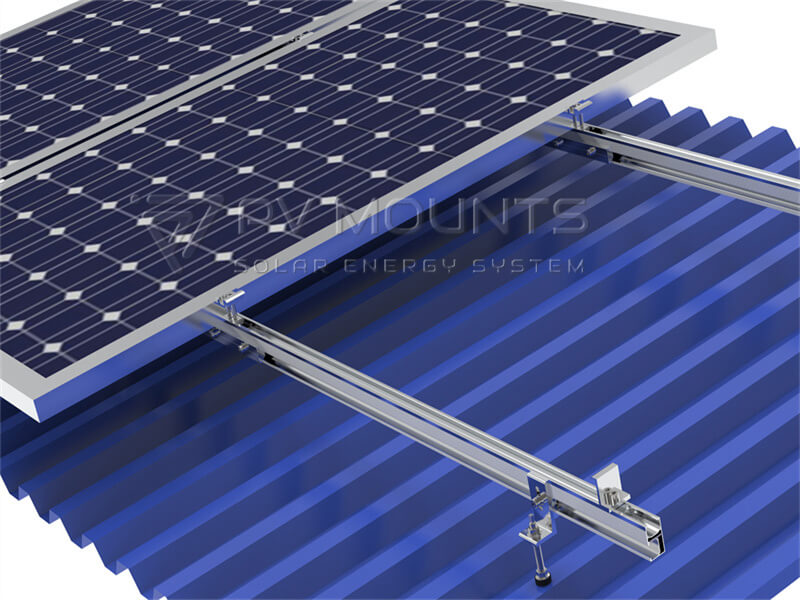
Trapezoidal metal roofs are widely used in industrial and commercial buildings.Solar mounting for trapezoidal metal roofs requires proper system design, including fixing methods, rail spacing, and waterproof sealing to ensure long-term performance and safety.
This guide explains the best solar mounting systems for trapezoidal roofs, including fixing methods, spacing design, and installation best practices.
1. What Is a Trapezoidal Metal Roof?
A trapezoidal metal roof is formed by steel or aluminum sheets with repeating trapezoidal profiles. These roofs are commonly used in factories, warehouses, and commercial buildings due to their:
- High strength and durability
- Lightweight structure
- Fast installation
Their regular geometry also makes them suitable for solar mounting systems when properly designed.
2. What is the best solar mounting solution for trapezoidal metal roofs?
The best solution for trapezoidal metal roofs is typically a mini rail mounting system fixed with self-drilling screws and EPDM sealing. It offers a balance of cost, installation speed, and structural reliability, making it widely used in commercial and industrial solar projects.
3. Best Solar Mounting Solution for Trapezoidal Roof
There are two common mounting solutions for trapezoidal metal roofs:
3.1. Sistema de minicarriles (Most Recommended)
Mini rail systems are widely used for solar mounting on trapezoidal metal roofs due to their cost efficiency and fast installation. Pre-assembled mini rail solutions can significantly reduce installation time on site.
- Short aluminum rails fixed directly to the roof sheet
- Lower material cost
- Faster installation
- Suitable for most industrial roofs
👉 This is the most widely used solution in Europe due to its balance of cost, speed, and structural reliability.
One of the most popular solutions for trapezoidal roofs is the mini rail mounting system, which offers fast installation and cost efficiency.
👉 Read the full guide: Mini Rail Solar Mounting System
3.2. L Foot + Full Rail System (Most Popular)
- Traditional mounting solution
- Higher material consumption
- More flexible for complex layouts
👉 In most standard projects, mini rail systems are the preferred choice.
Cómo elegir el sistema de montaje solar adecuado para su tejado trapezoidal
Selecting the appropriate solar mounting system is crucial. Factors like roof size, angle, and material play a key role. It’s important to consider the local climate and potential shading issues as well. Consulting with experts ensures the chosen system fits the specific needs of the trapezoidal roof. They can guide through options and recommend the best solution. If you have no idea, please contact with XIAMEN PV MOUNTS experts. info@pv-mounts.com
4. How to Fix Solar Mounting on Trapezoidal Roof
Proper fixing is critical for solar mounting on trapezoidal metal roofs to ensure both safety and waterproof performance.
Fixing Method
- Use self-drilling screws
- Fix on the crest (top of rib), not the valley
- Apply EPDM rubber sealing to prevent leakage
👉 Key point:
Trapezoidal roofs are designed for controlled penetration, so correct sealing and screw positioning are essential for long-term waterproof performance.
5. Rail / Fixing Spacing for Trapezoidal Roof
Spacing design is one of the most important factors in system safety.
Typical Spacing
- 600 mm – 1000 mm (common range)
Depends on:
- Wind load
- Snow load
- Roof sheet thickness
- Building height
Example
For a wind load of 0.85 kN/m², the recommended fixing spacing is approximately 800 mm.
Recommended Fixing Spacing by Wind Load
Wind Load (kN/m²) Recommended Spacing ≤ 0.6 1000 mm 0.6 – 0.85 800 mm 0.85 – 1.2 600 mm 👉 Correct spacing ensures:
- Structural stability
- Reduced uplift risk
- Longer system lifespan
6. Wind Load Considerations (EN 1991)
For European projects, wind load calculation should follow EN 1991 standards.
Key factors include:
- Building height
- Roof zone (edge / corner / middle)
- Local wind conditions
👉 Proper load calculation helps determine:
- Fixing quantity
- Rail spacing
- System safety margin
7. Installation Process (Step-by-Step)
A typical installation process includes:
- Mark rail positions based on layout
- Place mini rails on roof crest
- Fix with self-drilling screws
- Apply EPDM sealing (pre-assembled)
- Install solar panels
👉 Professional installation ensures:
- Accurate alignment
- Strong fixing
- Waterproof performance
8. Common Mistakes to Avoid
Incorrect installation can lead to serious issues.
Typical mistakes:
- Fixing in the valley instead of crest
- Over-tightening screws
- Ignoring waterproof sealing
- Incorrect spacing design
👉 Avoiding these mistakes is critical for long-term reliability.
9. Why Use Stainless Steel Fasteners?
Material selection is especially important for roof mounting systems.
Advantages of stainless steel (SUS304 / SUS410):
- Excellent corrosion resistance
- Suitable for coastal and humid environments
- Longer service life
👉 Stainless steel components significantly improve system durability.
10. Cost Considerations
Compared to other roof types, trapezoidal roof systems offer:
- Lower installation cost
- Faster installation time
- Reduced material usage (especially mini rail systems)
👉 This makes them one of the most cost-effective solar mounting solutions.
11. Design Considerations for Solar Panels on Trapezoidal Roofs
Cuando se trata de equipar tejados trapezoidales con paneles solares, las consideraciones de diseño desempeñan un papel fundamental. La forma única de estos tejados requiere un planteamiento minucioso para garantizar que la instalación solar no sólo encaje estéticamente, sino que también funcione de forma óptima. La orientación y la inclinación son cruciales; deben calcularse meticulosamente para aprovechar los rayos solares con la máxima eficacia. Una orientación sur, por ejemplo, maximiza la exposición al sol en el hemisferio norte, mientras que el ángulo de inclinación debe ajustarse a la latitud del lugar para una absorción óptima de la energía.
La distribución de la carga es otro factor crítico, ya que el peso de los paneles solares debe repartirse uniformemente por las crestas trapezoidales para evitar tensiones estructurales. Además, la integración de la tecnología solar debe mejorar el aspecto y la funcionalidad del tejado, no comprometerlos. Este delicado equilibrio entre forma y función pone de relieve el arte y la ciencia de las instalaciones solares en cubiertas trapezoidales, y muestra el ingenio necesario para combinar las soluciones de energía renovable con la integridad arquitectónica.
12. Maintaining Your Solar Panel System on a Trapezoidal Roof
Después de la instalación, hay que centrarse en el mantenimiento del sistema de paneles solares para garantizar su longevidad y eficiencia. Las comprobaciones rutinarias son esenciales para detectar y resolver problemas como la acumulación de polvo, las sombras o el desgaste, que pueden afectar al rendimiento. Limpiar los paneles con regularidad también es crucial para eliminar los residuos que puedan bloquear la luz solar.
Además, el mantenimiento no consiste sólo en preservar la funcionalidad, sino también la eficiencia. Las reparaciones, cuando son necesarias, deben ejecutarse con prontitud para evitar que los problemas menores se conviertan en problemas mayores. Este cuidado continuo no sólo prolonga la vida útil del sistema solar, sino que también garantiza que siga funcionando con la máxima eficiencia, haciendo del mantenimiento un capítulo clave en la historia de la energía solar en cubiertas trapezoidales.
13. Cost Analysis of Installing Solar Panels on Trapezoidal Metal Roofs
El aspecto financiero de la instalación de paneles solares en cubiertas metálicas trapezoidales merece un examen detenido. El coste inicial puede parecer desalentador, pero es una inversión a largo plazo que reporta beneficios. Con el tiempo, el ahorro de energía puede compensar los gastos iniciales. Analizar estos costes implica comparar el precio de la instalación, los equipos y el mantenimiento con el ahorro energético previsto y la vida útil del sistema.
Los incentivos y subvenciones pueden reducir considerablemente el desembolso inicial. Muchos gobiernos ofrecen desgravaciones fiscales, descuentos o subvenciones para fomentar la adopción de la energía solar. Estos incentivos pueden hacer que las instalaciones solares sean mucho más asequibles. En última instancia, el retorno de la inversión en paneles solares en tejados trapezoidales es favorable, sobre todo si se tienen en cuenta los beneficios medioambientales y el posible aumento del valor de la propiedad.
PREGUNTAS FRECUENTES
No, when using proper EPDM sealing and correct installation methods.
Typically 600–1000 mm, depending on wind load and roof conditions.
Yes, but screw selection and pull-out strength must be verified.
Mini rail is more cost-effective for standard projects. L foot is more stable than mini rail.
Trapezoidal roofs can enhance efficiency due to their shape, allowing optimal panel placement.
Yes, but the mounting system must be compatible with the roof’s design and load capacity.
Typically, these systems last 25-30 years, mirroring the lifespan of solar pan
Properly installed systems withstand various weather conditions, ensuring durability and performance.
Regular cleaning and occasional inspections are necessary to maintain efficiency and longevity.
Yes, but a roof assessment is essential to ensure it can support the solar system.
Mini rail systems can be used on most trapezoidal metal roofs, but not all.
Compatibility depends on several factors:
Roof sheet thickness
Rib height and spacing
Load requirements (wind and snow load)
Structural condition of the roof
In general, mini rail systems are suitable for standard industrial trapezoidal roofs with sufficient strength. However, for very thin sheets or high load conditions, additional reinforcement or a full rail system may be required.
👉 For solar mounting on trapezoidal metal roofs, it is recommended to verify pull-out strength and structural capacity before installation.
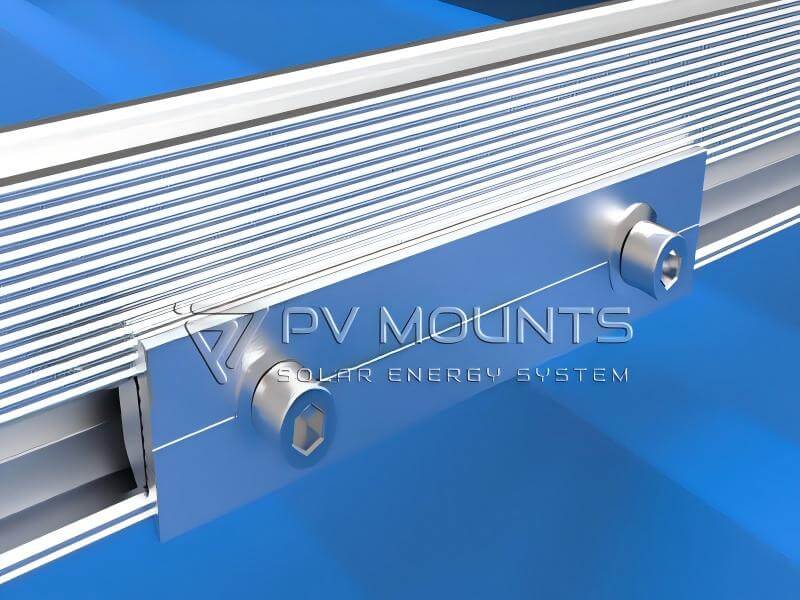
Pre-assembled mini rail solutions can simplify installation and improve efficiency on site.
Screws should always be installed on the crest (top of the rib) of the trapezoidal metal sheet, not in the valley.
Key reasons:
The crest area provides better structural support
It reduces the risk of water leakage
It ensures stronger pull-out resistance
Additionally, all screws should be installed with Arandelas de estanqueidad de EPDM to maintain long-term waterproof performance.
👉 Correct screw positioning is critical for safe and durable solar mounting on trapezoidal roofs.
Engineering Summary for Trapezoidal Roof Solar Mounting
- Recommended solution: Mini rail system
- Typical spacing: 600–1000 mm
- Fixing method: Self-drilling screws with EPDM
- Material: Aluminum + Stainless Steel (SUS304 / SUS410)
Conclusión y perspectivas
Solar mounting systems for trapezoidal metal roofs provide a reliable and cost-effective solution for industrial and commercial solar projects. By using the right mounting method, proper spacing design, and high-quality materials, you can ensure long-term system performance and safety.
Los sistemas de montaje solar en tejados trapezoidales representan una inversión inteligente en energías renovables. Combinan funcionalidad, eficiencia y sostenibilidad. A medida que avance la tecnología, estos sistemas serán más integrados y eficientes. El futuro de la energía solar en tejados trapezoidales es brillante y promete un planeta más limpio y verde.
As a professional solar mounting system manufacturer, Xiamen PV Mounts provides reliable solutions for trapezoidal metal roofs, including mini rail systems, stainless steel fasteners, and customized mounting structures.
For project-specific design support or quotation, feel free to contact our engineering team.
Compared to corrugated roofs, trapezoidal roofs offer a flatter surface and easier installation.
👉 See also: Corrugated Roof Solar Mounting Guide

 Spanish
  English
  Portuguese
  Russian
  Hungarian
  Arabic
  Romanian
  French