
Tabla de conținut
Trapezoidal metal roofs are widely used in industrial and commercial buildings.Solar mounting for trapezoidal metal roofs requires proper system design, including fixing methods, rail spacing, and waterproof sealing to ensure long-term performance and safety.
This guide explains the best solar mounting systems for trapezoidal roofs, including fixing methods, spacing design, and installation best practices.
1. What Is a Trapezoidal Metal Roof?
A trapezoidal metal roof is formed by steel or aluminum sheets with repeating trapezoidal profiles. These roofs are commonly used in factories, warehouses, and commercial buildings due to their:
- High strength and durability
- Lightweight structure
- Fast installation
Their regular geometry also makes them suitable for solar mounting systems when properly designed.
2. What is the best solar mounting solution for trapezoidal metal roofs?
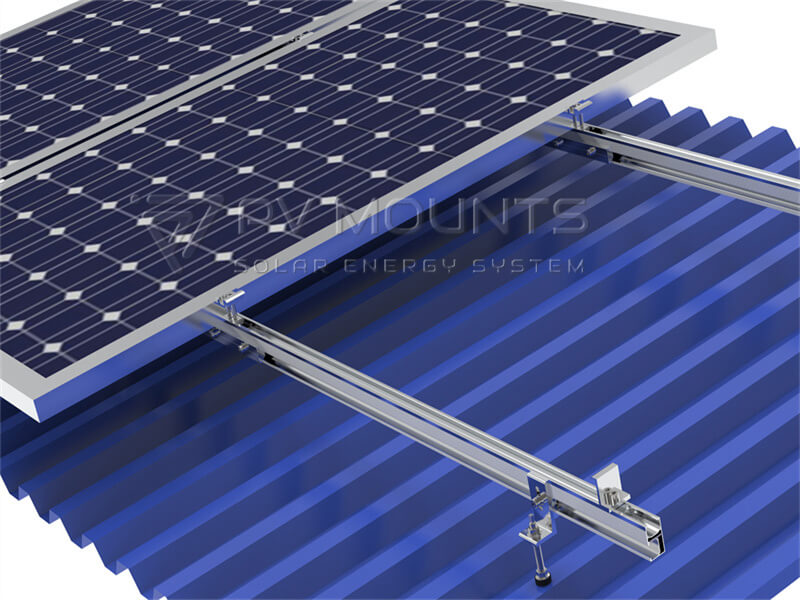
The best solution for trapezoidal metal roofs is typically a mini rail mounting system fixed with self-drilling screws and EPDM sealing. It offers a balance of cost, installation speed, and structural reliability, making it widely used in commercial and industrial solar projects.
3. Best Solar Mounting Solution for Trapezoidal Roof
There are two common mounting solutions for trapezoidal metal roofs:
3.1. Sistem Mini Rail (Most Recommended)
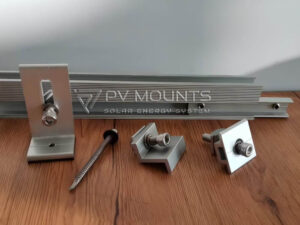
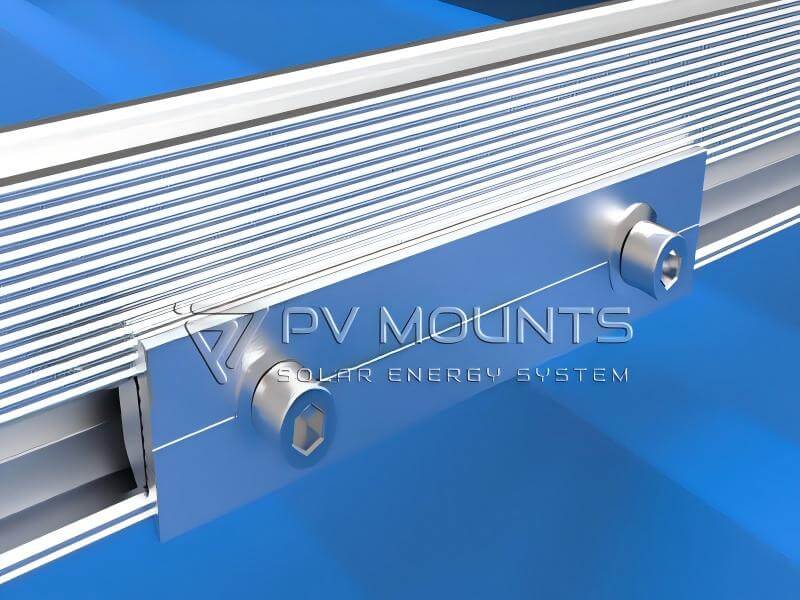
Mini rail systems are widely used for solar mounting on trapezoidal metal roofs due to their cost efficiency and fast installation. Pre-assembled mini rail solutions can significantly reduce installation time on site.
- Short aluminum rails fixed directly to the roof sheet
- Lower material cost
- Faster installation
- Suitable for most industrial roofs
👉 This is the most widely used solution in Europe due to its balance of cost, speed, and structural reliability.
One of the most popular solutions for trapezoidal roofs is the mini rail mounting system, which offers fast installation and cost efficiency.
👉 Read the full guide: Mini Rail Solar Mounting System
3.2. L Foot + Full Rail System (Most Popular)
- Traditional mounting solution
- Higher material consumption
- More flexible for complex layouts
👉 In most standard projects, mini rail systems are the preferred choice.
Alegerea sistemului de montaj solar potrivit pentru acoperișul dvs. trapezoidal
Selecting the appropriate solar mounting system is crucial. Factors like roof size, angle, and material play a key role. It’s important to consider the local climate and potential shading issues as well. Consulting with experts ensures the chosen system fits the specific needs of the trapezoidal roof. They can guide through options and recommend the best solution. If you have no idea, please contact with XIAMEN PV MOUNTS experts. info@pv-mounts.com
4. How to Fix Solar Mounting on Trapezoidal Roof
Proper fixing is critical for solar mounting on trapezoidal metal roofs to ensure both safety and waterproof performance.
Fixing Method
- Use self-drilling screws
- Fix on the crest (top of rib), not the valley
- Apply EPDM rubber sealing to prevent leakage
👉 Key point:
Trapezoidal roofs are designed for controlled penetration, so correct sealing and screw positioning are essential for long-term waterproof performance.
5. Rail / Fixing Spacing for Trapezoidal Roof
Spacing design is one of the most important factors in system safety.
Typical Spacing
- 600 mm – 1000 mm (common range)
Depends on:
- Wind load
- Snow load
- Roof sheet thickness
- Building height
Example
For a wind load of 0.85 kN/m², the recommended fixing spacing is approximately 800 mm.
Recommended Fixing Spacing by Wind Load
Wind Load (kN/m²) Recommended Spacing ≤ 0.6 1000 mm 0.6 – 0.85 800 mm 0.85 – 1.2 600 mm 👉 Correct spacing ensures:
- Structural stability
- Reduced uplift risk
- Longer system lifespan
6. Wind Load Considerations (EN 1991)
For European projects, wind load calculation should follow EN 1991 standards.
Key factors include:
- Building height
- Roof zone (edge / corner / middle)
- Local wind conditions
👉 Proper load calculation helps determine:
- Fixing quantity
- Rail spacing
- System safety margin
7. Installation Process (Step-by-Step)
A typical installation process includes:
- Mark rail positions based on layout
- Place mini rails on roof crest
- Fix with self-drilling screws
- Apply EPDM sealing (pre-assembled)
- Install solar panels
👉 Professional installation ensures:
- Accurate alignment
- Strong fixing
- Waterproof performance
8. Common Mistakes to Avoid
Incorrect installation can lead to serious issues.
Typical mistakes:
- Fixing in the valley instead of crest
- Over-tightening screws
- Ignoring waterproof sealing
- Incorrect spacing design
👉 Avoiding these mistakes is critical for long-term reliability.
9. Why Use Stainless Steel Fasteners?
Material selection is especially important for roof mounting systems.
Advantages of stainless steel (SUS304 / SUS410):
- Excellent corrosion resistance
- Suitable for coastal and humid environments
- Longer service life
👉 Stainless steel components significantly improve system durability.
10. Cost Considerations
Compared to other roof types, trapezoidal roof systems offer:
- Lower installation cost
- Faster installation time
- Reduced material usage (especially mini rail systems)
👉 This makes them one of the most cost-effective solar mounting solutions.
11. Design Considerations for Solar Panels on Trapezoidal Roofs
Atunci când vine vorba de echiparea acoperișurilor trapezoidale cu panouri solare, considerentele de proiectare joacă un rol esențial. Forma unică a acestor acoperișuri necesită o abordare atentă pentru a se asigura că panoul solar nu numai că se potrivește estetic, dar și funcționează optim. Orientarea și înclinarea sunt cruciale; acestea trebuie calculate meticulos pentru a valorifica razele soarelui cât mai eficient. O orientare spre sud, de exemplu, maximizează expunerea la soare în emisfera nordică, în timp ce unghiul de înclinare trebuie ajustat în funcție de latitudinea locației pentru o absorbție optimă a energiei.
Distribuția sarcinii este un alt factor critic, deoarece greutatea panourilor solare trebuie să fie repartizată uniform pe crestele trapezoidale pentru a evita stresul structural. În plus, integrarea tehnologiei solare trebuie să îmbunătățească, nu să compromită, aspectul și funcționalitatea acoperișului. Acest echilibru delicat între formă și funcție evidențiază arta și știința instalațiilor solare pe acoperișuri trapezoidale, demonstrând ingeniozitatea necesară pentru a îmbina soluțiile de energie regenerabilă cu integritatea arhitecturală.
12. Maintaining Your Solar Panel System on a Trapezoidal Roof
După instalare, accentul se pune pe întreținerea sistemului de panouri solare pentru a-i asigura longevitatea și eficiența. Verificările de rutină sunt esențiale; acestea ajută la identificarea și rezolvarea problemelor precum acumularea de praf, umbrirea sau uzura, care pot afecta performanța. Curățarea periodică a panourilor este, de asemenea, esențială pentru îndepărtarea resturilor care ar putea bloca lumina soarelui.
În plus, întreținerea nu înseamnă doar păstrarea funcționalității, ci și menținerea eficienței. Reparațiile, atunci când sunt necesare, ar trebui efectuate prompt pentru a preveni escaladarea problemelor minore în probleme majore. Această îngrijire continuă nu numai că prelungește durata de viață a sistemului solar, dar asigură, de asemenea, că acesta continuă să funcționeze la eficiență maximă, făcând din întreținere un capitol cheie în povestea energiei solare pe acoperișurile trapezoidale.
13. Cost Analysis of Installing Solar Panels on Trapezoidal Metal Roofs
Aspectul financiar al instalării de panouri solare pe acoperișurile metalice trapezoidale merită o examinare atentă. Costul inițial poate părea descurajant, dar este o investiție pe termen lung care aduce dividende. În timp, economiile de energie pot compensa cheltuielile inițiale. Analiza acestor costuri implică compararea prețului instalației, al echipamentelor și al întreținerii cu economiile de energie preconizate și cu durata de viață a sistemului.
Stimulentele și subvențiile pot reduce semnificativ investiția inițială. Multe guverne oferă scutiri fiscale, reduceri sau subvenții pentru a încuraja adoptarea energiei solare. Aceste stimulente pot face instalațiile solare mult mai accesibile. În cele din urmă, rentabilitatea investiției pentru panourile solare de pe acoperișurile trapezoidale este favorabilă, mai ales dacă se iau în considerare beneficiile pentru mediu și creșterea potențială a valorii proprietății.
ÎNTREBĂRI FRECVENTE
No, when using proper EPDM sealing and correct installation methods.
Typically 600–1000 mm, depending on wind load and roof conditions.
Yes, but screw selection and pull-out strength must be verified.
Mini rail is more cost-effective for standard projects. L foot is more stable than mini rail.
Trapezoidal roofs can enhance efficiency due to their shape, allowing optimal panel placement.
Yes, but the mounting system must be compatible with the roof’s design and load capacity.
Typically, these systems last 25-30 years, mirroring the lifespan of solar pan
Properly installed systems withstand various weather conditions, ensuring durability and performance.
Regular cleaning and occasional inspections are necessary to maintain efficiency and longevity.
Yes, but a roof assessment is essential to ensure it can support the solar system.
Mini rail systems can be used on most trapezoidal metal roofs, but not all.
Compatibility depends on several factors:
Roof sheet thickness
Rib height and spacing
Load requirements (wind and snow load)
Structural condition of the roof
In general, mini rail systems are suitable for standard industrial trapezoidal roofs with sufficient strength. However, for very thin sheets or high load conditions, additional reinforcement or a full rail system may be required.
👉 For solar mounting on trapezoidal metal roofs, it is recommended to verify pull-out strength and structural capacity before installation.
Pre-assembled mini rail solutions can simplify installation and improve efficiency on site.
Screws should always be installed on the crest (top of the rib) of the trapezoidal metal sheet, not in the valley.
Key reasons:
The crest area provides better structural support
It reduces the risk of water leakage
It ensures stronger pull-out resistance
Additionally, all screws should be installed with EPDM sealing washers to maintain long-term waterproof performance.
👉 Correct screw positioning is critical for safe and durable solar mounting on trapezoidal roofs.
Engineering Summary for Trapezoidal Roof Solar Mounting
- Recommended solution: Mini rail system
- Typical spacing: 600–1000 mm
- Fixing method: Self-drilling screws with EPDM
- Material: Aluminum + Stainless Steel (SUS304 / SUS410)
Concluzii și perspective de viitor
Solar mounting systems for trapezoidal metal roofs provide a reliable and cost-effective solution for industrial and commercial solar projects. By using the right mounting method, proper spacing design, and high-quality materials, you can ensure long-term system performance and safety.
Sistemele de montaj solar pe acoperișuri trapezoidale reprezintă o investiție inteligentă în energia regenerabilă. Acestea combină funcționalitatea, eficiența și durabilitatea. Pe măsură ce tehnologia avansează, aceste sisteme vor deveni mai integrate și mai eficiente. Viitorul este luminos pentru energia solară pe acoperișuri trapezoidale, promițând o planetă mai curată și mai verde.
As a professional solar mounting system manufacturer, Xiamen PV Mounts provides reliable solutions for trapezoidal metal roofs, including mini rail systems, stainless steel fasteners, and customized mounting structures.
For project-specific design support or quotation, feel free to contact our engineering team.
Compared to corrugated roofs, trapezoidal roofs offer a flatter surface and easier installation.
👉 See also: Corrugated Roof Solar Mounting Guide

 Romanian
  English
  Spanish
  Portuguese
  Russian
  Hungarian
  Arabic
  French