
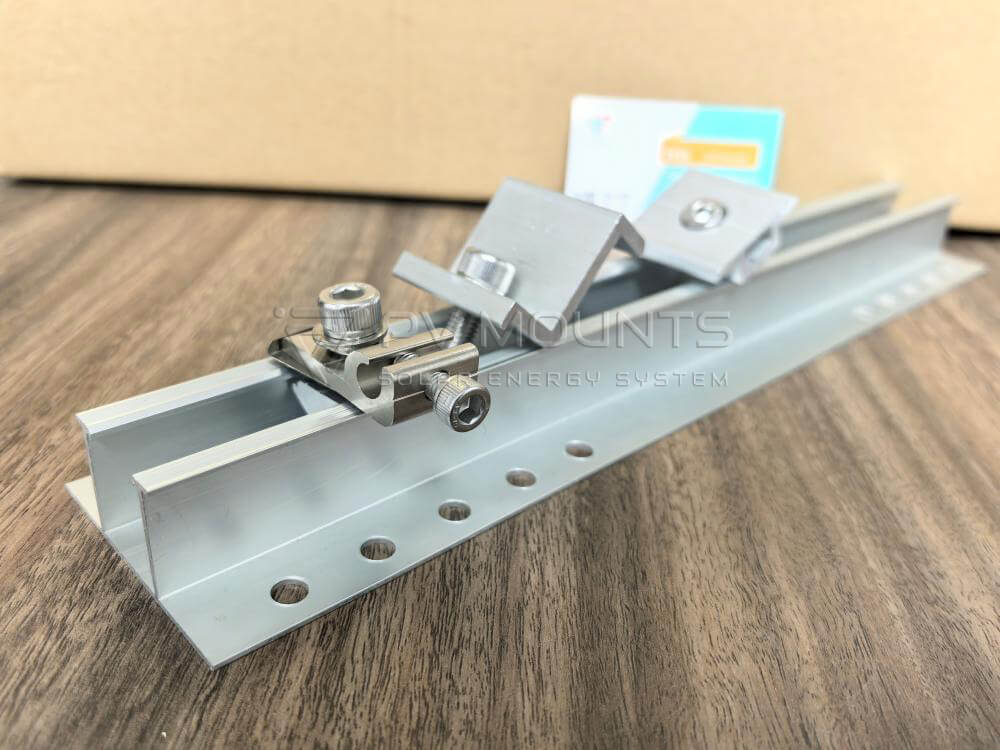
1.Introduction
Can mini rail be used on corrugated roofs?
Yes — mini rail systems can be used on corrugated metal roofs, but only if the system is specifically designed to match the roof profile.
In most cases, mini rail works well when it includes an integrated EPDM rubber pad for sealing and is fixed correctly on the crown of the sheet into structural supports. However, it may not be suitable for complex roof structures or high load conditions.
Many installation problems — such as leakage or poor stability — are not caused by the mini rail itself, but by using the wrong type of system for the roof.
2.Understanding the Core Challenge of Corrugated Roofs
Corrugated roofs are structurally different from other metal roofs.
They feature:
- Curved wave profiles
- Limited flat contact surface
- Uneven load distribution
👉 This leads to a key engineering issue:
❗A mounting system must adapt to the roof — not the other way around.
3.Can Mini Rail Be Used? Yes — If the System Is Designed for It
Mini rail systems can be used on corrugated roofs, but only when the system is properly designed to match the roof profile.
What Makes the Difference?
The key factor is how the rail interfaces with the roof surface.
4.Integrated EPDM Design: Why It Works on Corrugated Roofs
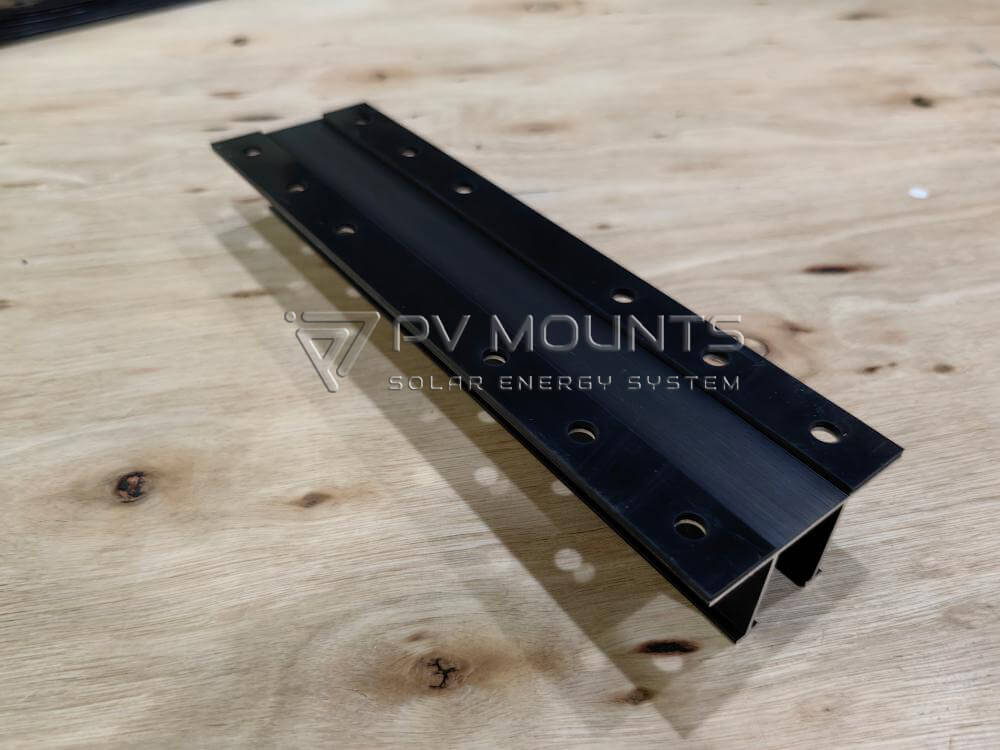
High-quality mini rail systems designed for corrugated roofs typically include an integrated EPDM rubber pad.
This design solves two critical problems:
4.1. Surface Contact on Curved Roofs
Corrugated sheets are not flat.
The EPDM layer helps the rail:
- Conform to the curved surface
- Improve contact stability
- Reduce stress concentration
4.2. Long-Term Waterproof Performance
Fixing points are the most vulnerable areas for leakage.
The EPDM pad:
- Seals around screw penetration
- Prevents water ingress
- Maintains elasticity over time
👉 This allows:
✅ Direct installation on the roof without additional base plates (when the system is properly designed)
5.When Mini Rail Is a Good Choice for Corrugated Roofs
Mini rail systems are suitable when:
✅ Project prioritizes cost and installation efficiency
- Less material compared to full rail systems
- Faster installation process
✅ Roof structure is regular and in good condition
- Consistent wave profile
- No deformation or damage
✅ Load conditions are moderate
- Standard wind load
- No extreme snow load
✅ Proper fixing into structural supports
Screws must always anchor into purlins, not just the sheet.
6.When Mini Rail May Not Be the Best Option
Mini rail is not always the optimal solution.
❌ Complex or irregular roof geometry
- Non-standard corrugated shapes
- Uneven surface
❌ High load requirements
- Strong wind zones
- Heavy snow conditions
👉 In these cases:
A full rail system may provide better structural performance.
❌ Poor roof condition
- Thin or aged metal sheets
- Corrosion issues
👉 Additional reinforcement may be required.
7.Common Mistakes When Using Mini Rail on Corrugated Roofs
Even with the right system, incorrect installation can cause problems.
❌ Fixing at the wrong position (valley instead of crown)
→ Increased leakage risk
❌ Not sealing properly
→ Water ingress over time
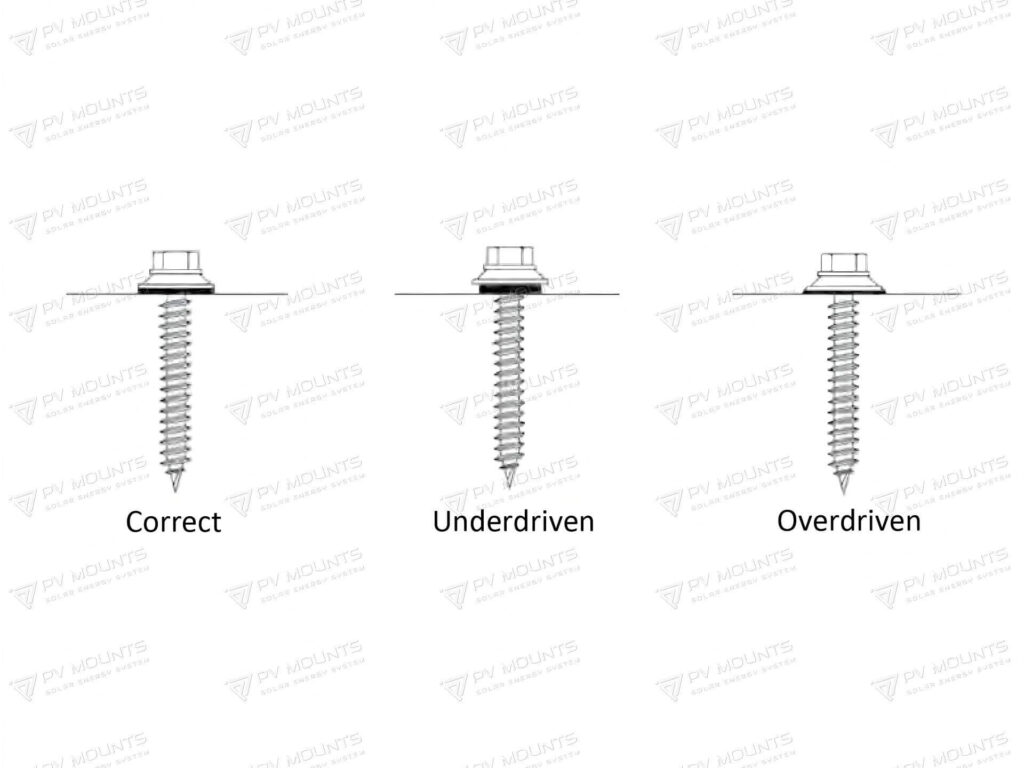
❌ Over-tightening screws
→ Damages EPDM sealing layer
8.Practical Decision Logic
Instead of asking:
“Can mini rail be used?”
A better question is:
“Is mini rail the most suitable solution for this project?”
Quick reference:
| Condition | Recommendation |
|---|---|
| Cost-sensitive project | Mini rail |
| Fast installation needed | Mini rail |
| Complex structure | Rail system |
| High load requirement | Rail system |
9.FAQ
Here are some of the most common questions about using mini rail systems on corrugated roofs:
Yes, mini rail can be installed directly on corrugated roofs if the system is specifically designed for the roof profile. Systems with integrated EPDM rubber pads can adapt to the curved surface and provide reliable sealing without additional base plates.
Not always. A base plate is not required when the mini rail includes a pre-formed base or EPDM interface. However, using flat-based systems without proper adaptation is not recommended.
Mini rail systems can be waterproof when installed correctly. Waterproof performance depends on proper sealing components such as EPDM pads, correct screw positioning on the crown, and appropriate tightening.
Mini rail should typically be fixed on the crown (top of the wave) rather than the valley. This reduces water exposure and improves long-term waterproof performance.
The main risks include poor surface contact, incorrect screw positioning, and inadequate sealing. These can lead to leakage or reduced structural stability if not properly addressed.
Mini rail may not be suitable for projects with irregular roof profiles, large purlin spacing, or high wind and snow load requirements. In such cases, a full rail system may be a better choice.
Yes, mini rail systems are generally more cost-effective because they use less material and allow faster installation. However, the overall cost benefit depends on project conditions.
10.Conclusion
Mini rail systems can be used on corrugated roofs — but only when the system is properly designed to adapt to the roof structure.
With an integrated EPDM interface, mini rail can:
- Provide stable contact on curved surfaces
- Ensure reliable waterproof sealing
- Simplify installation without additional components
❗The key is not just choosing mini rail — but choosing the right mini rail for your specific roof.
Not sure if your corrugated roof is suitable for a mini rail system?
Send us your roof profile or project details — we’ll help you evaluate the safest and most cost-effective solution.

 Hungarian
  English
  Spanish
  Portuguese
  Russian
  Arabic
  Romanian
  French