In Europe’s rapidly expanding rooftop solar market, metal roof structures are widely used in industrial, agricultural, and commercial buildings.
Corrugated steel roofs, trapezoidal sheet roofs, and sandwich panel systems require reliable and compliant mounting solutions.
Among these, solar metal roof hooks play a critical structural role.
Selecting CE certified, corrosion-resistant, and Eurocode-compliant metal roof hooks is essential for ensuring long-term safety, waterproof integrity, and regulatory compliance.
This guide explains how to evaluate and source solar metal roof hooks suitable for European projects.
What Is a Solar Metal Roof Hook?
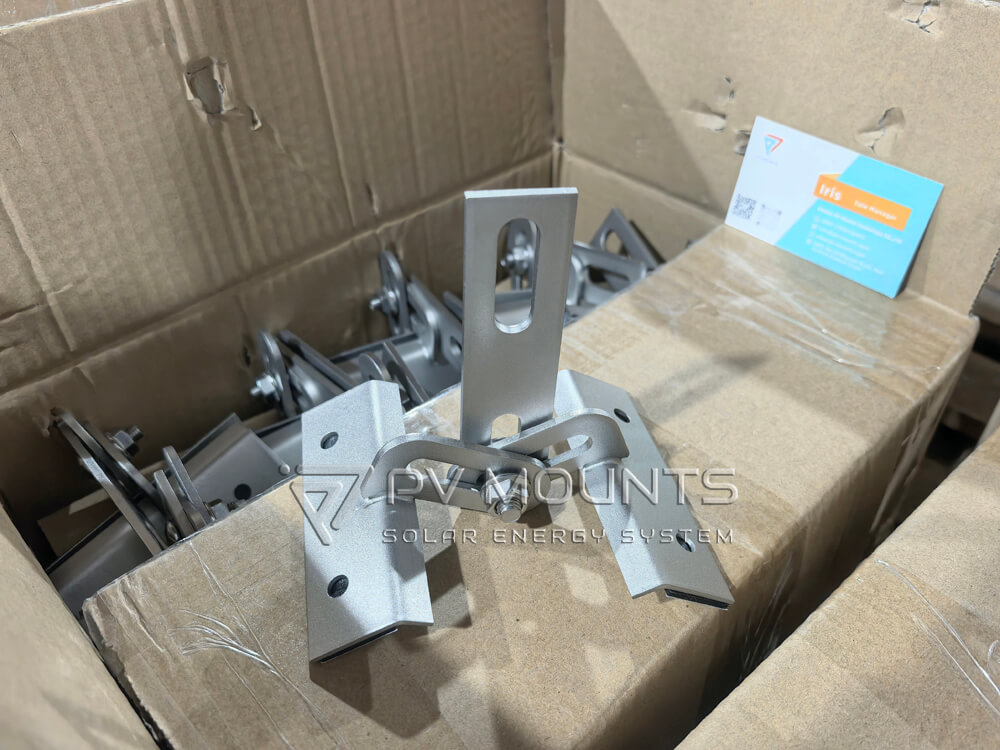
A solar metal roof hook (often referred to as a tin roof hook or metal roof bracket) is a mounting component fixed directly to steel sheet roofing structures.
It is commonly used for:
- Corrugated metal roofs
- Trapezoidal sheet roofs
- Sandwich panel metal roofs
- Agricultural buildings
- Industrial warehouses
Unlike standing seam clamps (which clamp without penetration), metal roof hooks are typically fixed through the sheet into the structural support beneath.
Proper design ensures:
- Structural load transfer
- Waterproof sealing
- Long-term corrosion resistance
What Is a Solar Metal Roof Hook?
A solar metal roof hook (often referred to as a tin roof hook or metal roof bracket) is a mounting component fixed directly to steel sheet roofing structures.
It is commonly used for:
- Corrugated metal roofs
- Trapezoidal sheet roofs
- Sandwich panel metal roofs
- Agricultural buildings
- Industrial warehouses
Unlike standing seam clamps (which clamp without penetration), metal roof hooks are typically fixed through the sheet into the structural support beneath.
Proper design ensures:
- Structural load transfer
- Waterproof sealing
- Long-term corrosion resistance
CE Certification and EU Compliance Requirements
For solar mounting products placed on the European market, compliance with EU safety regulations is required.
Metal roof hooks are typically assessed under:
- Machinery Directive 2006/42/EC
- EN ISO 12100 (Risk assessment and safety principles)
- Eurocode EN 1991-1-3 (Snow load)
- Eurocode EN 1991-1-4 (Wind load)
A CE certified solar metal roof hook demonstrates:
✔ Risk evaluation has been conducted
✔ Manufacturing process is controlled
✔ Product meets essential safety requirements
Buyers should verify:
- Certification body name
- Certificate number
- Validity dates
- Scope of covered products
- Online verification availability
Never rely only on a CE mark without documentation.
Wind & Snow Load Design for European Climate Conditions
Europe presents diverse environmental challenges:
- Heavy snow zones in Northern and Central Europe
- High wind coastal regions
- Large-span industrial roofs
Metal roof hooks must be engineered to withstand:
- Uplift forces
- Shear forces
- Combined load scenarios
Engineering considerations include:
- Base plate thickness
- Fastener type and pull-out strength
- Sheet deformation resistance
- Rail connection stability
Compliance with EN 1991 ensures the design accounts for site-specific wind and snow loads.
Professional suppliers should support structural calculation assistance when required.
SUS304 Stainless Steel: Essential for Corrosion Resistance
Metal roofs are often exposed to:
- Rainwater accumulation
- Condensation
- Coastal salt air
- Industrial pollution
Using SUS304 stainless steel ensures:
- Strong corrosion resistance
- Long-term structural stability
- Compatibility with steel roofing
- Reduced maintenance risk
Carbon steel or low-grade materials can corrode quickly, especially around screw penetration points, increasing the risk of leakage and structural degradation.
For 25+ year solar installations, corrosion resistance is critical.
Waterproofing: Preventing Leakage on Metal Roofs
One of the primary concerns for European installers is roof leakage.
A reliable solar metal roof hook design must:
- Use high-quality EPDM sealing washers
- Distribute pressure evenly across the sheet
- Avoid excessive sheet deformation
- Maintain proper screw torque
Installation best practices include:
- Fixing into structural purlins
- Using stainless steel fasteners
- Avoiding over-tightening
- Ensuring proper alignment
Waterproof safety depends on both product design and correct installation.
Metal Roof Hook vs L-Foot vs Standing Seam Clamp
In European projects, different solutions are used depending on roof type:
Metal Roof Hook
- Suitable for corrugated or trapezoidal sheets
- Penetrating installation
- Strong structural anchoring
L-Foot Bracket
- Simple solution for trapezoidal sheets
- Cost-effective
- Requires proper sealing
Álló varrás bilincs
- Non-penetrating
- Used on seam-type roofs
- Higher cost but preserves roof warranty
Choosing the correct system depends on roof structure and project requirements.
Metal Roof Hook vs L-Foot vs Standing Seam Clamp
In European projects, different solutions are used depending on roof type:
Metal Roof Hook
- Suitable for corrugated or trapezoidal sheets
- Penetrating installation
- Strong structural anchoring
L-Foot Bracket
- Simple solution for trapezoidal sheets
- Cost-effective
- Requires proper sealing
Álló varrás bilincs
- Non-penetrating
- Used on seam-type roofs
- Higher cost but preserves roof warranty
Choosing the correct system depends on roof structure and project requirements.
OEM & Custom Manufacturing for Metal Roof Projects
European roofs vary widely in profile shape and sheet thickness.
A professional manufacturer should support:
- Custom base plate dimensions
- Special height adjustments
- Reinforced thickness options
- Logo marking
- Packaging customization
- Project-specific solutions
Customization ensures compatibility while maintaining compliance and structural integrity.
How to Identify a Reliable Solar Metal Roof Hook Manufacturer
Before choosing a supplier, verify:
✔ CE certification with verifiable documentation
✔ EN 1991 load understanding
✔ SUS304 material transparency
✔ Real factory production capability
✔ Engineering documentation support
✔ Installation manuals
✔ Stock availability for standard models
A reliable manufacturer should respond to technical questions clearly — not just provide a quotation.
Common Risks of Low-Quality Metal Roof Hooks
Substandard products may cause:
- Early corrosion
- Sheet deformation
- Loose fastening
- Water leakage
- Structural instability under wind uplift
In commercial projects, these failures can result in high repair costs and reputation damage.
Frequently Asked Questions (FAQ)
Are solar metal roof hooks required to have CE certification in Europe?
Products placed on the EU market must comply with relevant directives. Buyers should always request documentation and verify validity.
Can metal roof hooks be used in coastal Europe?
Yes, if manufactured from SUS304 stainless steel with proper corrosion resistance.
How thick should a solar metal roof hook be?
Thickness depends on load requirements and design. Structural calculation based on EN 1991 is recommended.
How fast can standard models be delivered?
For in-stock models, dispatch within 1–3 working days is achievable.
Következtetés
Solar metal roof hooks are structural components that must combine:
✔ CE compliance
✔ EN 1991 load consideration
✔ SUS304 corrosion resistance
✔ Waterproof-safe design
✔ Fast delivery capability
✔ Custom manufacturing flexibility
For European industrial and commercial rooftop projects, selecting a compliant and reliable supplier ensures safety, durability, and on-time installation.
If you would like to verify certification, request engineering assistance, or check current stock availability for metal roof hooks, contact us for technical support.



 Hungarian
  English
  Spanish
  Portuguese
  Russian
  Arabic
  Romanian
  French