
1.Introduction
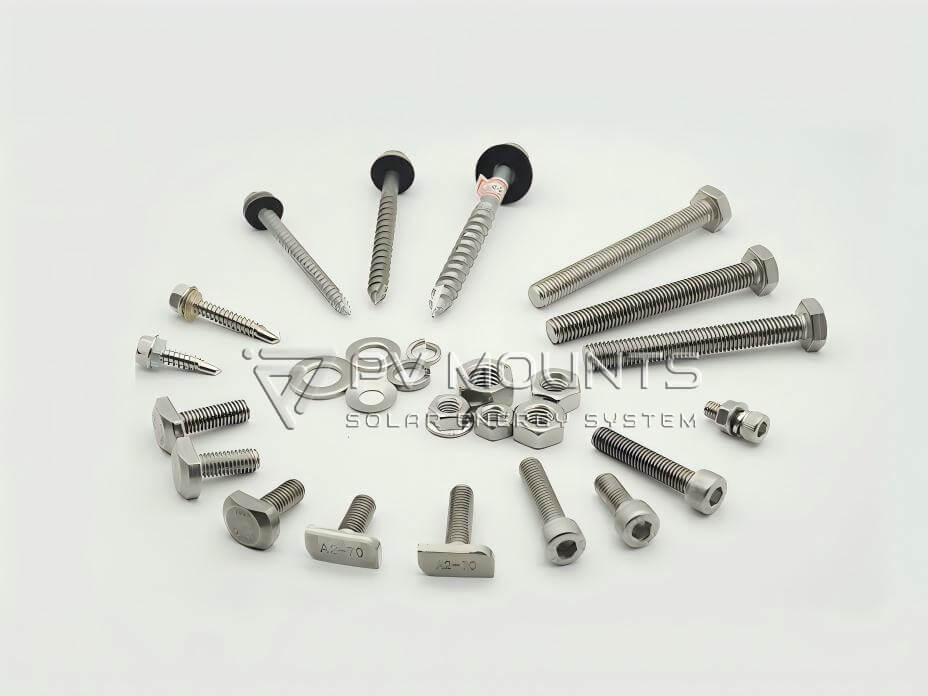
Solar mounting fasteners and hardware kits are critical components in photovoltaic (PV) systems, directly affecting structural stability, installation efficiency, and long-term system reliability.
In EPC solar projects, fasteners are not purchased as individual items—they are managed as part of a complete solar mounting hardware procurement system and BOM strategy.
Missing or incompatible fasteners can lead to installation delays, structural risks, and increased labor costs on-site.
This is why EPC contractors increasingly prefer standardized or pre-assembled solar mounting hardware kits from a reliable solar mounting hardware manufacturer.
At the same time, many EPC buyers also search for a PV mounting fasteners manufacturer to ensure stable quality and consistent supply across large-scale solar projects.
You can also explore our solar mounting hardware supplier China guide to understand sourcing strategies for EPC projects.
2.EPC Solar Mounting Fasteners Procurement Logic
This is especially important for companies looking for an integrated EPC solar mounting procurement solution, rather than sourcing individual components separately.
In EPC solar projects, fasteners are not selected individually.
They must be planned as part of a complete system-level procurement process, including:
- Roof type compatibility
- Structural load requirements
- Environmental corrosion conditions
- Standardization of solar mounting hardware kits
- Supplier or manufacturer sourcing strategy
👉 The objective is not only to purchase fasteners, but to ensure full system compatibility and installation efficiency across the entire PV project.
EPC Fastener Procurement Principle
For EPC solar projects, fastener selection should follow a simple rule:
Structural compatibility → Environmental suitability → Standardization → Supplier consolidation
This ensures long-term system stability, reduces procurement risk, and improves installation efficiency.All solar mounting hardware components work as a unified system rather than independent parts.
3.Solar Mounting Hardware Kit vs Individual Fasteners
Many EPC contractors prefer using a pre-assembled solar mounting hardware kit instead of sourcing fasteners individually.
Comparison:
| Factor | Hardware Kit | Individual Fasteners |
|---|---|---|
| BOM management | Simple | Complex |
| Installation efficiency | High | Low |
| Missing parts risk | Low | High |
| Supplier coordination | Single source | Multiple suppliers |
| Project risk | Low | High |
👉 Hardware kits significantly improve EPC procurement efficiency and reduce on-site installation risks. This is especially important for international EPC projects requiring stable supply from a solar mounting hardware supplier China.
4.Main Fastener Functions in PV Systems
Solar mounting fasteners perform several key mechanical functions in PV systems:
- Structural connection between components (bolts)
- Load distribution across mounting surfaces (washers)
- Anti-loosening and vibration resistance (nuts)
- Roof fixation in metal and tile systems (screws)
- Rail system connection and alignment (connectors)
👉 Each component plays a role in maintaining long-term structural integrity of the solar mounting system.
5.Solar Fasteners Types & Installation Guide🔩
Fasteners not only connect structural components but also require correct selection and installation to ensure long-term system reliability in PV mounting systems.
In EPC solar projects, fasteners must be selected based on structural compatibility and installed following proper engineering practices.
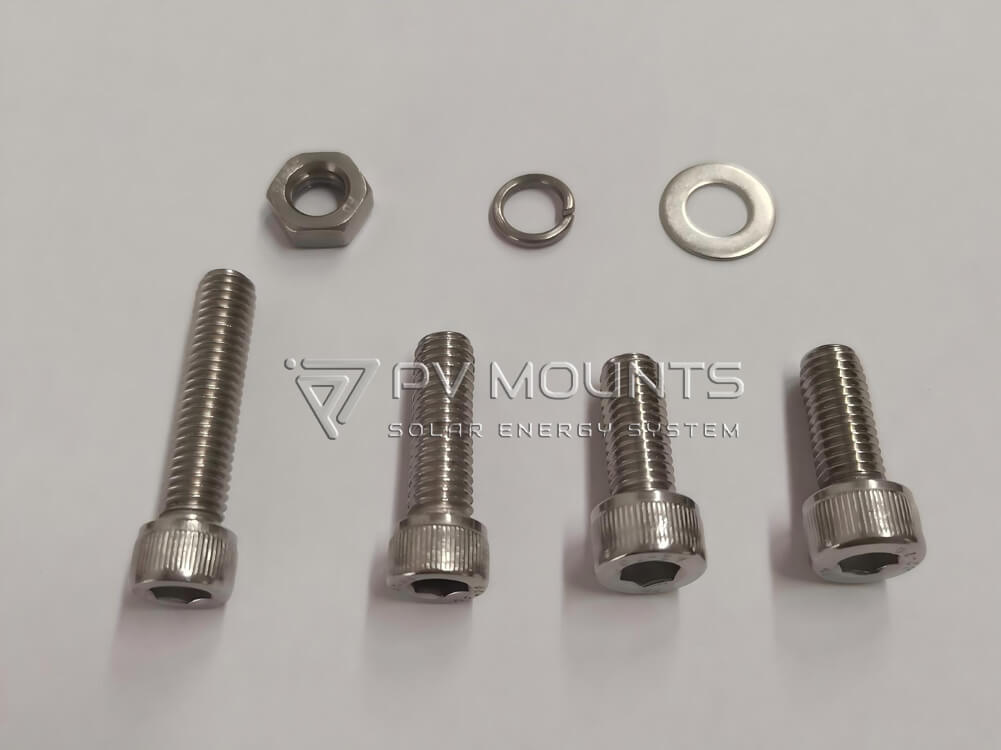
🔧 5.1. Solar Bolts (Structural Connection Fasteners)
Solar bolts are used for structural connections between mounting components such as rails, clamps, and roof hooks.
They are typically made from:
- SUS304 stainless steel (standard environments)
- SUS316 stainless steel (coastal or high-corrosion environments)
📌 Installation requirement:
- Ensure correct bolt length matches rail profile
- Use SUS304 or SUS316 stainless steel material
- Avoid mixing different material grades
👉 This ensures stable mechanical connection and electrical bonding continuity across the system.
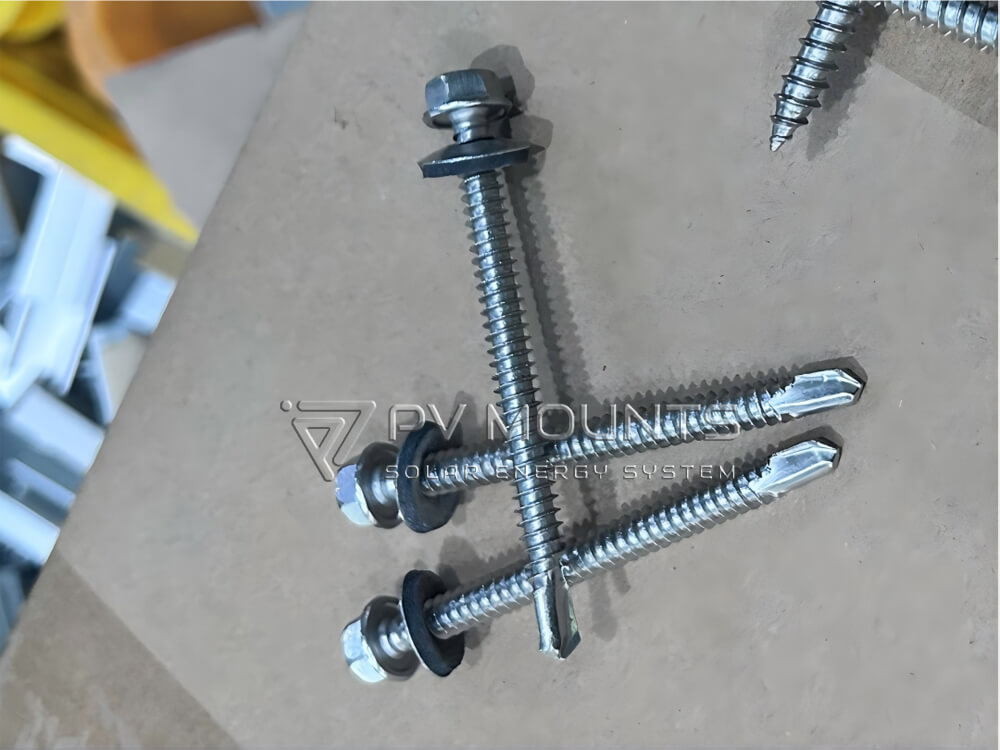
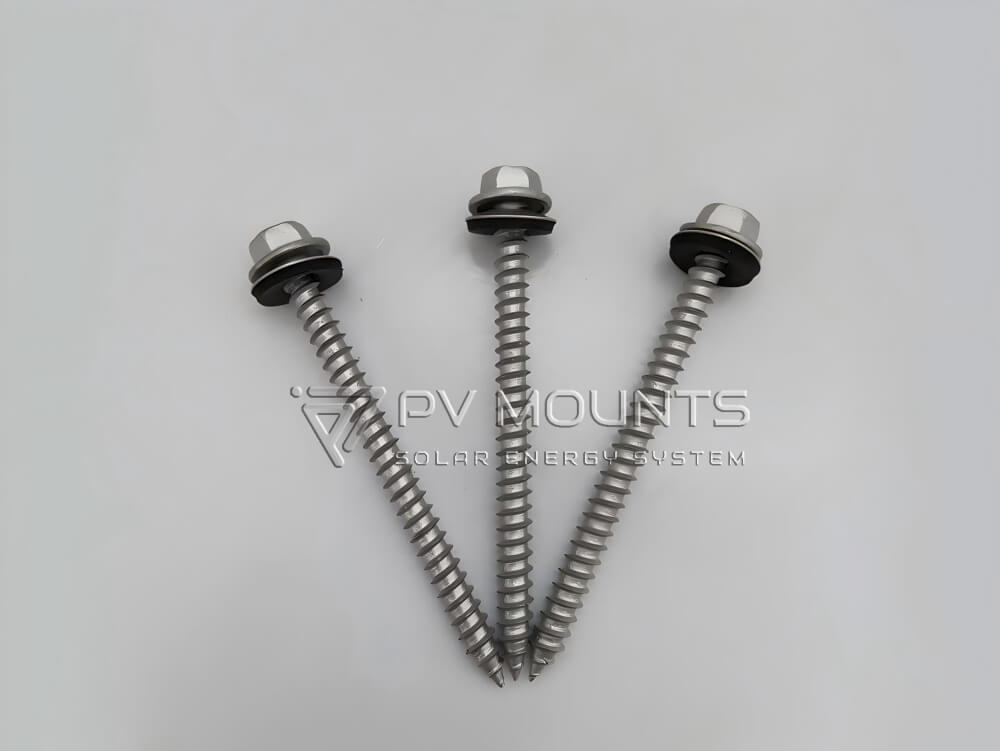
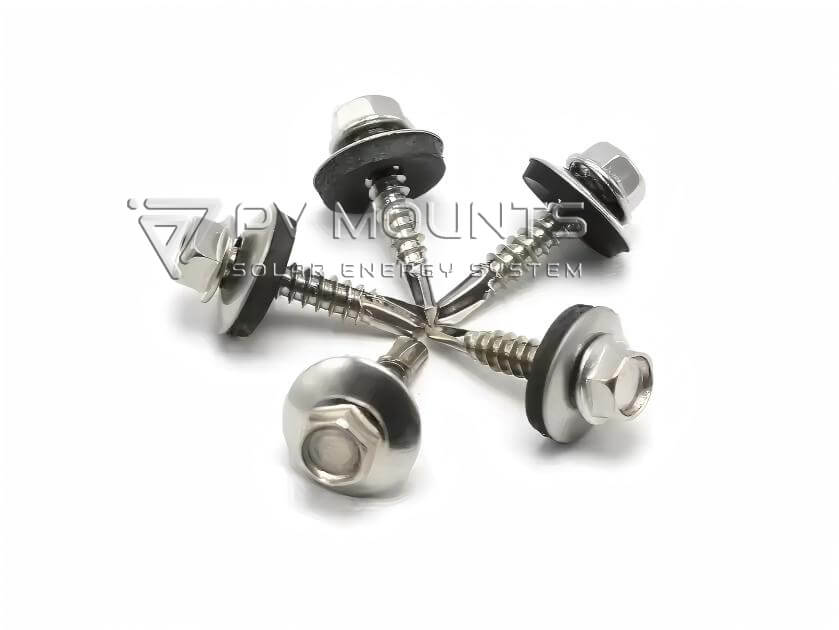
🔧 5.2. PV Mounting Screws (Roof Fixing Fasteners)
PV mounting screws are used for direct fixation on metal roof structures and steel frames.
They are commonly applied in:
- Trapezoidal metal roofs
- Corrugated roofs
- Steel support structures
📌 Installation requirement:
- Pre-drill if required by roof structure
- Maintain proper torque to avoid roof deformation
- Ensure corrosion-resistant coating or stainless steel grade
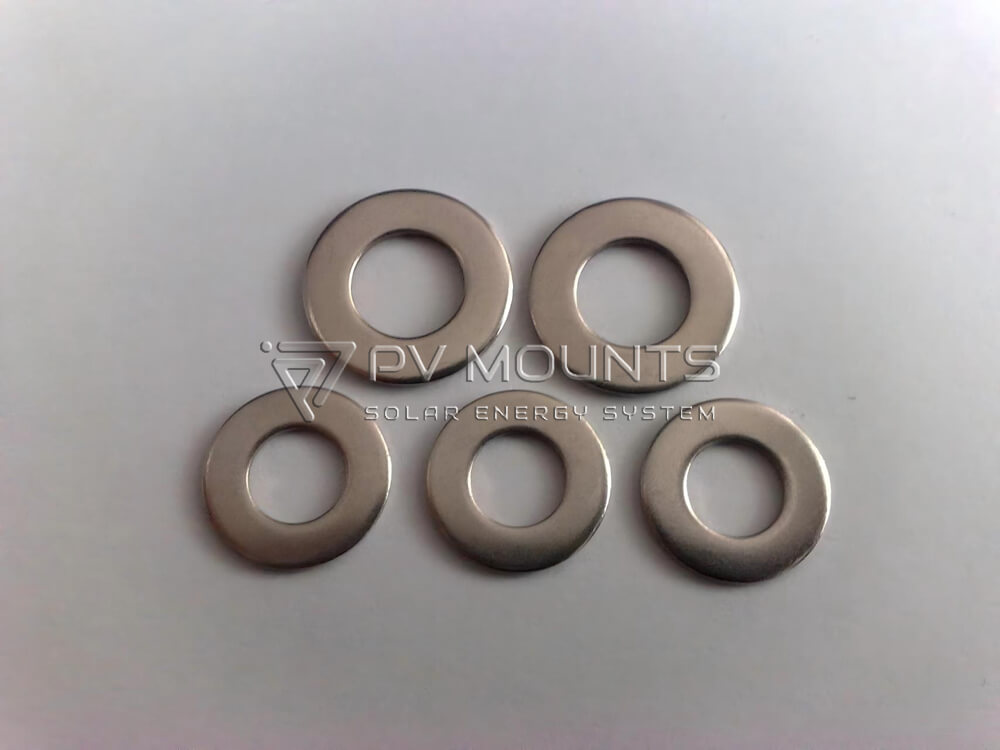
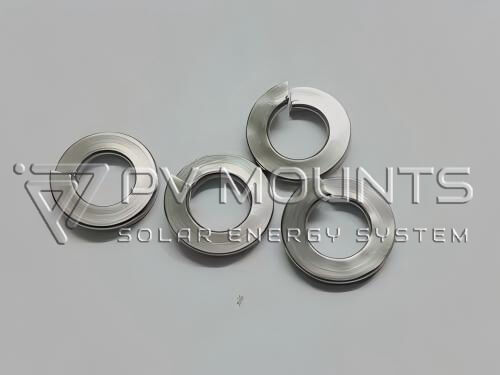
🔧 5.3. Washers & Locking Components (Stability Control)
Washers play a critical role in maintaining system stability and preventing loosening caused by vibration or wind loads.
- Flat washers → load distribution
- Spring washers → anti-loosening performance
📌 Installation requirement:
- Always install with correct torque specification
- Ensure full contact with anodized aluminum surfaces to maintain electrical continuity
⚠ Common Installation Mistakes in EPC Projects
- Using non-stainless steel fasteners in outdoor PV systems
- Over-tightening bolts causing rail deformation
- Ignoring corrosion environment (coastal vs inland)
- Mixing incompatible fastener materials
- Missing locking washers in high-vibration areas
6.EPC Solar Mounting Hardware System Components
A complete EPC solar mounting system typically includes:
- Roof attachment components (ganchos de teto, L-feet, clamps)
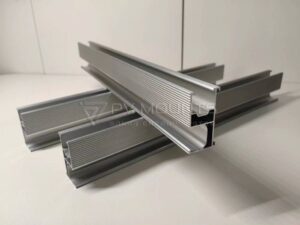
- Structural components (aluminum rails, rail splices)
- Module fixation components (mid clamps, end clamps)
- Electrical bonding components (grounding accessories)
- Cable management components (cable clips, holders)
- Drainage components (water drainage clips)
- Fasteners and hardware kits
👉 Fasteners connect all subsystems into one stable PV mounting structure.
Example: 500 kW Metal Roof Solar Projeto
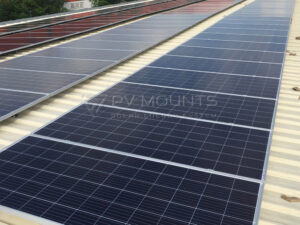
A typical 500 kW metal roof project may include the following hardware categories:
| Hardware Category | Typical Components |
|---|---|
| Roof Attachment | L Feet or Standing Seam Clamps |
| Structural Components | Aluminum Rails, Rail Splices |
| Module Fixation | Mid Clamps, End Clamps |
| Electrical Bonding | Grounding Clips, Bonding Washers |
| Gerenciamento de cabos | Clipes para cabos solares |
| Drainage | Water Drainage Clips |
| Fasteners | Stainless Steel Bolts, Nuts, Washers, Self-Tapping Screws |
Rather than purchasing these components separately, many EPC contractors prefer sourcing complete solar mounting hardware kits from a single manufacturer. This approach improves BOM accuracy, reduces procurement complexity, and minimizes the risk of missing components during installation.
Engineering Note: The final hardware configuration should always be confirmed according to roof type, rail cross-section, module dimensions, design loads, and local engineering standards before procurement.
7.Common Procurement Risks in Solar Mounting Fasteners
Improper fastener procurement is one of the most common causes of installation delays in EPC solar projects.
Typical risks include:
- Mixing different stainless steel grades (A2 vs A4 mismatch)
- Underestimating quantities in solar mounting BOM
- Using multiple solar mounting hardware suppliers
- Ignoring corrosion requirements for coastal environments
- Missing rail connection fasteners during procurement
👉 These risks are especially common in large-scale international EPC solar mounting projects.
8.Solar Mounting Hardware Supplier vs Manufacturer
For global EPC buyers searching for a reliable solar mounting hardware supplier China, choosing a direct manufacturer is often the most efficient sourcing strategy.
Solar Mounting Hardware Manufacturer advantages:
- Better consistency across fasteners and kits
- Faster customization for different roof conditions
- Stable stock availability for EPC projects
- No MOQ flexibility for mixed project requirements
- Easier BOM management and procurement control
👉 This is why many EPC contractors prefer sourcing directly from a solar mounting hardware manufacturer rather than multiple suppliers.
9.Stainless Steel Solar Mounting Accessories Selection
Most EPC projects use SUS304 stainless steel solar mounting accessories for standard outdoor environments.
For coastal, high-humidity, or highly corrosive environments, SUS316 stainless steel fasteners are recommended.
Stainless steel ensures:
- Long service life
- Resistência à corrosão
- Stable mechanical performance under outdoor conditions
10.Application Scenarios
Solar mounting fasteners and hardware kits are widely used in:
- Rooftop solar mounting systems
- Ground-mounted PV systems
- Solar carport structures
- Commercial and industrial solar projects
Different applications require different fastener configurations depending on structural load and installation conditions.
11.MONTAGENS FV Solar Mounting Hardware Solutions
PV MOUNTS is a global PV mounting fasteners manufacturer providing complete EPC solar mounting solutions.
PV MOUNTS provides complete EPC-oriented solar mounting solutions, including:
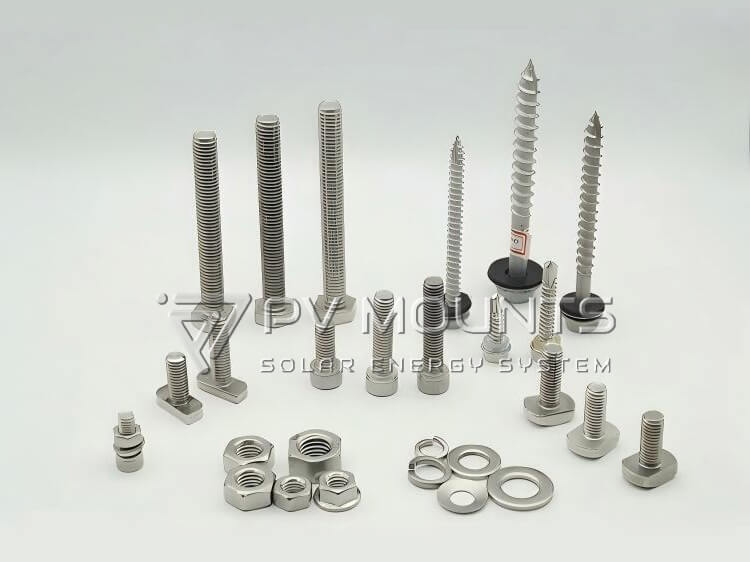
- Solar mounting fasteners and hardware kits
- Stainless steel solar mounting accessories
- Customized EPC BOM packaging solutions
- Roof, ground, and carport mounting systems
- OEM and private label manufacturing services
A reliable supplier should also be able to review roof drawings, recommend compatible hardware, optimize BOM configurations, and support customized solutions for special roof structures.
As a solar mounting hardware manufacturer, PV MOUNTS supports both standard and customized fastening solutions based on project requirements.
We also support full stainless steel solar mounting accessories supply for EPC projects worldwide.
12.FAQ
They are used to connect and secure photovoltaic mounting systems, ensuring structural stability and long-term reliability.
A pre-assembled set of fasteners including bolts, nuts, washers, and rail connectors used in PV mounting systems.
Because they improve BOM accuracy, reduce installation errors, and simplify solar mounting hardware procurement.
SUS304 and SUS316 stainless steel are widely used due to corrosion resistance and durability.
A manufacturer produces and controls quality directly, while a supplier may resell from multiple sources.
Yes, PV MOUNTS provides customized solar mounting hardware kits based on EPC project requirements.
Because it provides long-term corrosion resistance and structural reliability in outdoor environments.
Incorrect material selection, missing components, and inconsistent suppliers are the most common risks.
Most solar mounting hardware manufacturers offer flexible MOQ options depending on project size, especially for EPC and wholesale orders. Some suppliers support mixed fastener kits for project-based procurement.
Yes. Many manufacturers, including PV MOUNTS, provide pre-assembled fastener kits as part of a complete EPC solar mounting BOM to reduce installation time and procurement complexity.
The best approach is to verify roof drawings, standardize the hardware list, confirm material specifications, and source compatible components from a single manufacturer whenever possible. This helps reduce compatibility issues, simplify logistics, and improve installation efficiency.
Yes. Many EPC contractors prefer receiving complete hardware kits that include mounting accessories, grounding components, cable clips, drainage clips, and fasteners. Project-based packaging simplifies procurement, reduces missing parts, and speeds up installation.
Before procurement, EPC contractors should confirm roof type, rail dimensions, module specifications, environmental conditions, and mounting layout. Reviewing engineering drawings with the manufacturer helps avoid compatibility issues and reduces installation risks.
Yes. Many EPC contractors prefer working with a single manufacturer that can provide roof attachments, rails, clamps, grounding clips, cable clips, drainage clips, and fasteners as a complete procurement package. This simplifies BOM management and improves supply consistency.
As a professional solar mounting system manufacture, XIAMENT PV Mounts can supply all rooftop solar mounting hardware based on your project demand.
13.Conclusion
Solar mounting fasteners and hardware kits may be small components, but they are essential for the structural safety and long-term reliability of PV systems.
For EPC contractors, choosing a reliable solar mounting hardware manufacturer ensures better BOM accuracy, faster installation, long-term system performance, and reduced procurement risks.
Whether you are sourcing hardware for a commercial rooftop, industrial factory, carport, or utility-scale project, Xiamen PV MOUNTS engineering team can recommend compatible mounting hardware based on your roof drawings, environmental conditions, and project requirements.


 Portuguese
  English
  Spanish
  Russian
  Hungarian
  Arabic
  Romanian
  French