
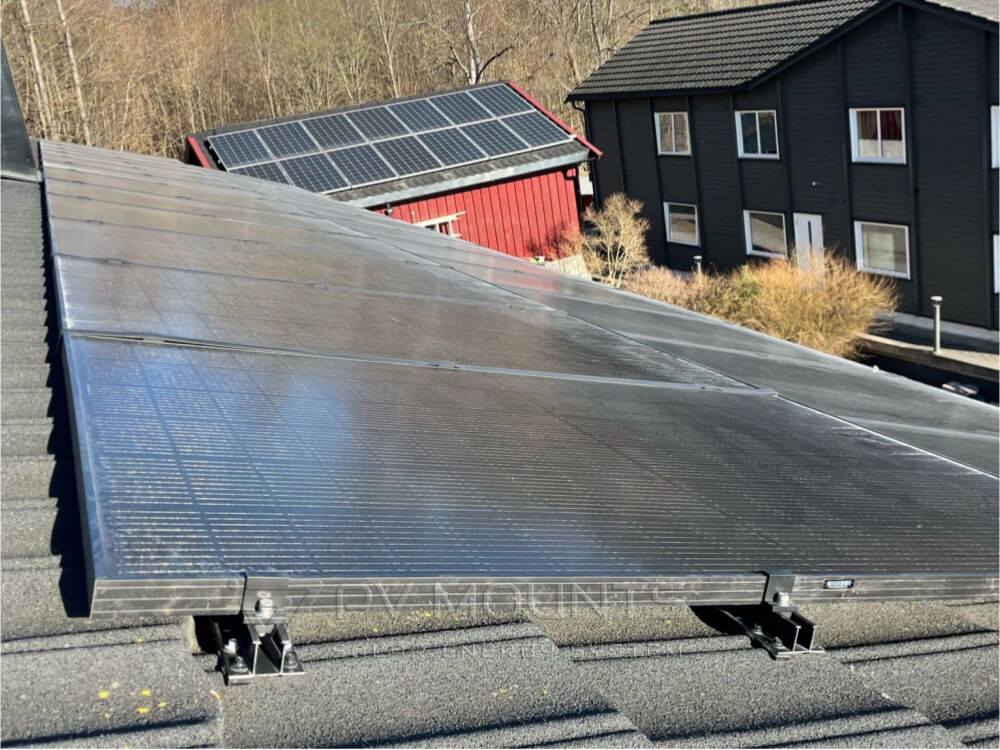
1.Introduction
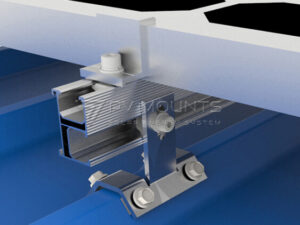
O mini rail solar mounting system is one of the most efficient and cost-effective solutions for installing solar panels on metal roofs. It’s short rail solar mounting solution. Compared with traditional long rail systems, mini rails reduce material usage, simplify installation, and improve overall project efficiency.
This guide will help you understand how mini rail systems work, when to use them, and how to choose the right solution for your solar projects.
2.What is a Mini Rail Solar Mounting System for Metal Roof?
A mini rail system (also called a short rail mounting system) is a rail-based solution that uses compact aluminum rails fixed directly onto the roof sheet, typically with self-drilling screws and waterproof sealing.
Unlike full-length rail systems, mini rails:
- Are installed under each solar panel section
- Do not run continuously across the roof
- Require fewer components and less labor
3.Key Components of a Mini Rail System
A standard mini rail system includes:
- Mini rail (short aluminum profile)
- Self-drilling screws with EPDM sealing
- Mid clamps & end clamps
- Optional grounding components
👉 The simplified structure is one of the main reasons for its popularity in commercial and industrial projects.
4.Advantages of Mini Rail Systems
1️⃣ Lower Material Cost
Mini rail systems use significantly less aluminum than traditional rails, reducing overall project cost.
2️⃣ Faster Installation
- Fewer rails to align
- Less cutting and adjustment
- Reduced solar mini rail installation time
👉 Ideal for EPC contractors handling large rooftop projects.
3️⃣ Excellent Waterproof Performance
With proper EPDM sealing and correct screw positioning, mini rail systems for metal roof provide reliable waterproof protection.
4️⃣ Lightweight Solution
Less material means:
- Lower roof load
- Easier transportation
- Better suitability for lightweight structures
5.Mini Rail vs Long Rail System
| Feature | Sistema de mini trilhos | Long Rail System |
|---|---|---|
| Material usage | Low | High |
| Installation speed | Fast | Moderate |
| Flexibility | Limited | High |
| Structural strength | Medium | High |
| Best for | Standard metal roofs | Complex layouts |
👉 Conclusion:
Mini rails are ideal for standardized metal roof projects, while long rails are better for complex or high-load conditions.
6.Suitable Roof Types for Mini Rail Systems
Mini rail systems are widely used on:
✔ Trapezoidal Metal Roofs
The most common application, using crest or valley fixing depending on design.
✔ Corrugated Metal Roofs
Suitable with proper bracket design and sealing methods.
✔ Sandwich Panel Roofs
Applicable when structural strength is verified.
👉 This makes mini rails a versatile solution across multiple industrial roofing types.
Mini rail systems are widely used on trapezoidal and corrugated metal roofs.
👉 Learn more about installation on trapezoidal roofs in our Trapezoidal Roof Mounting Guide
👉 Or explore solutions for curved sheets in our Corrugated Roof Mounting Guide
7.Installation Method Overview
Typical installation steps:
- Mark rail positions based on panel layout
- Fix mini rails using self-drilling screws
- Ensure EPDM sealing is properly compressed
- Install solar panels using mid/end clamps
- Complete grounding and inspection
👉 Correct screw positioning is critical to avoid leakage.
8.Limitations of Mini Rail Systems
While efficient, mini rail systems are not suitable for all scenarios:
- ❌ High snow load regions
- ❌ Large span structures requiring extra strength
- ❌ Projects requiring flexible rail alignment
👉 In such cases, a full rail system is recommended.
9.When Should You Choose a Mini Rail System?
Mini rail is the best choice when:
- You want to reduce project cost
- The roof structure is standard and uniform
- Installation speed is a priority
- Load conditions are moderate
10.FAQ for Rail-less Solar Mounting System
A mini rail solar mounting system is a compact mounting solution that uses short aluminum rails fixed directly onto metal roofs to support solar panels efficiently.
Mini rail systems are suitable for most metal roofs, including trapezoidal and corrugated sheets, but may not be ideal for standing seam roofs without clamps.
Mini rail systems reduce material cost, speed up installation, and require fewer components, making them more efficient for standard rooftop projects.
Mini rails are typically fixed using self-drilling screws with EPDM rubber washers to ensure both strong attachment and waterproof sealing.
Yes, when installed correctly with proper sealing components, mini rail systems provide reliable waterproof performance.
Screws are usually installed on the crest of trapezoidal or corrugated metal sheets to reduce the risk of water leakage.
Mini rail systems use short aluminum rails, while rail-less systems eliminate rails completely and rely on clamps or direct mounting methods.
Mini rail systems can handle moderate wind loads, but for high wind or snow load conditions, a full rail system is recommended.
Depending on the project, mini rail systems can reduce material and labor costs by 10–30% compared to traditional rail systems.
Mini rail systems are best for projects with standard roof structures, moderate loads, and where fast installation and cost efficiency are priorities.
10.Conclusion
The mini rail solar mounting system offers a perfect balance between cost, efficiency, and performance, making it a preferred solution for many metal roof solar projects.
For EPC contractors and distributors, choosing the right mounting system can significantly impact project success — and mini rails are often the smartest choice for fast and reliable installations.
For different roof structures, choosing the right mounting solution is essential.
You may also refer to:
– Trapezoidal Roof Solar Mounting
– Corrugated Roof Solar Mounting

 Portuguese
  English
  Spanish
  Russian
  Hungarian
  Arabic
  Romanian
  French