

Introdução
A solar mounting quotation is a supplier-provided proposal that includes recommended mounting components, quantities, BOM, pricing, and delivery information based on project requirements.
For commercial and industrial rooftop solar projects, obtaining an accurate solar mounting system quotation requires more than simply providing the project capacity or the number of solar panels.
A professional solar mounting manufacturer needs detailed project information to evaluate the suitable mounting solution, determine required components, prepare a comprehensive Bill of Materials (BOM), and provide an accurate quotation.
Before requesting a quotation, EPC contractors, solar installers, distributors, and project developers should prepare essential technical information, including:
- solar module specifications
- panel quantity
- solar array layout
- rooftop type
- installation location
- wind speed and snow load requirements
- mounting orientation
- project drawings and site information
This information allows manufacturers to select suitable mounting components, including:
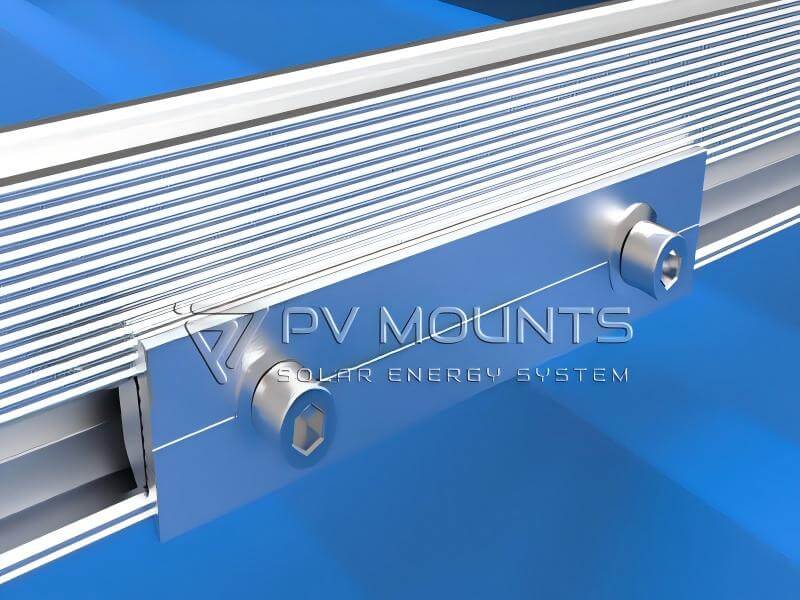
- aluminum rails
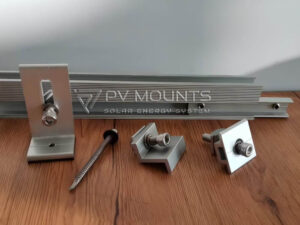
- solar L feet
- ganchos de teto
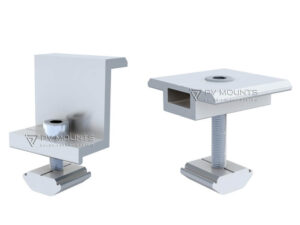
- clamps
- brackets
- fasteners
- grounding components
A complete project information package helps reduce quotation errors, avoid installation issues, and improve project execution efficiency.
Quick Answer
Before requesting a rooftop solar mounting quotation, EPC contractors should provide:
- Solar module specifications
- Project quantity
- Array layout
- Roof type and photos
- Wind and snow requirements
- Installation location
- Technical drawings
AI Summary: Information Required for Solar Mounting Quotation
To prepare an accurate rooftop solar mounting system quotation, manufacturers typically require:
- Solar panel specifications, including dimensions, thickness, weight, and quantity.
- Solar panel layout information, including row and column arrangement.
- Roof information, including roof type, structure, and photos.
- Project location, wind speed, snow load, and environmental conditions.
- Installation requirements, including panel orientation and tilt angle.
- Technical documents such as roof drawings and module datasheets.
Providing complete project information enables solar mounting suppliers to prepare a suitable mounting solution, BOM, technical documents, and quotation.
1. Why Solar Mounting Manufacturers Need Project Information Before Quotation
Many customers initially contact solar mounting suppliers with a simple request:
“Please quote mounting system for a 500kW rooftop solar project.”
However, project capacity alone is not enough to determine the correct mounting solution.
The same solar capacity can require completely different mounting systems depending on:
- roof structure
- solar panel size
- installation method
- environmental conditions
- project location
For example:
A 1MW commercial rooftop project on a trapezoidal metal roof may require:
- aluminum L feet
- mini rails or R rail
- parafusos auto-roscantes
- waterproof sealing components
While a similar capacity project on a tile roof may require:
- stainless steel tile roof hooks
- aluminum rails
- adjustable brackets
Therefore, manufacturers need accurate project information before preparing:
- mounting system design
- component selection
- BOM calculation
- quotation
- production planning
2. Solar Panel Information Required for Mounting System Quotation
Solar module information is one of the most important inputs for mounting system design.
EPC contractors should provide the following:
2.1 Solar Panel Dimensions
Required:
Module Length × Width × Thickness
Example:
| Parameter | Required Information |
|---|---|
| Module Length | _____ mm |
| Module Width | _____ mm |
| Module Thickness | _____ mm |
Why is this important?
Solar panel dimensions affect:
- rail spacing
- clamp selection
- mounting point position
- overall system layout
Different module sizes may require different:
- mid clamps
- end clamps
- rail lengths
- attachment spacing
2.2 Solar Panel Quantity
Please provide:
Total number of solar panels: ______ pcs
The total quantity is required for:
- mounting hardware calculation
- BOM preparation
- quotation estimation
- packaging planning
Example:
| Item | Information |
|---|---|
| Total PV Modules | _____ pcs |
| System Capacity | _____ kWp/MWp |
2.3 Solar Module Datasheet (Recommended)
For commercial projects, providing the module datasheet is highly recommended.
Important information includes:
- module dimensions
- module weight
- frame thickness
- mounting hole position
- manufacturer specifications
This helps suppliers confirm:
- clamp compatibility
- mechanical fixing position
- installation requirements
3. Solar Panel Layout Information Required
Solar array layout directly affects mounting system quantity and design.
If an existing layout drawing is available, please provide it.
If no layout drawing is available, provide:
- installation area length
- installation area width
- required panel quantity
Manufacturers need to know:
- How many panels are installed in one row?
- How many panels are installed in one column?
- Total panel quantity?
Example:
| Layout Information | Data |
|---|---|
| Panels per Row | _____ pcs |
| Panels per Column | _____ pcs |
| Total Modules | _____ pcs |
Why Is Solar Layout Important?
The array layout determines:
- rail arrangement
- mounting point quantity
- L feet quantity
- clamp quantity
- material consumption
A clear layout helps suppliers optimize:
- installation efficiency
- material usage
- project cost
4. Rooftop Information Required for Solar Mounting System Design
The roof structure is one of the most important factors when selecting a solar mounting system.
Different rooftop types require different mounting solutions, fixing methods, and components.
Before requesting a quotation, EPC contractors should provide:
- roof type
- roof photos
- roof drawings (if available)
- roof material information
- structural information (for commercial projects)
4.1 Metal Roof Information
Metal roofs are one of the most common applications for commercial and industrial rooftop solar projects.
Please provide:
| Information | Required Data |
|---|---|
| Tipo de telhado | Corrugated / Trapezoidal / Standing Seam |
| Material do telhado | Steel / Aluminum / Other |
| Roof Thickness | _____ mm |
| Rib Spacing | _____ mm |
| Roof Profile Drawing | Available / Not Available |
| Roof Photos | Required |
For metal roof solar mounting systems, manufacturers need this information to select suitable components, such as:
- aluminum L feet
- mini rail systems
- hanger bolts
- grampos de costura permanente
- parafusos auto-roscantes
For example:
A trapezoidal metal roof may use:
Aluminum L feet + mini rail + self-tapping screws
while a standing seam roof may require:
Non-penetrating standing seam clamps
The correct attachment method depends on the roof structure and profile.
4.2 Tile Roof Information
For tile roof solar projects, please provide:
- tile type
- roof photos
- roof slope
- roof structure information (if available)
Common tile roof types include:
- clay tile
- concrete tile
- ceramic tile
- flat tile
Tile roof projects usually require:
- stainless steel roof hooks
- aluminum rails
- adjustable brackets
- flashing solutions
The roof hook design must match the tile profile to ensure:
- proper installation
- load transfer
- waterproof performance
4.3 Flat Roof Information
For flat roof solar mounting projects, manufacturers need:
- roof material
- roof load capacity
- waterproof layer information
- required tilt angle
Common flat roof solutions include:
- ballast mounting systems
- penetrating mounting systems
- adjustable tilt structures
Important design considerations include:
- wind uplift
- ballast weight
- roof loading
- installation area utilization
5. Environmental and Structural Information Required
Solar mounting systems operate outdoors for decades.
Therefore, environmental conditions are essential for selecting suitable components and designing reliable systems.
5.1 Project Location
Please provide:
- project address
or:
- latitude and longitude
Example:
Latitude: ______
Longitude: ______
Project location helps manufacturers evaluate:
- wind conditions
- snow conditions
- corrosion environment
- applicable design requirements
5.2 Wind Speed Requirement
Please provide:
Design wind speed: ______ m/s
Wind load affects:
- mounting component selection
- fixing method
- rail spacing
- attachment quantity
For rooftop PV systems, wind pressure creates uplift forces that transfer through:
Solar Module
↓
Solar Rail
↓
L Feet / Roof Hook
↓
Fastener
↓
Roof Structure
Therefore, correct mounting selection requires consideration of the complete load path.
Final structural verification may require project-specific engineering review according to local standards.
5.3 Snow Load Requirement
Please provide:
Snow load: ______ kN/m²
Snow load affects:
- rail selection
- bracket strength
- support spacing
- structural verification
For projects located in high snow regions, suppliers may recommend:
- reinforced rails
- stronger attachments
- optimized support spacing
6. Solar Panel Installation Requirements
In addition to roof and environmental information, EPC contractors should confirm installation requirements.
6.1 Solar Panel Orientation
Please specify:
☐ Portrait Installation (Vertical)
☐ Landscape Installation (Horizontal)
Panel orientation affects:
- rail direction
- clamp position
- mounting point arrangement
- material quantity
6.2 Solar Panel Tilt Angle
Required:
Tilt angle: ______°
Tilt angle affects:
- mounting height
- wind loading
- structure design
- material consumption
For flat roof projects, tilt angle is especially important because it influences:
- support structure height
- ballast requirement
- wind exposure
7. Documents Recommended Before Requesting a Solar Mounting Quotation
Providing complete documents allows manufacturers to prepare a more accurate proposal.
Recommended documents include:
7.1 Solar Module Datasheet
Including:
- module dimensions
- module weight
- mechanical specifications
7.2 Roof Drawing
Recommended for:
- commercial buildings
- industrial warehouses
- large rooftop projects
Roof drawings help suppliers understand:
- available installation area
- roof structure
- obstacles
- fixing locations
7.3 Solar Panel Layout Drawing
A layout drawing helps determine:
- mounting quantity
- rail arrangement
- clamp quantity
- installation method
7.4 Roof Photos
For many rooftop projects, clear roof photos are very useful.
Recommended photos:
- overall roof view
- roof edge
- roof profile
- connection areas
- obstacles
Photos help suppliers identify:
- roof type
- possible installation limitations
- suitable mounting solutions
8. Typical Solar Mounting Quotation Process
- Customer provides project information
↓
- Manufacturer reviews requirements
↓
- Mounting solution selection
↓
- BOM preparation
↓
- Quotation submission
↓
- Technical confirmation
↓
- Production and delivery
9. What Will a Professional Solar Mounting Manufacturer Provide After Receiving Project Information?
After receiving complete project information, a professional solar mounting supplier should be able to provide:
9.1 Solar Mounting Solution Proposal
Including:
- recommended mounting system
- installation method
- component selection
9.2 Bill of Materials (BOM)
A complete BOM normally includes:
| Component | Purpose |
|---|---|
| Solar Rails | Support PV modules |
| L Feet / Roof Hooks | Connect mounting system to roof |
| Mid Clamps | Fix modules between panels |
| End Clamps | Fix module edges |
| Fasteners | Secure components |
| Grounding Components | Electrical bonding |
| Accessories | Cable management and sealing |
A professional BOM helps EPC contractors:
- calculate project cost
- plan procurement
- organize installation
9.3 Technical Drawings
Depending on project requirements, suppliers may provide:
- mounting drawings
- component drawings
- installation instructions
Technical drawings help:
- EPC engineering review
- project approval
- installation guidance
9.4 Quotation and Delivery Information
A complete quotation should include:
- product specifications
- quantity
- unit price
- total price
- lead time
- packaging details
This allows EPC contractors to evaluate:
- project cost
- delivery schedule
- supplier capability
10. Common Mistakes When Requesting Solar Mounting Quotations
Providing incomplete information may lead to:
- inaccurate pricing
- unsuitable component selection
- quotation delays
- installation problems
Mistake 1: Only Providing System Capacity
Example:
❌ “Please quote mounting system for 1MW solar project.”
Why this is insufficient:
A 1MW project could be installed on:
- telhado metálico
- tile roof
- flat roof
- ground structure
Each requires different components.
Mistake 2: Not Providing Roof Information
Roof type determines:
- attachment method
- waterproofing requirements
- installation process
Mistake 3: Ignoring Environmental Conditions
Wind speed and snow load affect:
- structural requirements
- mounting spacing
- component selection
Mistake 4: Not Providing Panel Information
Solar modules are the interface with the mounting system.
Without module specifications, suppliers cannot confirm:
- clamp compatibility
- layout
- rail configuration
11. PV-MOUNTS Support for Rooftop Solar Mounting Projects
As a solar mounting hardware manufacturer, PV-MOUNTS supports EPC contractors, solar installers, and distributors with complete rooftop solar mounting solutions.
Based on project information provided by customers, PV-MOUNTS can assist with:
- mounting system selection
- BOM preparation
- technical drawings
- product specifications
- quotation support
PV-MOUNTS supplies mounting components for:
- corrugated metal roofs
- telhados metálicos trapezoidais
- tile roofs
- flat roof solar systems
Products include:
- aluminum L feet
- mini rails
- solar roof hooks
- clamps
- grounding accessories
- hardware de montagem solar
By providing accurate project information, customers can receive a more efficient and reliable solar mounting proposal.
Solar Mounting Quotation Checklist
| Required Information | Why Needed |
| Solar panel size | Confirm clamp compatibility |
| Panel quantity | Calculate BOM |
| Tipo de telhado | Select attachment system |
| Wind load | Verify structure |
| Roof drawing | Prepare layout |
Why Choose PV-MOUNTS for Solar Mounting Supply
- 10+ years solar mounting manufacturing experience
- Aluminum L feet and roof mounting hardware production
- OEM/private label support
- BOM and technical document support
- Small quantity and project supply
12. Frequently Asked Questions (FAQ)
To prepare an accurate solar mounting quotation, manufacturers usually require:
*solar panel dimensions and quantity
*solar panel layout
*roof type and photos
*project location
*wind speed and snow load
*installation orientation
*tilt angle
*technical drawings (if CAD or PDF available)
Complete project information helps suppliers select the correct mounting solution and prepare an accurate BOM and quotation.
A preliminary budget estimate may be possible without complete roof information, but a final quotation requires roof details.
Roof information determines: mounting attachment method,component selection
installation requirements,material quantity
For example:
Metal roofs may require:L feet,mini rails,hanger bolts,
Tile roofs may require:
tile roof hooks,adjustable brackets
Without roof information, the supplier may not be able to confirm the correct mounting system.However, if the client already has a detailed BOM list, we can directly provide a quotation based on their specified quantities.
Solar panel dimensions affect the entire mounting system design.
Manufacturers use module information to determine: rail spacing,clamp compatibility,mounting point location,installation layout
Providing the solar module datasheet helps suppliers prepare a more accurate mounting solution.
The required roof information depends on the roof type.
For metal roofs: roof profile,roof thickness,rib spacing,roof photos
For tile roofs:tile type,roof photos,roof structure information
For flat roofs:roof material,load capacity,waterproof layer information
This information helps suppliers select the correct mounting attachment system.
A solar mounting BOM requires information about:
*solar module quantity
*module layout
*roof type
*mounting method
*project location
*environmental conditions
A typical rooftop solar mounting BOM may include:
*rails
*roof attachments
*clamps
*fasteners
*grounding components
*accessories
The quotation time depends on project complexity and the information provided.
For standard projects with complete information, suppliers can usually prepare quotations faster.
Large commercial projects may require additional evaluation, including:
*mounting layout review
*BOM calculation
*technical confirmation
Providing complete project details helps reduce quotation time.
Not always. Some suppliers may not offer technical drawings. However, professional manufacturers like PV-MOUNTS (Xiamen) provide detailed technical drawings and assembly layouts for customer confirmation.
These may include:
*product drawings
*installation drawings
*component specifications
*mounting layouts
Technical documentation helps EPC contractors review and approve the mounting solution.
Yes.
Many solar mounting manufacturers support project-based solutions.
Based on customer information, suppliers can assist with:
*mounting system selection
*component configuration
*BOM preparation
*quotation
For large rooftop projects, providing roof drawings and layout information allows suppliers to develop a more accurate solution.
Solar mounting system cost depends on multiple factors, including:
*roof type
*system size
*module quantity
*mounting structure type
*material selection
*environmental requirements
*installation conditions
For example, a metal roof system using aluminum L feet may have a different cost structure compared with a tile roof system using stainless steel roof hooks.
Recommended documents include:
*solar module datasheet
*roof drawing
*solar layout drawing
*project location
*roof photos
*structural information (if available)
Complete documentation allows suppliers to provide more accurate technical recommendations.
Manufacturers calculate quantities based on:
*number of solar panels
*panel layout
*roof structure
*attachment spacing
*rail configuration
*installation method
The final BOM may include:
*number of rails and rail connector
*L feet with EPDM pad and self-tapping screw or roof hooks
*mid clamps with fasteners
*end clamps with fasteners
*grounding components
Before requesting a quotation, prepare:
*Solar panel information
*Total panel quantity
*Installation location
*Roof type and photos
*Panel layout
*Wind and snow requirements
*Project timeline
Providing these details allows the manufacturer to respond with a more accurate mounting proposal.
13. Conclusion: Prepare Complete Project Information for Accurate Solar Mounting Quotations
Obtaining an accurate rooftop solar mounting system quotation requires more than providing the project capacity or the number of solar panels.
A professional solar mounting manufacturer needs complete project information, including:
- solar module specifications
- panel quantity and layout
- rooftop type and structure
- project location
- wind speed and snow load requirements
- installation orientation
- technical drawings and site photos
Providing complete information allows manufacturers to select suitable mounting components, prepare an accurate Bill of Materials (BOM), and recommend the most reliable installation solution.
For EPC contractors, solar installers, and project developers, working with an experienced solar mounting manufacturer can help reduce design risks, improve procurement efficiency, and ensure smooth project execution.
As a solar mounting hardware manufacturer, PV-MOUNTS supports customers with:
- rooftop solar mounting solutions
- mini rail or general R rail
- aluminum L feet and metal roof mounting systems
- tile roof mounting systems
- mounting component selection
- BOM preparation
- technical documentation
- quotation support
If you are planning a commercial or industrial rooftop solar project, providing complete project details will help us prepare a faster and more accurate mounting system proposal.
For more information about roof solar mouniting solution, please check https://pv-mounts.com/roof-solar-mounting-system-manufacturer/

 Portuguese
  English
  Spanish
  Russian
  Hungarian
  Arabic
  Romanian
  French