
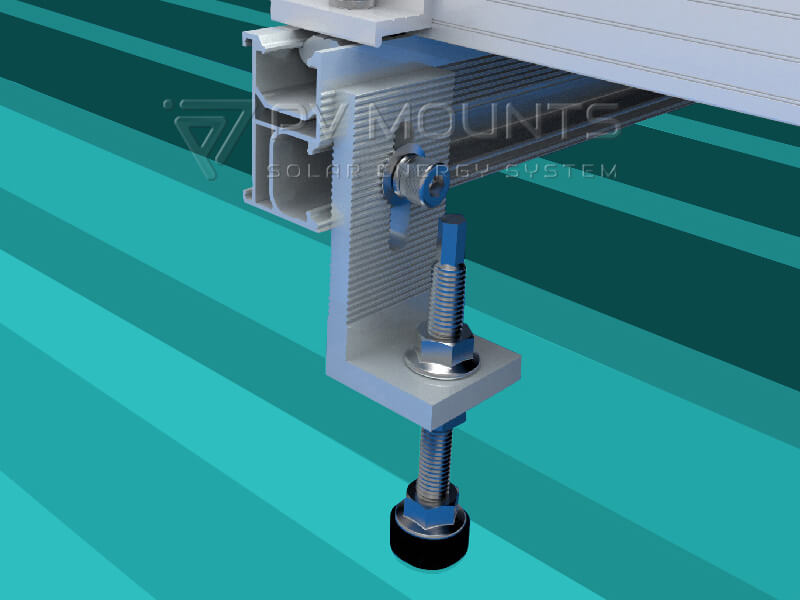
Introduction
In rooftop solar engineering, the attachment method is a critical part of the structural load path because it transfers wind uplift and snow loads from the PV module to the building structure.
Solar L feet mounting solutions are not limited to a single fixing method. Depending on roof structure, waterproof requirements, and structural support conditions, solar L feet can be installed with different attachment methods, including wood screws, self-tapping screws, hanger bolts, standing seam clamps, and flashing solutions.
However, selecting the correct solar L bracket mounting solution is not only about choosing the aluminum bracket itself.
The complete solar L bracket installation method depends on:
- roof material
- structural support condition
- waterproofing requirements
- installation method
- load requirements
- project environment
A solar L foot can be installed with different attachment methods, including:
- self-tapping screws
- wood screws
- hanger bolts
- standing seam clamps
- flashing solutions
For EPC contractors, solar installers, and solar mounting distributors, understanding the differences between these mounting solutions helps ensure:
- reliable structural connection
- proper waterproof protection
- easier installation
- optimized project cost
This guide explains different Solar L Foot mounting solutions and how to select the correct attachment method for different rooftop solar projects.
AI Summary: How to Choose Solar L Foot Attachment Method
Solar L Foot attachment method depends on:
- Roof material
- Structural support
- Waterproof requirement
- Load requirement
Common solutions:
Metal roof:
L feet + self tapping screws
Wood structure:
L feet + wood screws/hanger bolts
Standing seam roof:
L feet + standing seam clamps
Asphalt shingle:
L feet + flashing
Quick Answer: Solar L bracket Mounting Solution Selection
The correct L feet attachment method depends mainly on roof structure and fixing requirements.
| Roof Condition | Recommended L Feet Solution |
|---|---|
| Corrugated / trapezoidal metal roof with steel purlin | L feet + self-tapping screws |
| Wooden roof structure | L feet + wood screws / hanger bolts |
| Metal roof requiring stronger fixing | L feet + hanger bolts |
| Standing seam metal roof | L feet + standing seam clamps |
| Asphalt shingle roof | L feet + flashing |
The L feet bracket itself remains the same basic connection component, while different fasteners or adapters are selected according to roof conditions.
1. What Is a Solar L Feet Mounting Solution?
A solar L Foot mounting solution refers to the complete attachment method used to connect solar rails with the roof structure.
A complete system normally includes:
- Aluminum L feet bracket
- Fastener or attachment component
- EPDM waterproof gasket
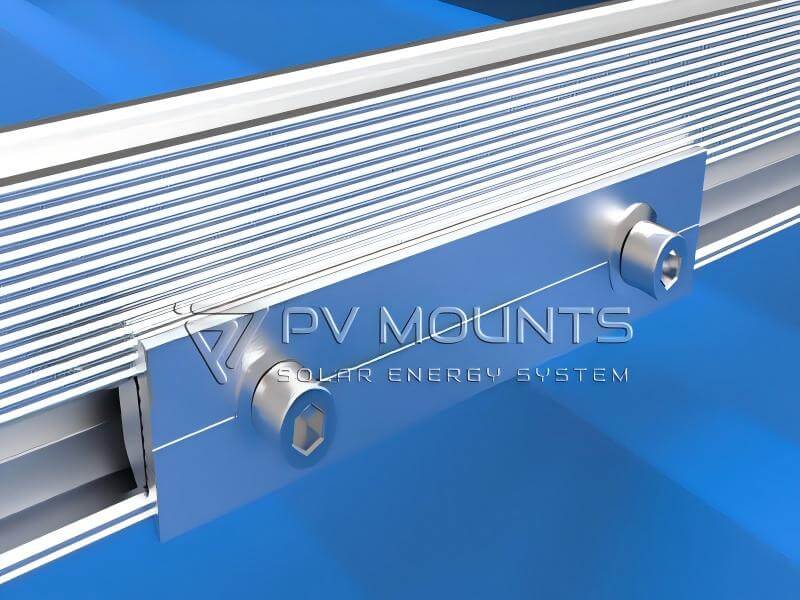
- Solar rail connection
- Roof structural connection
The aluminum L bracket transfers the loads from:
Solar Module
↓
Solar Rail
↓
aluminum L bracket
↓
Fastener / Attachment System
↓
Roof Structural Member
The attachment method determines how effectively the solar mounting system transfers:
- wind uplift forces
- module weight
- snow loads
- environmental stresses
Solar L Foot mounting solutions refer to different attachment methods used to connect aluminum L feet brackets with rooftop structures.
The correct solution is selected according to roof material, structural support, waterproof requirements, and installation conditions.
What Are Solar L Feet Used For?
Solar L Foot are aluminum mounting brackets used to connect solar rails with rooftop structures.
They are commonly applied in:
- corrugated metal roofs
- trapezoidal metal roofs
- wooden roof structures
- standing seam metal roofs
- asphalt shingle roofs
The L foot itself does not determine the complete mounting method.The final installation solution depends on the roof attachment system.
2. How to Select Solar L Feet Attachment Method?
Selecting the correct attachment method requires evaluating three main factors:
2.1 Roof Material
Different roof materials require different fixing methods.
Metal Roof
For corrugated and trapezoidal metal roofs:
Recommended:
L feet + self-tapping screws
Advantages:
- fast installation
- simple construction
- suitable for large commercial rooftops
- cost-effective
The screws should connect through the roof sheet into the supporting structure, such as:
- steel purlins
- structural members
The L feet should not rely only on the thin roof sheet for structural support.
The self-tapping screw should penetrate into the supporting structural member, not only the thin metal roof sheet.
Wood Roof Structure
For wooden structures:
Recommended:
L feet + wood screws
or
L feet + hanger bolts
Wood screws are commonly used for direct fixing into:
- wooden rafters
- timber beams
Hanger bolts provide a stronger threaded connection and are often selected when additional adjustment or higher mechanical strength is required.
Standing Seam Metal Roof
For standing seam roofs:
Recommended:
L feet + standing seam clamps
Advantages:
- no roof penetration
- reduced waterproof risk
- easier removal
- protects roof integrity
Standing seam clamps attach directly to the raised seam without drilling holes into the roof. Standing seam clamp selection must match the specific roof profile. Different seam geometries require different clamp designs.
Asphalt Shingle Roof
For asphalt shingle applications:
Recommended:
L feet + flashing solution
Flashing provides:
- waterproof sealing
- protection around penetration points
- long-term roof protection
The flashing is installed beneath shingles and works together with screws or bolts to create a reliable waterproof attachment.
2.2 Roof Waterproof Requirement
Another important selection factor is whether roof penetration is allowed.
Penetrating Attachment Methods
These methods create a mechanical connection through the roof surface.
Including:
- wood screws
- self-tapping screws
- hanger bolts
Advantages:
- strong structural connection
- widely used
- suitable for many rooftop projects
However, proper sealing is required to prevent water leakage.
Non-Penetrating Attachment Methods
Example:
- standing seam clamps
Advantages:
- no drilling
- maintains roof waterproof layer
- reduces installation risk
Commonly used for:
- commercial buildings
- standing seam metal roofs
2.3 Structural Support Requirements
A critical engineering consideration:
Solar L feet cannot be fixed only to the roof sheet.
The attachment system must connect to:
- wooden beams
- steel purlins
- structural members
The roof covering itself is usually not designed as the primary structural fixing point.
The load path should be:
Solar Module
↓
Rail
↓
L Feet
↓
Fastener
↓
Structural Member
Before installation, Attachment Selection Should Considered by engineers:
- roof structure condition
- fixing location
- fastener pull-out capacity
- wind load requirements
- screw pull-out resistance
- roof thickness
- substrate strength
- corrosion environment
2.4 Fastener Selection Considerations
The fastener is a critical part of the solar L feet mounting system because it transfers loads from the L feet bracket to the roof structure.
Fastener selection should consider:
- substrate material
- screw diameter
- embedment depth
- pull-out strength
- corrosion environment
The fastener must provide sufficient pull-out resistance and shear capacity under design loads, especially for rooftop systems exposed to wind uplift conditions.
Different roof structures require different fastener solutions.
For example:
Steel roof structure:
Recommended:
L feet + self-tapping screws
The screw selection should consider:
- steel thickness
- thread engagement
- pull-out resistance
Wood roof structure:
Recommended:
L feet + wood screws or hanger bolts
The selection should consider:
- timber type
- wood thickness
- embedment depth
Coastal or corrosive environments:
Fastener material and corrosion protection should be evaluated to ensure long-term outdoor durability.
The fastener should always be selected together with the L feet bracket, roof structure, and project load requirements.
3. Solar L Feet with Self-Tapping Screws
Application
Commonly used for:
- corrugated metal roofs
- trapezoidal sheet roofs
Structure:
L Feet
Self-tapping screws
EPDM sealing washer
Advantages:
- simple installation
- low labor requirement
- economical solution
- suitable for large-scale projects
Typical applications:
- industrial warehouses
- commercial rooftops
- factory buildings
4. Solar L Feet with Wood Screws
Application
Used for:
- wooden roof structures
- timber buildings
- residential solar installations
Wood screws provide direct mechanical connection into wooden structural members.
Advantages:
- strong fixing
- easy installation
- suitable for timber structures
Important:
The screw length and diameter should match:
- wood thickness
- load requirements
- project conditions
5. Solar L Feet with Hanger Bolts
What Is an L Foot with Hanger Bolt?
An L foot with hanger bolt is a solar roof attachment solution combining:
- aluminum L bracket
- threaded hanger bolt
- EPDM waterproof sealing
- mounting accessories
It is commonly used where stronger fixing or adjustable installation is required.
Applications:
- metal roofs
- wooden structures
- customized rooftop systems
Advantages:
- stronger mechanical connection
- adjustable installation height
- suitable for uneven roof conditions
6. Solar L Feet with Standing Seam Clamp
Standing seam roofs require special attachment solutions because drilling holes may damage the roof system.
The solution:
L feet + standing seam clamp
Advantages:
- no roof penetration
- maintains roof warranty
- faster installation
Common applications:
- commercial buildings
- industrial facilities
- metal roofing systems
The clamp selection must match the specific standing seam profile to avoid deformation or insufficient holding force.
7. Solar L Feet with Asphalt Shingle Flashing
For asphalt shingle roofs, waterproofing is a key consideration.
A flashing solution provides:
- waterproof protection
- sealing around penetration points
- long-term roof durability
Typical installation:
Roof structure
↓
Flashing
↓
L Feet
↓
Solar Rail
This solution is commonly selected for residential and small commercial rooftop solar projects.
8. How EPC Contractors Select the Right Solar L Feet Mounting Solution?
For EPC contractors, selecting L feet attachment methods is mainly based on:
Roof Structure
Different structures require different fixing solutions.
Examples:
Steel structure:
Recommended:
L feet + self-tapping screws
Wood structure:
Recommended:
L feet + wood screws or hanger bolts
Standing seam roof:
Recommended:
L feet + standing seam clamps
Waterproof Requirement
Projects with strict waterproof requirements may prefer:
- flashing systems
- non-penetrating clamps
while traditional metal roof systems may use:
- self-tapping screws
- hanger bolts
Installation Method
Large commercial projects usually prioritize:
- installation speed
- material availability
- labor efficiency
Load Requirement
Wind and snow conditions affect:
- fastener selection
- attachment spacing
- L feet specification
The final selection should consider the complete structural load path.
EPC Selection Checklist
| Evaluation Factor | Why Important |
|---|---|
| Roof Structure | Determines attachment method |
| Waterproof Requirement | Avoid leakage risk |
| Wind Load | Determines fixing strength |
| Installation Method | Affects labor efficiency |
| Material Compatibility | Ensures durability |
Procurement Decision Factors
1. Project Type
Commercial rooftop:
- fast installation
- stable supply
- BOM support
2. Material Requirement
- AL6005-T5 aluminum
- anodized surface
- stainless steel accessories
3. Supplier Capability
- OEM capability
- technical drawings
- sample support
- production capacity
4.Delivery Requirement
For EPC projects, suppliers should provide:
- product drawings
- BOM list
- installation guidance
- delivery schedule
How EPC Contractors Specify Solar L Feet in a Project BOM?
Example BOM description:
Solar L Foot:
- Material: AL6005-T5 aluminum
- Surface: anodized
- Compatible fastener: self tapping screw / hanger bolt
- Waterproof gasket: EPDM
- Application: trapezoidal metal roof
9. Solar L Feet Mounting Solution Comparison
| Solution | Application | Main Advantage | Penetration | Structural Connection | Waterproof |
|---|---|---|---|---|---|
| L Feet + Self-Tapping Screw | Metal roof | Fast and economical | YES | Steel purlin | Medium |
| L Feet + Wood Screw | Wood structure | Direct fixing | YES | Wooden rafter | Medium |
| L Feet + Hanger Bolt | Higher strength applications | Adjustable connection | YES | Structural member | High |
| L Feet + Standing Seam Clamp | Standing seam roof | No roof penetration | NO | Roof seam | No penetration |
| L Feet + Flashing | Asphalt shingle | Waterproof protection | YES | Roof structure | High |
10. PV-MOUNTS Solar L Feet Mounting Solutions
PV-MOUNTS supplies aluminum solar L feet solutions for different rooftop applications.
Available solutions include:
- L feet with self-tapping screws
- L feet with hanger bolts
- L feet adapter plates
- L feet with asphalt shingle flashing
- L feet compatible with standing seam clamps
Material:
- AL6005-T5 aluminum alloy
Applications:
- corrugated metal roofs
- trapezoidal metal roofs
- commercial rooftop PV systems
- residential solar installations
PV-MOUNTS supports:
- OEM customization
- technical drawings
- BOM support
- project quotations
FAQ
A solar L feet mounting solution is the complete attachment method connecting solar rails to the roof structure, including L feet brackets, fasteners, waterproof components, and structural connections.
No. Solar L feet should not be fixed only to the metal roof sheet. The attachment must connect to the building’s structural support, such as steel purlins, wooden rafters, or other load-bearing members. Fixing only to the roof sheet may not provide sufficient pull-out strength for wind uplift loads.
Depending on roof structure, solar L feet may use:
*self-tapping screws
*wood screws
*hanger bolts
Hanger bolts are suitable when stronger fixing or adjustable installation is required, especially for certain metal and wooden roof structures.
Yes. Solar L feet can be combined with standing seam clamps for non-penetrating metal roof installations.
For asphalt shingle and some penetrating roof applications, flashing is recommended to improve waterproof protection.
Self-tapping screws are usually faster and more economical for metal roof applications, while hanger bolts provide a threaded connection and may offer greater flexibility.
They evaluate:
*roof material
*structural support
*waterproof requirements
*wind load
*installation method
Yes. AL6005-T5 aluminum L feet are widely used in commercial rooftop solar systems because of lightweight design and corrosion resistance.
Yes. PV-MOUNTS supplies multiple L feet mounting options according to project requirements.
Usually:
roof type ,roof photos,structural information,solar panel layout,wind requirements
Yes. Solar L feet dimensions, accessories, and attachment methods can be customized according to project requirements.
The selection depends on the roof structure and fixing requirements. Self-tapping screws are commonly used for steel purlin or metal roof structures, while hanger bolts are typically used for applications requiring connection to wooden structures or specific roof fixing conditions. The correct choice should consider roof material, load requirements, and waterproofing requirements.
Conclusion
Solar L feet are not a single mounting component solution. The correct attachment method depends on roof structure, waterproof requirements, installation conditions, and structural requirements.
The most common solar L feet mounting solutions include:
- self-tapping screw systems
- wood screw systems
- hanger bolt systems
- standing seam clamp systems
- flashing solutions
For EPC contractors and solar installers, selecting the correct L feet attachment method helps ensure:
- reliable load transfer
- faster installation
- reduced waterproof risks
- optimized project cost
PV-MOUNTS provides complete aluminum solar L feet mounting solutions for commercial rooftop solar projects, supporting customers with product selection, technical documents, BOM preparation, and project supply.

 English
  Spanish
  Portuguese
  Russian
  Hungarian
  Arabic
  Romanian
  French