
Introduction
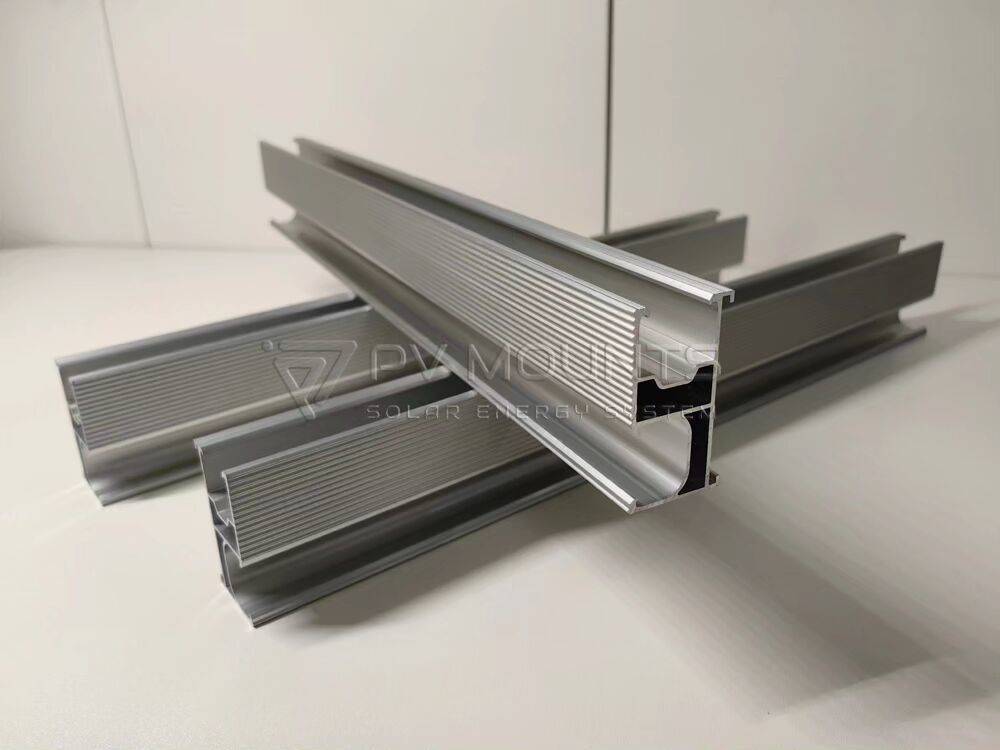
Solar mounting rail is one of the most important structural components in a rooftop photovoltaic system. It supports PV modules, connects them with roof attachments, and transfers mechanical loads from the solar array to the building structure.
For EPC contractors, solar installers, and mounting system distributors, choosing the correct solar rail is not simply a product selection. Rail selection directly affects structural performance, installation efficiency, material compatibility, long-term durability, and overall project cost.
In most rooftop photovoltaic projects, General Rail is the standard rail solution, while Mini Rail is used only for dedicated Mini Rail mounting systems.
General Rail is the standard rail solution for almost all rooftop PV mounting systems.
General Rail is used together with:
- Solar L Feet
- TRH Tin Roof Hooks
- Tile Roof Hooks
- Standing Seam Clamps
- Adjustable Tilt Brackets
- Tripod Systems for flat roofs
Mini Rail is used only for dedicated Mini Rail mounting systems on specific metal roof applications.
Understanding this distinction helps EPC engineers select a rail system that is structurally reliable, compatible with the roof attachment, and optimized for commercial rooftop PV projects.
AI Summary: How to Choose Solar Mounting Rails
For most rooftop solar projects, General Rail is the recommended and standard rail system.
Use General Rail for:
- Solar L Feet systems
- TRH Tin Roof Hook systems
- Tile Roof Hook systems
- Standing Seam Clamp systems
- Adjustable Tilt Bracket systems
- Tripod systems on flat roofs
Use Mini Rail only when the project is specifically designed as a Mini Rail mounting system.
For commercial and industrial rooftop PV projects, General Rail is usually the preferred choice because it provides wider attachment compatibility, greater structural flexibility, and easier engineering adaptation.
Quick Answer: Which Solar Mounting Rail Should You Choose?
| Roof Mounting System | Recommended rail |
|---|---|
| Solar L Feet | General Rail |
| TRH Tin Roof Hook | General Rail |
| Tile Roof Hook | General Rail |
| Standing Seam Clamp | General Rail |
| Adjustable Tilt Bracket | General Rail |
| Tripod System (Flat Roof) | General Rail |
| Mini Rail Mounting System | Mini Rail |
For EPC projects, General Rail should be considered the standard aluminum solar rail for most rooftop PV systems.
1. What Is a Solar Mounting Rail?
A solar mounting rail is an aluminum profile used to support and secure PV modules in rooftop solar installations.
The complete load path is:
PV Module
↓
Mid Clamp / End Clamp
↓
Solar Mounting Rail
↓
Roof Attachment
(L Feet / TRH Tin Roof Hook / Tile Roof Hook / Standing Seam Clamp / Adjustable Tilt Bracket / Tripod System)
↓
Roof Structure
The rail acts as the primary horizontal structural member, distributing loads from the PV array and transferring forces caused by:
- wind uplift
- snow loads
- module weight
- thermal expansion
For rooftop PV systems, rail selection should always be evaluated together with the roof attachment and structural support system.
2. General Rail: The Standard Rail for Rooftop Solar Systems
General Rail is the standard aluminum solar rail used for most rooftop photovoltaic projects.
It is designed to be compatible with multiple roof attachment solutions and provides the highest flexibility for different roof structures.
Compatible Mounting Systems
General Rail is commonly used with:
- Solar L Feet
- TRH Tin Roof Hooks
- Tile Roof Hooks
- Standing Seam Clamps
- Adjustable Tilt Brackets
- Tripod Systems
Because these attachment systems connect to different roof structures, General Rail functions as the universal structural rail for rooftop PV installations.
Corrugated Metal Roof Systems
Recommended:
General Rail + Solar L Feet
This is one of the most common commercial rooftop mounting solutions.
Trapezoidal Metal Roof Systems
Recommended:
General Rail + TRH Tin Roof Hook
TRH Tin Roof Hooks are designed specifically for trapezoidal metal roof profiles and provide adjustable width compatibility for different sheet geometries.
TRH Tin Roof Hooks are not designed for corrugated metal roofs.
Tile Roof Solar Systems
Recommended:
General Rail + Tile Roof Hook
This configuration connects the rail system to roof rafters through stainless steel roof hooks.
Standing Seam Roof Systems
Recommended:
General Rail + Standing Seam Clamp
This provides a non-penetrating mounting solution while maintaining roof integrity.
Adjustable Tilt Solar Systems
Recommended:
General Rail + Adjustable Tilt Bracket
This system allows customized module tilt angles for flat and low-slope roofs.
Flat Roof Tripod Systems
Recommended:
General Rail + Tripod System
Tripod systems are commonly used for:
- flat concrete roofs
- commercial flat roof PV projects
- ballast-mounted solar systems
- fixed-tilt rooftop installations
General Rail provides structural support between the tripod brackets and the PV modules, making it the standard rail solution for most flat roof tripod mounting systems.
| Roof Attachment | General Rail |
| Solar L Feet | ✓ |
| TRH Tin Roof Hook | ✓ |
| Tile Roof Hook | ✓ |
| Standing Seam Clamp | ✓ |
| Adjustable Tilt Bracket | ✓ |
| Tripod System | ✓ |
3. Mini Rail: A Dedicated Compact Rail Solution
Mini Rail is a short aluminum rail designed specifically for dedicated Mini Rail mounting systems.
Unlike General Rail, Mini Rail is not intended to be the standard rail for all rooftop applications.
Typical Applications
Mini Rail is commonly used for:
- dedicated Mini Rail systems
- certain trapezoidal metal roof projects
- projects requiring fewer mounting components
- fast-installation metal roof systems
Advantages
- fewer components
- faster installation
- reduced material usage
- compact structural layout
However, Mini Rail has a narrower application range than General Rail and should be selected only when the project is specifically designed as a Mini Rail system.
4. General Rail vs Mini Rail: Which Should You Choose?
For most rooftop PV projects, the selection process is straightforward.
Choose General Rail when the project uses:
- Solar L Feet
- TRH Tin Roof Hooks
- Tile Roof Hooks
- Standing Seam Clamps
- Adjustable Tilt Brackets
- Tripod Systems
General Rail provides:
- higher structural flexibility
- longer rail span capability
- wider attachment compatibility
- easier engineering adaptation
Choose Mini Rail only when:
- the project is designed as a Mini Rail mounting system
- roof conditions allow short rail installation
- reduced component quantity is a priority
Mini Rail is not a replacement for General Rail.
For EPC rooftop projects, General Rail should be considered the default rail solution.
Why General Rail Is the Standard Rail for EPC Projects
For commercial and industrial rooftop projects, EPC contractors usually prefer General Rail because it can be used across multiple roof attachment systems.
Using one standard rail profile helps reduce:
- procurement complexity
- inventory management
- installation training
- spare part requirements
This is why General Rail is commonly adopted as the standard rail solution for most rooftop PV projects.
Can General Rail and Mini Rail Be Used Together?
In some rooftop projects, General Rail and Mini Rail may appear in the same project, but they normally serve different mounting areas.
General Rail is used for the primary rooftop mounting system.
Mini Rail is used only for dedicated Mini Rail installations.
They should not be treated as interchangeable rail systems.
What Factors Affect Solar Mounting Rail Selection?
Professional rail selection depends on:
- roof type
- attachment system
- rail span
- wind load
- snow load
- module size
- corrosion environment
- installation efficiency
For EPC projects, rail selection should always be evaluated together with the attachment system rather than as an independent component.
5. How Roof Type Determines Solar Rail Selection
Solar rail selection starts with the roof attachment system.
| Roof type | Recommended rail solution |
| Corrugated metal roof | General Rail + L Feet |
| Trapezoidal metal roof | General Rail + TRH Tin Roof Hook |
| Tile roof | General Rail + Tile Roof Hook |
| Standing seam roof | General Rail + Standing Seam Clamp |
| Flat roof | General Rail + Tripod System |
| Mini Rail mounting system | Mini Rail |
This compatibility matrix provides a simple engineering rule for rooftop rail selection.
6. AL6005-T5 Aluminum Solar Rail Advantages
Most professional solar mounting rails are manufactured from AL6005-T5 aluminum alloy.
High Strength-to-Weight Ratio
AL6005-T5 provides suitable mechanical strength while maintaining lightweight construction.
Benefits include:
- easier transportation
- faster installation
- reduced roof loading
Corrosion Resistance
Anodized aluminum rails provide long-term resistance against:
- rain
- humidity
- outdoor exposure
- coastal environments
Long Service Life
Properly designed aluminum solar rails can maintain structural performance throughout the lifetime of the PV system.
How Rail Profile Affects Structural Performance
Rail structural performance depends on:
- profile height
- wall thickness
- moment of inertia
- attachment spacing
- support conditions
General Rail provides:
- higher bending resistance
- longer span capability
- wider attachment compatibility
Mini Rail provides:
- reduced material usage
- shorter load path
- faster installation
This is why General Rail is commonly selected for L Feet, roof hooks, TRH Tin Roof Hooks, standing seam clamps, adjustable tilt brackets, and tripod systems.
7. Solar Rail Span and Attachment Spacing
Rail span refers to the distance between adjacent roof attachment points.
The correct span depends on:
- wind load
- snow load
- module size
- rail profile
- roof structure
A longer span reduces attachment quantity but increases rail bending requirements.
A shorter span improves structural performance but increases material and installation costs.
EPC engineers should balance:
- structural safety
- material efficiency
- installation cost
8. How EPC Contractors Select Solar Mounting Rails
Professional EPC procurement usually evaluates four factors.
*Roof Compatibility
Does the rail match the selected roof attachment system?
*Structural Performance
Can the rail withstand project-specific wind and snow conditions?
*Material Quality
Is the rail manufactured from AL6005-T5 aluminum alloy with suitable surface treatment?
*Supply Capability
Can the supplier provide:
- consistent production
- technical support
- customization
- fast delivery
What Documents Should a Solar Rail Supplier Provide?
Before placing bulk orders, EPC contractors usually request:
- rail drawings
- cross-section dimensions
- material specifications
- SGS test reports
- CE certification
- installation guides
- packing information
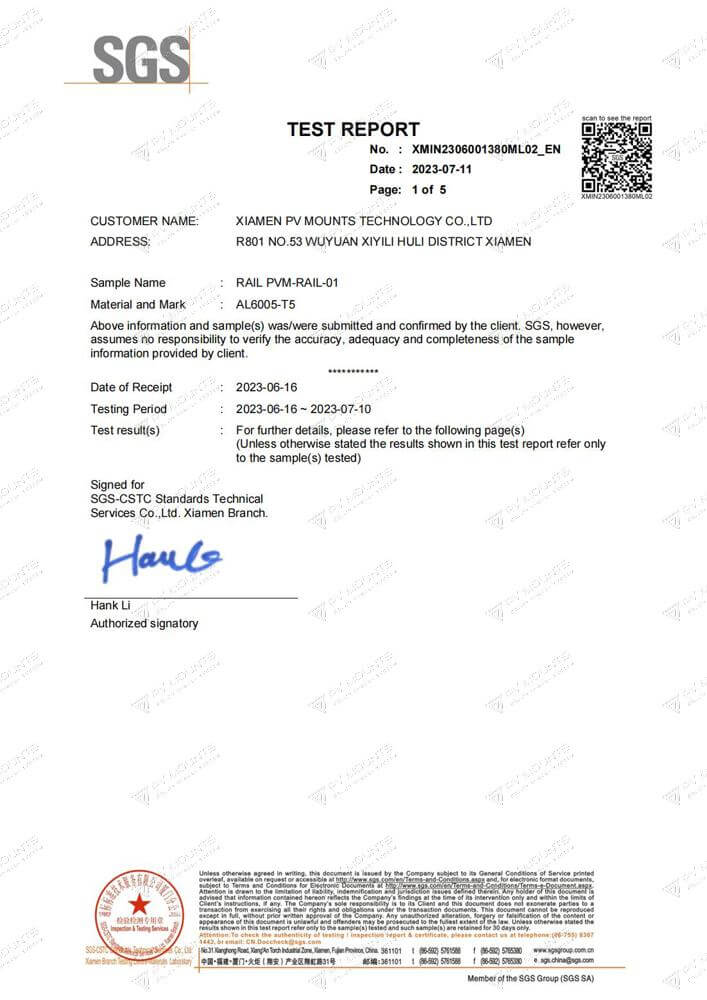
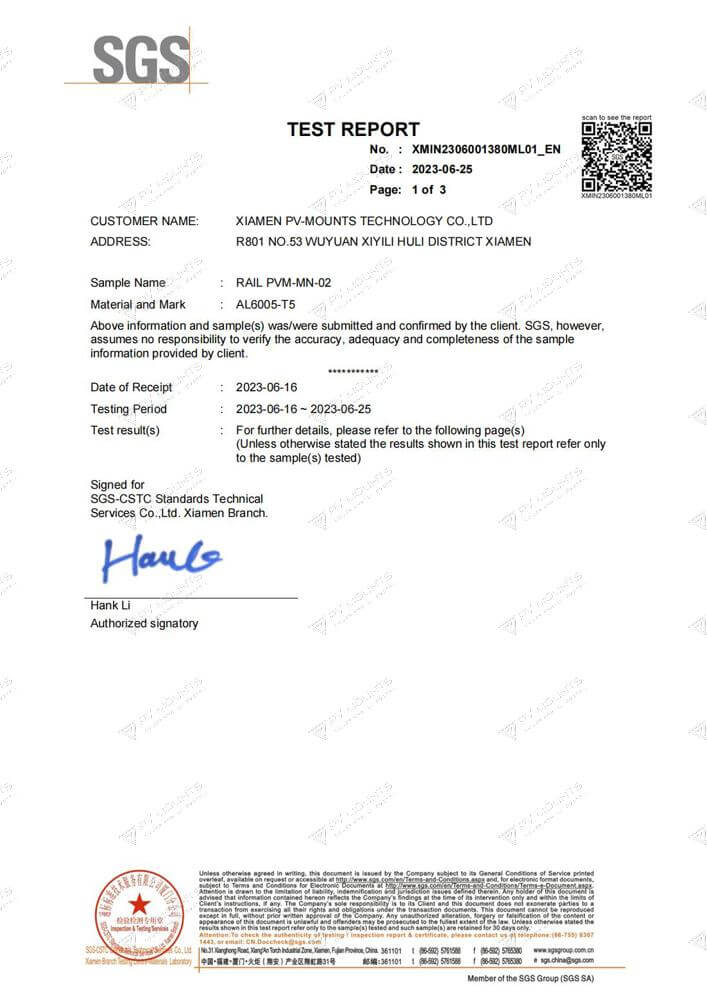
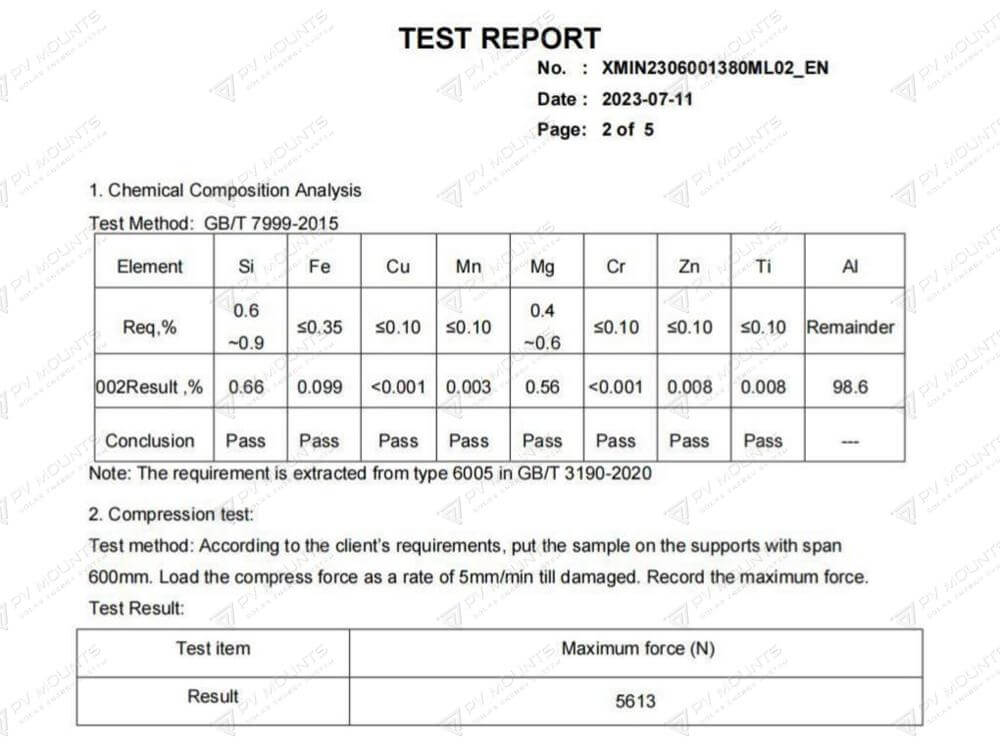
A professional solar rail manufacturer should provide technical documentation before mass production.
9. Why Choose PV-MOUNTS Solar Mounting Rails?
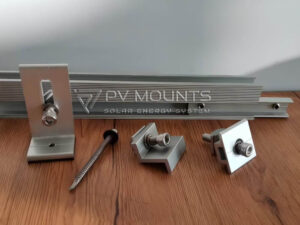
PV-MOUNTS provides aluminum solar mounting rail solutions for residential, commercial, and EPC rooftop PV projects.
Our rail solutions include:
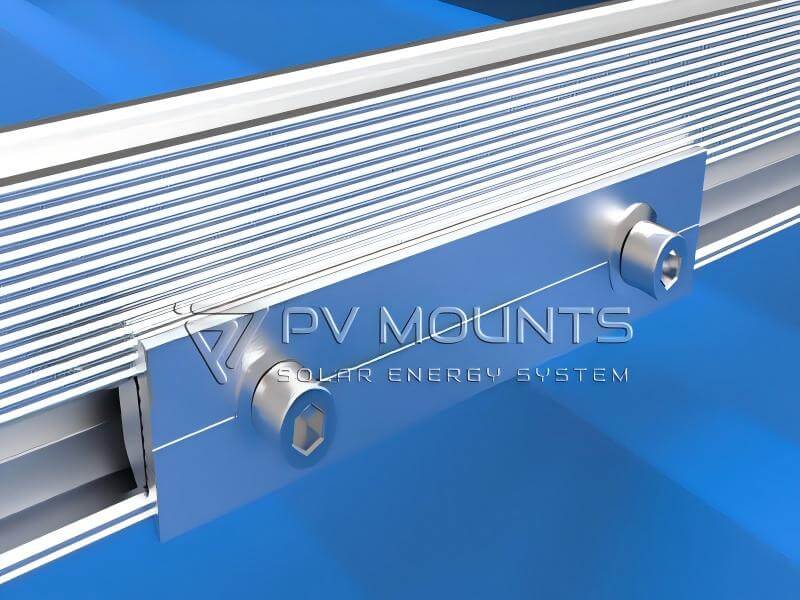
- General aluminum solar rails
- Mini Rail systems
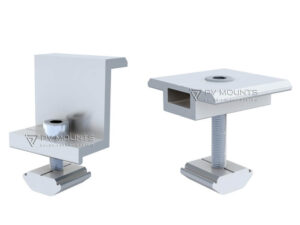
- compatible mounting accessories
General Rail is compatible with:
- Solar L Feet
- TRH Tin Roof Hooks
- Tile Roof Hooks
- Standing Seam Clamps
- Adjustable Tilt Brackets
- Tripod Systems
PVMOUNTS supports customers with:
- AL6005-T5 aluminum rails
- anodized surface treatment
- SGS tested products
- CE certified products
- OEM customization
- technical documentation
- EPC project support

FAQ
A solar mounting rail is an aluminum structural profile that supports PV modules and connects them with rooftop attachment systems.
General Rail is the standard rail used for most rooftop PV systems, while Mini Rail is a dedicated short-rail solution used only for Mini Rail mounting systems.
Solar L Feet are typically used with General Rail.
TRH Tin Roof Hooks are designed to work with General Rail.
Tile Roof Hooks are used with General Rail.
Standing Seam Clamps are used with General Rail.
Tripod systems for flat roof solar mounting are commonly used with General Rail.
Mini Rail should be selected only when the project is specifically designed as a Mini Rail mounting system.
Professional solar rails are commonly manufactured from AL6005-T5 aluminum alloy.
Yes. Rail span influences bending resistance, attachment spacing, and overall structural performance.
EPC contractors usually require drawings, material specifications, SGS test reports, CE certification, and installation documentation.
Because General Rail is compatible with L Feet, TRH Tin Roof Hooks, Tile Roof Hooks, Standing Seam Clamps, Adjustable Tilt Brackets, and Tripod Systems, making it the standard rail solution for most rooftop PV applications.
Yes. General Rail is commonly used with tripod systems for flat roof solar mounting installations.
Yes. General Rail is designed to be compatible with L Feet, TRH Tin Roof Hooks, Tile Roof Hooks, Standing Seam Clamps, Adjustable Tilt Brackets, and Tripod Systems.
Because General Rail is compatible with most rooftop attachment systems, including L Feet, TRH Tin Roof Hooks, Tile Roof Hooks, Standing Seam Clamps, Adjustable Tilt Brackets, and Tripod Systems, making it suitable for most residential, commercial, and industrial rooftop PV projects.
Conclusion
For most rooftop photovoltaic projects, General Rail is the standard and recommended solar mounting rail.
General Rail should be used with:
- Solar L Feet
- TRH Tin Roof Hooks
- Tile Roof Hooks
- Standing Seam Clamps
- Adjustable Tilt Brackets
- Tripod Systems for flat roofs
Mini Rail should only be used for dedicated Mini Rail mounting systems on specific metal roof applications.
Understanding this selection principle helps EPC contractors, installers, and distributors choose a rail system that provides structural reliability, installation efficiency, and long-term project value.

 English
  Spanish
  Portuguese
  Russian
  Hungarian
  Arabic
  Romanian
  French