
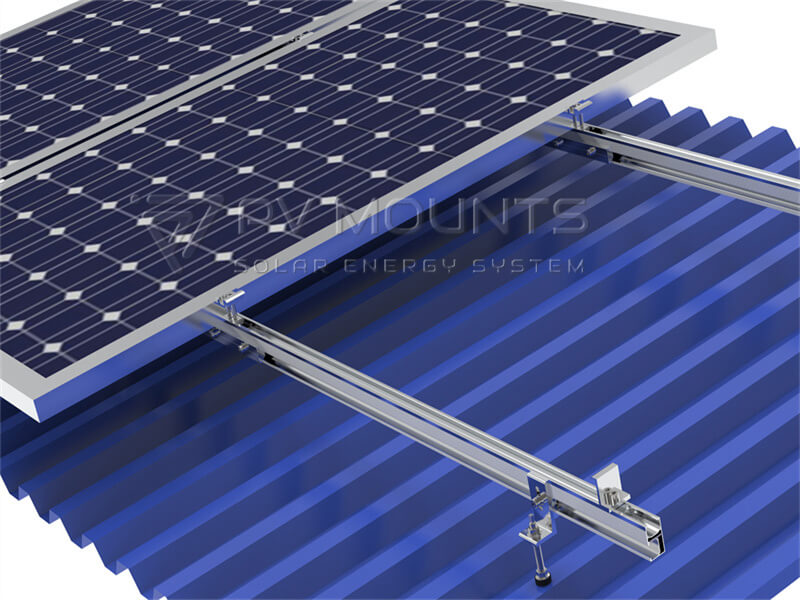
Trapezoidal metal roofs are widely used in industrial and commercial buildings.Solar mounting for trapezoidal metal roofs requires proper system design, including fixing methods, rail spacing, and waterproof sealing to ensure long-term performance and safety.
This guide explains the best solar mounting systems for trapezoidal roofs, including fixing methods, spacing design, and installation best practices.
1. What Is a Trapezoidal Metal Roof?
A trapezoidal metal roof is formed by steel or aluminum sheets with repeating trapezoidal profiles. These roofs are commonly used in factories, warehouses, and commercial buildings due to their:
- High strength and durability
- Lightweight structure
- Fast installation
Their regular geometry also makes them suitable for solar mounting systems when properly designed.
2. What is the best solar mounting solution for trapezoidal metal roofs?
The best solution for trapezoidal metal roofs is typically a mini rail mounting system fixed with self-drilling screws and EPDM sealing. It offers a balance of cost, installation speed, and structural reliability, making it widely used in commercial and industrial solar projects.
3. Best Solar Mounting Solution for Trapezoidal Roof
There are two common mounting solutions for trapezoidal metal roofs:
3.1. نظام السكك الحديدية الصغيرة (Most Recommended)
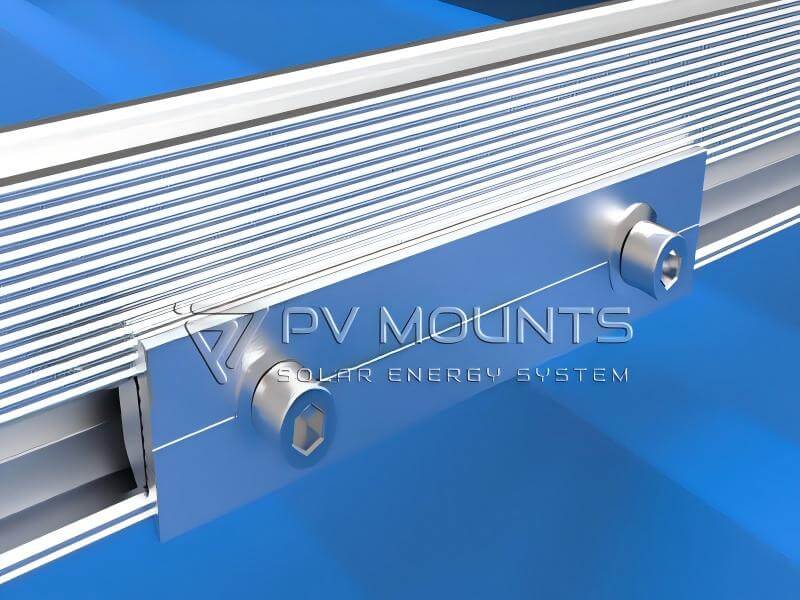
Mini rail systems are widely used for solar mounting on trapezoidal metal roofs due to their cost efficiency and fast installation. Pre-assembled mini rail solutions can significantly reduce installation time on site.
- Short aluminum rails fixed directly to the roof sheet
- Lower material cost
- Faster installation
- Suitable for most industrial roofs
👉 This is the most widely used solution in Europe due to its balance of cost, speed, and structural reliability.
One of the most popular solutions for trapezoidal roofs is the mini rail mounting system, which offers fast installation and cost efficiency.
👉 Read the full guide: Mini Rail Solar Mounting System
3.2. L Foot + Full Rail System (Most Popular)
- Traditional mounting solution
- Higher material consumption
- More flexible for complex layouts
👉 In most standard projects, mini rail systems are the preferred choice.
اختيار نظام تركيب الطاقة الشمسية المناسب لسقفك شبه المنحرف
Selecting the appropriate solar mounting system is crucial. Factors like roof size, angle, and material play a key role. It’s important to consider the local climate and potential shading issues as well. Consulting with experts ensures the chosen system fits the specific needs of the trapezoidal roof. They can guide through options and recommend the best solution. If you have no idea, please contact with XIAMEN PV MOUNTS experts. info@pv-mounts.com
4. How to Fix Solar Mounting on Trapezoidal Roof
Proper fixing is critical for solar mounting on trapezoidal metal roofs to ensure both safety and waterproof performance.
Fixing Method
- Use self-drilling screws
- Fix on the crest (top of rib), not the valley
- Apply EPDM rubber sealing to prevent leakage
👉 Key point:
Trapezoidal roofs are designed for controlled penetration, so correct sealing and screw positioning are essential for long-term waterproof performance.
5. Rail / Fixing Spacing for Trapezoidal Roof
Spacing design is one of the most important factors in system safety.
Typical Spacing
- 600 mm – 1000 mm (common range)
Depends on:
- Wind load
- Snow load
- Roof sheet thickness
- Building height
Example
For a wind load of 0.85 kN/m², the recommended fixing spacing is approximately 800 mm.
Recommended Fixing Spacing by Wind Load
Wind Load (kN/m²) Recommended Spacing ≤ 0.6 1000 mm 0.6 – 0.85 800 mm 0.85 – 1.2 600 mm 👉 Correct spacing ensures:
- Structural stability
- Reduced uplift risk
- Longer system lifespan
6. Wind Load Considerations (EN 1991)
For European projects, wind load calculation should follow EN 1991 standards.
Key factors include:
- Building height
- Roof zone (edge / corner / middle)
- Local wind conditions
👉 Proper load calculation helps determine:
- Fixing quantity
- Rail spacing
- System safety margin
7. Installation Process (Step-by-Step)
A typical installation process includes:
- Mark rail positions based on layout
- Place mini rails on roof crest
- Fix with self-drilling screws
- Apply EPDM sealing (pre-assembled)
- Install solar panels
👉 Professional installation ensures:
- Accurate alignment
- Strong fixing
- Waterproof performance
8. Common Mistakes to Avoid
Incorrect installation can lead to serious issues.
Typical mistakes:
- Fixing in the valley instead of crest
- Over-tightening screws
- Ignoring waterproof sealing
- Incorrect spacing design
👉 Avoiding these mistakes is critical for long-term reliability.
9. Why Use Stainless Steel Fasteners?
Material selection is especially important for roof mounting systems.
Advantages of stainless steel (SUS304 / SUS410):
- Excellent corrosion resistance
- Suitable for coastal and humid environments
- Longer service life
👉 Stainless steel components significantly improve system durability.
10. Cost Considerations
Compared to other roof types, trapezoidal roof systems offer:
- Lower installation cost
- Faster installation time
- Reduced material usage (especially mini rail systems)
👉 This makes them one of the most cost-effective solar mounting solutions.
11. Design Considerations for Solar Panels on Trapezoidal Roofs
عندما يتعلق الأمر بتجهيز الأسطح شبه المنحرفة بألواح الطاقة الشمسية، تلعب اعتبارات التصميم دوراً محورياً. يتطلب الشكل الفريد لهذه الأسطح نهجًا مدروسًا لضمان أن مجموعة الطاقة الشمسية لا تتناسب من الناحية الجمالية فحسب، بل تعمل أيضًا على النحو الأمثل. فالتوجيه والإمالة أمران حاسمان؛ حيث يجب حسابهما بدقة لتسخير أشعة الشمس بأكبر قدر من الفعالية. فالاتجاه المواجه للجنوب، على سبيل المثال، يزيد من التعرض لأشعة الشمس في نصف الكرة الشمالي، في حين يجب ضبط زاوية الميل لتتناسب مع خط عرض الموقع لامتصاص الطاقة على النحو الأمثل.
توزيع الأحمال عامل حاسم آخر، حيث يجب توزيع وزن الألواح الشمسية بالتساوي على الحواف شبه المنحرفة لتجنب الإجهاد الهيكلي. وعلاوة على ذلك، يجب أن يؤدي دمج تكنولوجيا الطاقة الشمسية إلى تحسين مظهر السقف ووظائفه وليس الإضرار بها. يسلط هذا التوازن الدقيق بين الشكل والوظيفة الضوء على فن وعلم تركيبات الطاقة الشمسية على الأسطح شبه المنحرفة، مما يبرز البراعة المطلوبة لدمج حلول الطاقة المتجددة مع السلامة المعمارية.
12. Maintaining Your Solar Panel System on a Trapezoidal Roof
بعد التثبيت، ينتقل التركيز إلى صيانة نظام الألواح الشمسية لضمان طول عمره وكفاءته. تعتبر الفحوصات الروتينية ضرورية؛ فهي تساعد في تحديد ومعالجة المشاكل مثل تراكم الغبار أو التظليل أو التآكل، والتي يمكن أن تؤثر على الأداء. ومن الضروري أيضاً تنظيف الألواح بانتظام لإزالة الحطام الذي قد يحجب ضوء الشمس.
علاوة على ذلك، لا تتعلق الصيانة بالحفاظ على الأداء الوظيفي فحسب، بل تتعلق أيضًا بالحفاظ على الكفاءة. يجب إجراء الإصلاحات عند الحاجة إليها على الفور لمنع تفاقم المشاكل البسيطة إلى مشاكل كبيرة. هذه الرعاية المستمرة لا تطيل عمر النظام الشمسي فحسب، بل تضمن أيضًا استمراره في العمل بأعلى كفاءة، مما يجعل الصيانة فصلًا رئيسيًا في قصة الطاقة الشمسية على الأسطح شبه المنحرفة.
13. Cost Analysis of Installing Solar Panels on Trapezoidal Metal Roofs
إن الجانب المالي لتركيب الألواح الشمسية على الأسقف المعدنية شبه المنحرفة يستدعي فحصًا دقيقًا. قد تبدو التكلفة الأولية باهظة، لكنه استثمار طويل الأجل يؤتي ثماره. بمرور الوقت، يمكن أن تعوض وفورات الطاقة بمرور الوقت النفقات الأولية. ينطوي تحليل هذه التكاليف على مقارنة سعر التركيب والمعدات والصيانة مع وفورات الطاقة المتوقعة والعمر الافتراضي للنظام.
يمكن أن تقلل الحوافز والإعانات بشكل كبير من النفقات الأولية. تقدم العديد من الحكومات إعفاءات ضريبية أو خصومات أو منح لتشجيع اعتماد الطاقة الشمسية. يمكن لهذه الحوافز أن تجعل تركيبات الطاقة الشمسية ميسورة التكلفة. في نهاية المطاف، فإن العائد على الاستثمار في الألواح الشمسية على الأسطح شبه المنحرفة مناسب، خاصة عند النظر في الفوائد البيئية والزيادة المحتملة في قيمة العقار.
الأسئلة الشائعة
No, when using proper EPDM sealing and correct installation methods.
Typically 600–1000 mm, depending on wind load and roof conditions.
Yes, but screw selection and pull-out strength must be verified.
Mini rail is more cost-effective for standard projects. L foot is more stable than mini rail.
Trapezoidal roofs can enhance efficiency due to their shape, allowing optimal panel placement.
Yes, but the mounting system must be compatible with the roof’s design and load capacity.
Typically, these systems last 25-30 years, mirroring the lifespan of solar pan
Properly installed systems withstand various weather conditions, ensuring durability and performance.
Regular cleaning and occasional inspections are necessary to maintain efficiency and longevity.
Yes, but a roof assessment is essential to ensure it can support the solar system.
Mini rail systems can be used on most trapezoidal metal roofs, but not all.
Compatibility depends on several factors:
Roof sheet thickness
Rib height and spacing
Load requirements (wind and snow load)
Structural condition of the roof
In general, mini rail systems are suitable for standard industrial trapezoidal roofs with sufficient strength. However, for very thin sheets or high load conditions, additional reinforcement or a full rail system may be required.
👉 For solar mounting on trapezoidal metal roofs, it is recommended to verify pull-out strength and structural capacity before installation.
Pre-assembled mini rail solutions can simplify installation and improve efficiency on site.
Screws should always be installed on the crest (top of the rib) of the trapezoidal metal sheet, not in the valley.
Key reasons:
The crest area provides better structural support
It reduces the risk of water leakage
It ensures stronger pull-out resistance
Additionally, all screws should be installed with EPDM sealing washers to maintain long-term waterproof performance.
👉 Correct screw positioning is critical for safe and durable solar mounting on trapezoidal roofs.
Engineering Summary for Trapezoidal Roof Solar Mounting
- Recommended solution: Mini rail system
- Typical spacing: 600–1000 mm
- Fixing method: Self-drilling screws with EPDM
- Material: Aluminum + Stainless Steel (SUS304 / SUS410)
الخاتمة والتوقعات المستقبلية
Solar mounting systems for trapezoidal metal roofs provide a reliable and cost-effective solution for industrial and commercial solar projects. By using the right mounting method, proper spacing design, and high-quality materials, you can ensure long-term system performance and safety.
تمثل أنظمة تركيب الطاقة الشمسية على الأسطح شبه المنحرفة استثماراً ذكياً في الطاقة المتجددة. فهي تجمع بين الأداء الوظيفي والكفاءة والاستدامة. ومع تقدم التكنولوجيا، ستصبح هذه الأنظمة أكثر تكاملاً وكفاءة. إن المستقبل مشرق للطاقة الشمسية على الأسطح شبه المنحرفة، مما يبشر بكوكب أنظف وأكثر خضرة.
As a professional solar mounting system manufacturer, Xiamen PV Mounts provides reliable solutions for trapezoidal metal roofs, including mini rail systems, stainless steel fasteners, and customized mounting structures.
For project-specific design support or quotation, feel free to contact our engineering team.
Compared to corrugated roofs, trapezoidal roofs offer a flatter surface and easier installation.
👉 See also: Corrugated Roof Solar Mounting Guide

 Arabic
  English
  Spanish
  Portuguese
  Russian
  Hungarian
  Romanian
  French