
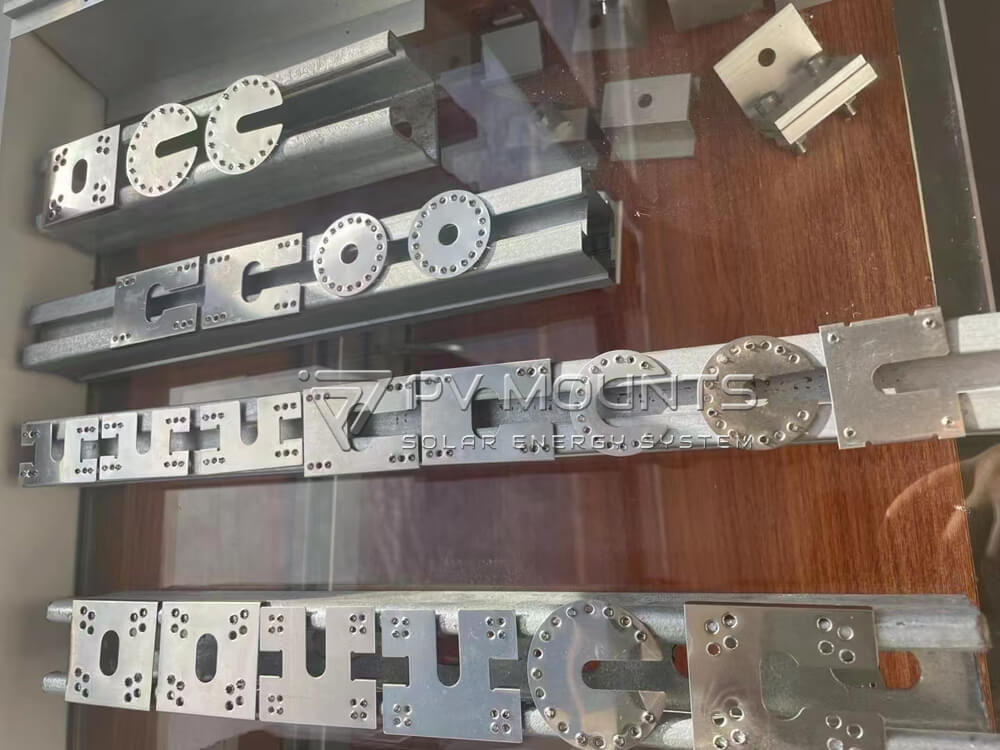
Definition: What Is Solar Grounding Clip Compatibility with Mounting Rails?
Solar grounding clip compatibility refers to whether a grounding clip is suitable for a specific solar mounting rail design, including rail profile, cross-section, material, and installation method.Solar grounding clips are also known as PV bonding clips or photovoltaic bonding components in some solar mounting applications.
In photovoltaic mounting systems, grounding clips are not universal components.
A grounding clip designed for one type of solar rail may not provide optimal electrical bonding or mechanical contact when installed on another rail structure.
The correct grounding clip selection depends on:
- Solar mounting rail profile
- Rail cross-section
- Rail material
- Surface treatment
- Module frame design
- Installation method
A typical PV bonding connection includes:
PV Module Frame
        ↓
Solar Grounding Clip
        ↓
Mounting Rail
        ↓
Grounding System
PV Mounts supplies SUS304 stainless steel solar grounding clips designed for different photovoltaic mounting applications, including aluminum rails, mini rails, and commercial solar mounting systems.
Quick Answer: Which Solar Rails Need Compatible Grounding Clips?
| Solar Rail Type | Grounding Clip Consideration |
|---|---|
| Aluminum Rail | Match rail profile and module frame |
| Mini Rail | Confirm smaller contact area |
| Standing Seam | Verify clamp and bonding design |
1. Why Solar Rail Compatibility Matters for Grounding Clips
Solar mounting rails are available in different designs depending on:
- Type de toit
- PV system size
- Installation method
- Structural requirements
Common solar rail types include:
| Rail Type | Typical Application |
|---|---|
| Aluminum solar rail | Rooftop and commercial PV systems |
| Mini rail | Residential metal roof applications |
| U-shape rail | Lightweight mounting systems |
| Commercial solar rail | Large-scale rooftop projects |
| Standing seam systems | Non-penetrating metal roof installations |
Because each rail design has different geometry, grounding clips must match the rail structure.
Incorrect compatibility may result in:
| Problem | Possible Cause |
|---|---|
| Poor electrical contact | Incorrect clip design |
| Unstable installation | Rail mismatch |
| Difficult installation | Wrong clip size |
| Reduced bonding reliability | Insufficient contact area |
For EPC contractors, grounding clip selection should consider both electrical bonding requirements and solar mounting structure compatibility.
2. Solar Grounding Clips for Aluminum Solar Rails
How Grounding Clips Work with Aluminum Rails
Aluminum rails are the most common mounting structures used in photovoltaic systems.
They are widely used for:
- Residential rooftop solar
- Commercial rooftop PV
- Industrial solar installations
- Ground-mounted PV systems
A compatible solar grounding clip connects:
PV Aluminum Frame
        ↓
SUS304 Grounding Clip
        ↓
Aluminum Mounting Rail
The grounding clip uses mechanical contact to establish electrical continuity between the PV module frame and mounting rail.
Important Compatibility Factors for Aluminum Rails
When selecting grounding clips for aluminum solar rails, EPC buyers should consider:
| Factor | Engineering Requirement |
|---|---|
| Rail cross-section | Match clip geometry |
| Rail width | Ensure proper positioning |
| Rail thickness | Maintain contact pressure |
| Surface treatment | Ensure reliable electrical contact |
| Module frame | Confirm compatibility |
Why Rail Profile Matters
Different aluminum rails may have different:
- Width
- Height
- Channel design
- Fixing structure
- Surface treatment
A grounding clip designed for one aluminum rail profile may not fit correctly on another.
Therefore, professional solar mounting manufacturers evaluate grounding components together with rail design.
Grounding clip compatibility depends on:
- Rail width
- Rail height
- Rail thickness
- Contact surface area
- Module clamp position
- Rail material
3. Solar Grounding Clips for Mini Rail Solar Mounting Systems
What Are Mini Rail Systems?
Mini rail systems are lightweight solar mounting solutions commonly used for:
- Residential metal roofs
- Corrugated sheet roofs
- Toits métalliques trapézoïdaux
Compared with traditional full-length rails, mini rails provide:
- Reduced material usage
- Faster installation
- Lightweight structure
However, the smaller rail profile requires careful grounding clip selection.
Grounding Clip Compatibility Considerations for Mini Rails
Mini rails usually have different:
- Rail width
- Contact surface
- Fixing position
- Installation method
Therefore, grounding clips must be designed according to the mini rail structure.
Key considerations:
| Factor | Requirement |
|---|---|
| Mini rail width | Clip must match contact area |
| Rail height | Ensure correct positioning |
| Fixing method | Maintain stable installation |
| Module frame | Confirm bonding location |
Common Mini Rail Compatibility Problem
Problem:
A grounding clip designed for a standard aluminum rail is installed on a mini rail.
Possible result:
- Incorrect positioning
- Reduced contact area
- Installation difficulty
Solution:
Select grounding clips specifically compatible with the mini rail mounting design.
4. Solar Grounding Clips for Standing Seam Solar Mounting Systems
Standing seam solar applications are different from traditional rail systems because the module bonding path depends on:
- standing seam clamp design
- metal roof material
- rail connection method
- bonding continuity
Grounding components should be evaluated together with the complete mounting structure.
Understanding Standing Seam Applications
Standing seam solar mounting systems are different from traditional rail-based systems.
They typically use:
- Standing seam clamps
- Non-penetrating attachment methods
- Specialized mounting structures
The grounding design depends on:
- Clamp structure
- Rail connection method
- Metal roof material
- System bonding requirements
Grounding Clip Considerations for Standing Seam Systems
For standing seam applications, EPC contractors should evaluate:
| Factor | Consideration |
|---|---|
| Clamp design | Confirm bonding path |
| Metal roof type | Check compatibility |
| Rail connection | Verify grounding continuity |
| Material combination | Avoid corrosion concerns |
Grounding components should always be selected according to the complete mounting system design.
5. Grounding Clip Compatibility with Different Rail Materials
Solar mounting rails are commonly manufactured from:
- Aluminum alloy
- Stainless steel components
- Other coated metals
Material compatibility affects:
- Résistance à la corrosion
- Mechanical durability
- Long-term reliability
Typical PV grounding component materials:
| Component | Typical Material |
|---|---|
| Clip de mise à la terre | SUS304 Stainless Steel |
| PV Module Frame | Anodized Aluminum |
| Solar Rail | Aluminum Alloy |
| Fasteners | Stainless Steel |
SUS304 stainless steel is widely used for solar grounding clips because it provides:
- Résistance à la corrosion
- Stable mechanical performance
- Long-term outdoor durability
Rail Profile Parameters That Affect Grounding Clip Selection
6. How EPC Contractors Select Grounding Clips for Different Rails
Professional EPC contractors usually evaluate:
1. Rail Design
Confirm:
- Rail profile
- Cross-section
- Installation method
2. Module Compatibility
Check:
- Frame thickness
- Frame geometry
- Contact position
3. Environmental Conditions
Consider:
- Coastal exposure
- Humidity
- Industrial environment
4. Supplier Technical Support
A reliable supplier should understand:
- Solar mounting structure design
- PV grounding requirements
- Rail compatibility
Before Ordering Solar Grounding Clips, EPC Buyers Should Prepare:
| Information | Purpose |
|---|---|
| PV module datasheet | Confirm frame compatibility |
| Rail drawing | Confirm grounding clip fit |
| Project location | Evaluate corrosion requirement |
| Annual quantity | Production planning |
| Installation method | Confirm application |
7. Common Grounding Clip Problems in Different Rail Applications
| Problem | Cause | Solution |
|---|---|---|
| Clip cannot fit rail | Wrong rail profile | Confirm rail design |
| Poor contact | Incorrect clip type | Select compatible clip |
| Installation difficulty | Rail mismatch | Check mounting structure |
| Corrosion concern | Material mismatch | Use compatible materials |
Correct grounding clip selection during system design helps improve installation efficiency and long-term reliability.
8. PV Mounts Solar Grounding Clip Solutions for Different Mounting Rails
PV Mounts provides SUS304 stainless steel solar grounding clips for photovoltaic mounting systems.
Our grounding components support:
- Aluminum solar rails
- Mini rail systems
- Commercial rooftop mounting systems
- Customized PV mounting structures
PV Mounts provides:
| Capability | Support |
|---|---|
| Matériau | Acier inoxydable SUS304 |
| Fabrication | Precision stamping and forming |
| Application | Residential, commercial, utility PV |
| Service | OEM and wholesale supply |
| Support | Compatibility guidance |
Our customers include:
- EPC contractors
- Solar installers
- PV distributors
- Solar mounting system manufacturers
9. Procurement Guide: Information Needed Before Ordering Grounding Clips
To select the correct solar grounding clip, EPC buyers should provide:
| Information | Purpose |
|---|---|
| PV module model | Confirm frame compatibility |
| Module frame thickness | Select clip design |
| Rail drawing | Match rail profile |
| Installation method | Confirm application |
| Project environment | Evaluate material requirement |
| Annual quantity | Support OEM production |
Providing complete technical information helps suppliers recommend suitable grounding solutions.
10.Engineering Factors Affecting Grounding Clip Performance
Grounding clip compatibility is influenced by:
1. Contact Area
The grounding clip must maintain sufficient contact area between:
- PV frame
- grounding clip
- mounting rail
2. Tooth Engagement
Conductive teeth should penetrate surface oxidation layers of aluminum components to establish electrical continuity.
3. Mechanical Pressure
Proper spring force helps maintain stable bonding during:
- thermal expansion
- vibration
- long-term outdoor exposure
FAQ
No.Grounding clips must match the specific rail profile, module frame, and installation method.
Most aluminum rail systems use SUS304 stainless steel grounding clips designed for aluminum PV frames and mounting rails.
Yes.Mini rail systems have different dimensions and installation structures compared with traditional rails.
Compatibility depends on the standing seam mounting structure and bonding design.
Because rail geometry affects:
Clip positioning、Contact area、Mechanical stability、Electrical bonding
Provide:
Module specification、Rail drawing、Installation requirements、Project environment
Yes.SUS304 provides corrosion resistance and stable mechanical performance for outdoor PV applications.
PV Mounts provides SUS304 solar grounding clips for various photovoltaic mounting applications.
Yes.PV Mounts supports OEM and wholesale solar grounding clip supply for global PV customers.
Not always. Grounding clips should be selected according to rail profile, contact area, and mounting structure design.
Yes. Mini rail systems have different dimensions and installation structures compared with traditional aluminum rails.
Because SUS304 provides corrosion resistance, mechanical stability, and long-term durability.
Conclusion
Solar grounding clips must be selected according to the specific solar mounting rail system.
Different applications, including:
- Aluminum solar rails
- Mini rail mounting systems
- Standing seam solar structures
may require different compatibility considerations.
A properly matched SUS304 stainless steel solar grounding clip helps maintain:
- Reliable module-to-rail bonding
- Electrical continuity
- Stable PV system performance
PV Mounts manufactures SUS304 stainless steel solar grounding clips and photovoltaic bonding components for EPC contractors, solar installers, distributors, and solar mounting system manufacturers worldwide.

 French
  English
  Spanish
  Portuguese
  Russian
  Hungarian
  Arabic
  Romanian