
Defination
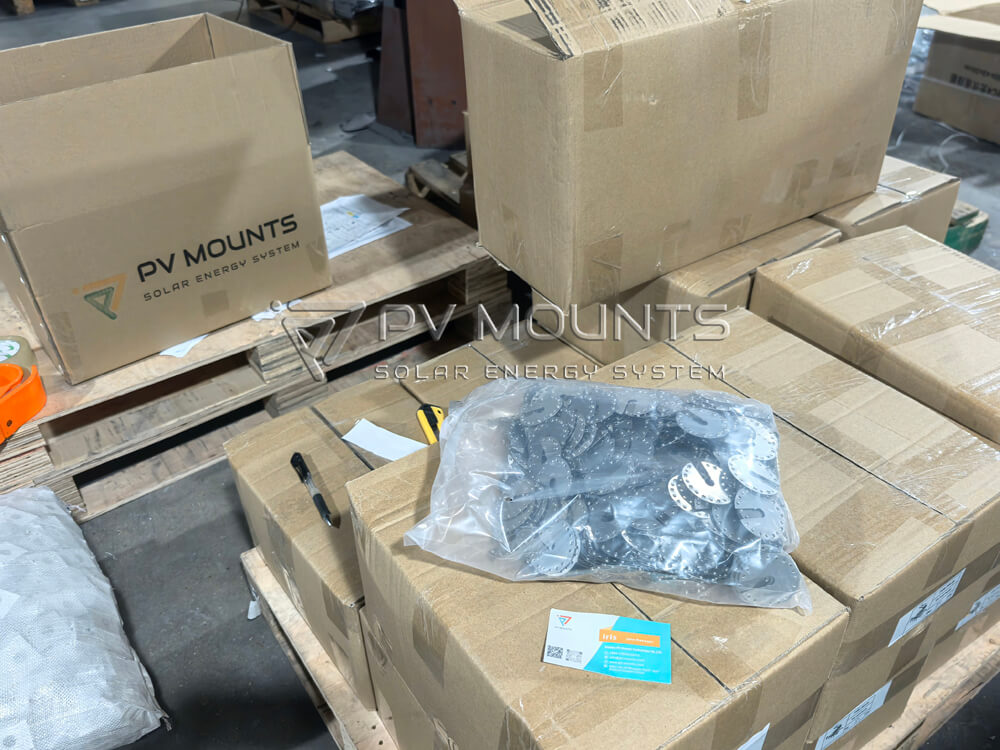
Solar grounding clips (also called earthing clips) are small components in photovoltaic mounting systems, but their performance directly affects the reliability of the PV bonding path.
A reliable solar grounding clip must maintain:
- stable electrical continuity
- consistent mechanical contact
- résistance à la corrosion
- long-term outdoor durability
For this reason, professional solar grounding clip manufacturers perform multiple quality evaluations before supplying components for residential, commercial, and utility-scale PV projects.
Solar grounding clip testing typically includes:
- Electrical bonding performance testing
- Mechanical performance evaluation
- Material verification
- Dimensional inspection
- Manufacturing quality control
For EPC contractors and solar mounting system manufacturers, understanding grounding clip testing helps evaluate supplier capability and product reliability.
Quick Answer: How Are Solar Grounding Clips Tested?
Solar grounding clips are commonly evaluated through:
| Testing Category | Purpose |
|---|---|
| Electrical bonding testing | Verify reliable conductive connection |
| Mechanical performance testing | Confirm stable contact force and structure |
| Material inspection | Verify stainless steel quality |
| Dimensional inspection | Ensure manufacturing consistency |
| Production quality control | Maintain batch reliability |
1.What Is Solar Grounding Clip Testing?
Solar grounding clip testing refers to the process of verifying whether a grounding clip can provide reliable electrical bonding and mechanical performance within a photovoltaic mounting system.
A typical PV grounding path includes:
PV Module Frame
        ↓
Grounding Clip
        ↓
Solar Mounting Rail
        ↓
Grounding Conductor
        ↓
Grounding System
The purpose of testing is to confirm that the grounding clip can maintain a stable connection between PV components throughout the expected service life of the solar system.
Unlike ordinary metal hardware, solar grounding clips require both:
- electrical performance
- mechanical reliability
because they operate continuously in outdoor PV environments.
2. Why Solar Grounding Clip Testing Matters
Solar grounding clips are installed between photovoltaic components where reliable bonding is required.
During long-term operation, grounding clips may experience:
- temperature changes
- humidity
- outdoor exposure
- mechanical vibration
- environmental corrosion factors
Therefore, manufacturers evaluate grounding clips to ensure:
- stable electrical contact
- consistent mechanical engagement
- reliable production quality
For EPC contractors, grounding clip quality should be evaluated together with:
- material specification
- manufacturing capability
- quality control process
- supplier experience
3. Electrical Bonding Performance Testing
How Is Solar Grounding Clip Electrical Performance Tested?
Electrical bonding testing evaluates whether the grounding clip can establish and maintain a conductive path between the grounding clip and the compatible mounting rail structure while maintaining electrical continuity with the PV module frame..
The key evaluation factors include:
Contact Resistance
The grounding connection should maintain effective electrical continuity between:
- PV module frame
- grounding clip
- aluminum mounting rail
Stable contact resistance within the specified range indicates consistent bonding performance.
Tooth Contact Performance
Most solar grounding clips use serrated teeth or conductive contact structures.
These teeth are designed to:
- break through the anodized surface layer of aluminum components to establish electrical contact.
- improve metal-to-metal contact
- maintain electrical connection
Testing evaluates:
- tooth geometry
- contact stability
- manufacturing consistency
The design of the conductive teeth is an important factor affecting grounding clip performance.
4. How Are Solar Grounding Clips Tested for Mechanical Performance?
Electrical performance alone is not enough.
A grounding clip must also maintain stable mechanical contact during installation and long-term operation.
Mechanical testing may include:
Spring Force Evaluation
Grounding clips rely on spring force to maintain pressure between:
- PV module frame
- mounting rail
Testing evaluates whether the clip can maintain sufficient mechanical engagement.
Retention Performance Testing
Retention testing evaluates whether the grounding clip remains properly positioned after installation.
Important factors include:
- clip structure
- material strength
- forming accuracy
Structural Integrity Inspection
Manufacturing processes such as stamping and bending can affect final product performance.
Inspection verifies:
- clip shape accuracy
- forming quality
- structural consistency
5. Material Quality Testing for SUS304 Solar Grounding Clips
Material selection directly influences outdoor durability.
SUS304 stainless steel is commonly used for solar grounding clips because it provides:
- résistance à la corrosion
- stable mechanical properties
- long-term outdoor performance
Material verification may include:
| Inspection Item | Purpose |
|---|---|
| Stainless steel grade verification | Confirm material specification |
| Material thickness inspection | Ensure structural consistency |
| Surface quality inspection | Check manufacturing condition |
For PV projects, material consistency is important because grounding clips are expected to operate reliably for many years.
6. Dimensional Inspection and Manufacturing Accuracy
Solar grounding clip dimensions directly affect:
- rail compatibility
- installation consistency
- bonding performance
Manufacturers typically inspect:
| Parameter | Purpose |
|---|---|
| Clip width | Confirm mounting compatibility |
| Material thickness | Verify mechanical strength |
| Tooth design | Ensure effective contact |
| Overall dimensions | Maintain batch consistency |
Consistent dimensions are especially important for EPC projects requiring large quantities of identical components.
7. Solar Grounding Clip Manufacturing Quality Control Process
Professional solar grounding clip suppliers normally control quality throughout the manufacturing process.
A typical quality workflow includes:
Raw Material Inspection

↓

Stamping Process Control

↓

Bending and Forming Inspection

↓

Dimension Verification

↓

Performance Evaluation

↓

Final Quality Check
This process helps ensure:
- stable production quality
- consistent product performance
- reliable project supply
Professional manufacturers verify grounding clip reliability through electrical bonding tests, mechanical evaluations, material verification, and production quality control procedures.
8.Testing Standards and Quality Requirements for Solar Grounding Clips
Professional solar grounding clip manufacturers evaluate products according to:
- electrical bonding requirements
- material specifications
- manufacturing consistency
- customer project requirements
Testing procedures may vary depending on:
- grounding clip design
- mounting system structure
- regional installation requirements
9.Rail Compatibility Verification Before Testing
Solar grounding clip performance should be evaluated together with the mounting rail structure.
Important factors include:
- rail profile
- rail material
- contact surface
- installation method
A grounding clip designed for one rail structure may not provide the same performance on another mounting system.
10.Solar Grounding Clip Testing Checklist for PV Projects
| Inspection Item | Purpose |
|---|---|
| Material Grade | Confirm SUS304 specification |
| Material Thickness | Verify mechanical strength |
| Rail Compatibility | Confirm mounting structure fit |
| Tooth Geometry | Evaluate electrical contact |
| Spring Force | Check mechanical retention |
| Contact Resistance | Verify bonding performance |
| Dimension Accuracy | Ensure batch consistency |
11. How EPC Contractors Evaluate Solar Grounding Clip Quality
When sourcing solar grounding clips, EPC contractors should evaluate more than unit price.
Important supplier evaluation factors include:
| Supplier Evaluation | Why EPC Buyers Care |
|---|---|
| Material traceability | Verify raw material consistency |
| Testing capability | Reduce project risk |
| Production capacity | Support large quantity orders |
| OEM capability | Support customized requirements |
| Export experience | Improve supply reliability |
A reliable supplier should understand both:
- PV grounding requirements
- solar mounting structure applications
What Documents Should Grounding Clip Suppliers Provide?
EPC buyers may request:
- Material certificate
- Stainless steel specification
- Dimension inspection report
- Production quality records
- Compatibility information
12. Common Quality Issues Without Proper Grounding Clip Testing
Insufficient quality control may lead to:
| Potential Issue | Possible Cause |
|---|---|
| Inconsistent bonding performance | Poor manufacturing control |
| Installation difficulty | Dimensional variation |
| Reduced durability | Incorrect material selection |
| Batch inconsistency | Insufficient inspection |
Proper testing helps reduce quality variation between production batches.
13. PV Mounts Solar Grounding Clip Testing and Manufacturing Quality Control
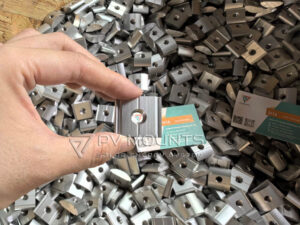
PV Mounts manufactures SUS304 stainless steel solar grounding clips and photovoltaic bonding components for global solar mounting applications.
Our quality focus includes:
- SUS304 material verification
- precision stamping control
- dimensional inspection
- production consistency evaluation
PV Mounts supports:
- EPC contractors
- solar installers
- PV distributors
- solar mounting system manufacturers
with OEM and wholesale solar grounding component solutions.
14.FAQ
Solar grounding clips need testing to verify electrical bonding reliability, mechanical stability, and manufacturing consistency.
Common evaluations include:
*electrical bonding testing
*mechanical performance testing
*material inspection
*dimensional inspection
Electrical bonding testing evaluates whether the grounding clip maintains a reliable conductive path between the PV frame and mounting rail.
Grounding clip teeth improve electrical contact by creating a conductive connection with compatible metal surfaces.
SUS304 stainless steel is commonly used because of its corrosion resistance and mechanical stability.
They should review:
*material specification
*testing capability
*manufacturing process
*quality control system
Testing requirements depend on:
*product design
*mounting application
*project requirements
*supplier quality system
Yes.Professional suppliers can support OEM production with quality control and manufacturing verification.
Manufacturers evaluate electrical bonding performance, mechanical stability, material quality, dimensional accuracy, and production consistency.
Testing helps EPC contractors verify supplier quality and reduce variation in large-scale PV installations.
EPC buyers should provide:
*mounting rail drawing
*grounding clip application
*material requirement
*annual quantity
15.Conclusion
Solar grounding clip testing is an important part of ensuring reliable PV bonding performance.
A high-quality grounding clip depends on:
- electrical bonding capability
- mechanical stability
- SUS304 material quality
- dimensional accuracy
- manufacturing consistency
For EPC contractors and solar mounting system manufacturers, selecting suppliers with reliable testing and quality control capability helps improve long-term photovoltaic system performance.
PV Mounts specializes in SUS304 stainless steel solar grounding clips and PV bonding components for rooftop, commercial and industrial solar mounting systems.

 French
  English
  Spanish
  Portuguese
  Russian
  Hungarian
  Arabic
  Romanian