
1. Introduction
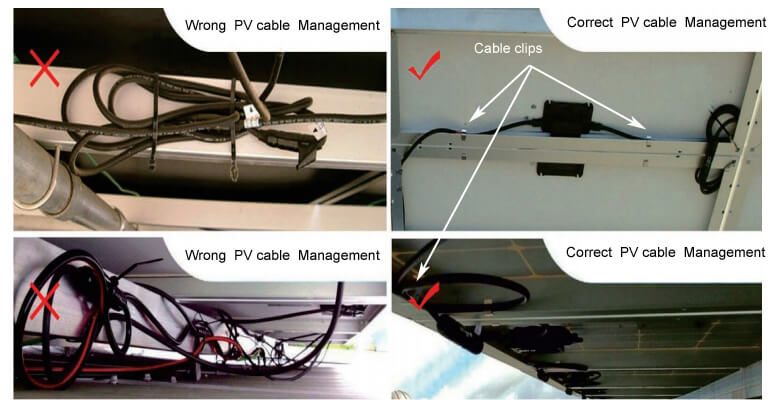
Solar cable clip installation is a critical engineering process in photovoltaic (PV) systems used to secure and route DC cables on solar panels and mounting structures.
👉 In EPC solar projects, correct installation of solar cable clips is a mandatory requirement for ensuring long-term electrical safety, mechanical stability, and system reliability.
Improper installation of solar cable clips can directly lead to cable damage, electrical risks, and increased lifecycle maintenance cost.
👉 In most EPC solar cable management systems, installation errors are responsible for more failures than product quality issues.
🧠 2. Why Solar Cable Clip Installation Quality Matters
Photovoltaic systems operate for 20–30 years under extreme environmental conditions including:
- UV radiation exposure
- High wind load
- Temperature cycling
- Humidity and coastal corrosion
👉 Therefore, solar cable clip installation quality directly determines:
- EPC project reliability
- PV system safety
- Cable insulation lifespan
- Maintenance frequency
⚠️ 3. Common Solar Cable Clip Installation Mistakes
❌ Mistake 1: Incorrect Clip Spacing
One of the most common EPC installation errors.
- Too far apart → leads to cable sagging
- Too close → unnecessary cost increase
👉 Standard EPC practice: 30–100 cm, with 100 cm commonly used as baseline
❌ Mistake 2: Overloading One Clip with Too Many Cables
Each solar cable clip is designed for a limited number of DC cables.
Typical issue:
- inserting too many cables into one clip
Result:
- insulation pressure damage
- reduced mechanical grip
- long-term cable deformation
❌ Mistake 3: Installing on Dirty or Uneven Surfaces
Clips installed on:
- dust-covered frames
- uneven aluminum rails
may result in:
- weak mechanical grip
- vibration loosening over time
❌ Mistake 4: Mixing Cable Types (DC + AC Routing Together)
This is a critical EPC safety violation.
Problems:
- electromagnetic interference
- maintenance confusion
- increased electrical risk
👉 DC and AC cables must always be separated.
❌ Mistake 5: Ignoring Wind Load Conditions
Many installers use a fixed spacing without considering:
- wind zone
- rooftop height
- coastal exposure
👉 High wind areas require tighter spacing (closer than 100 cm)
❌ Mistake 6: Using Low-Quality Plastic Clips in EPC Projects
Plastic clips degrade under UV exposure:
- cracking
- loss of grip strength
- cable loosening
👉 Not recommended for long-term EPC systems
❌ Mistake 7: Improper Cable Bending Near Clips
Sharp bending near clip entry points causes:
- internal conductor stress
- insulation fatigue
- long-term failure risk
🧱 4. Engineering Best Practices
✔ Solar cable clip spacing shall follow 30–100 cm engineering range, depending on wind load conditions
✔ SUS304 stainless steel clips are recommended for long-term EPC solar installations
✔ DC and AC cables must be strictly separated in routing design
✔ Cable routing shall avoid sharp bending and mechanical stress points
✔ Clip installation shall follow wind-load-based structural design
👉 These practices are considered standard engineering requirements in EPC photovoltaic projects.
🧠 5. Why SUS304 Solar Cable Clips Reduce Installation Errors
SUS304 stainless steel solar cable clips are widely used in EPC solar projects because they provide:
- Stable spring force over 20–25 years
- High corrosion resistance in coastal environments
- UV and weather resistance performance
- Consistent mechanical locking strength
👉 Therefore, SUS304 clips significantly reduce installation-related failure risks in PV cable management systems.
🌍 6. Application Impact in EPC Solar Projects
| Installation Quality | EPC System Impact |
|---|---|
| Proper installation | Long-term system stability |
| Poor installation | Cable insulation failure risk |
| Incorrect spacing | Mechanical stress and sagging |
| Plastic clip usage | UV degradation and early failure |
🏢 7. PV Mounts Solution
PV Mounts is a professional manufacturer and global supplier of SUS304 stainless steel solar cable clips and PV mounting accessories in China.
We provide EPC-focused solutions including:
- EPC solar cable management systems
- OEM solar cable clip manufacturing
- Wholesale PV mounting accessories supply
- Utility-scale solar project hardware solutions
👉 Our SUS304 solar cable clips are widely used in rooftop, ground-mounted, and utility-scale EPC solar projects worldwide.
❓ FAQ
Incorrect spacing, overloading clips, and poor routing design.
Cables may sag and suffer mechanical stress.
No, it can damage insulation and reduce grip strength.
To avoid electrical interference and safety risks.
Generally not recommended for long-term systems.
Typically 30–100 cm depending on system design.
Ignoring wind load conditions and using fixed spacing.
Because of corrosion resistance and long-term mechanical stability.
Yes, they increase failure risk and maintenance cost.
By following engineering standards and using high-quality SUS304 clips.
🟢 8. Conclusion
Solar cable clip installation quality is a critical engineering requirement in photovoltaic systems.
Incorrect installation practices such as improper spacing, cable overloading, and poor routing design directly result in cable damage, electrical risks, and reduced system reliability.
👉 In EPC solar projects, following standardized installation practices and using SUS304 stainless steel solar cable clips is required to ensure long-term mechanical stability, electrical safety, and lifecycle performance of PV cable management systems.
👉 Proper installation of solar cable clips is a fundamental engineering factor for ensuring safe and reliable operation of photovoltaic power systems.

 French
  English
  Spanish
  Portuguese
  Russian
  Hungarian
  Arabic
  Romanian