
1.Introduction
One of the most critical yet often misunderstood questions in metal roof solar installation is:
Where exactly should you fix the screws?
Many installation issues — including roof leakage, panel instability, and long-term structural damage — are not caused by the mounting system itself, but by incorrect screw positioning.
This guide explains the correct fixing positions for different metal roof types, based on structural logic, waterproof principles, and real project experience.
2.Why Screw Position Matters More Than You Think
The fixing point is not just about holding the system in place — it directly affects:
- Load transfer to the roof structure
- Waterproof performance
- Long-term durability of the roof sheet
Incorrect positioning can lead to:
- Water leakage through penetration points
- Sheet deformation under load
- Reduced pull-out resistance
👉 In short, even the best mounting system can fail if the fixing position is wrong.
3.Key Principle: Always Fix Into Structural Support
The most important rule:
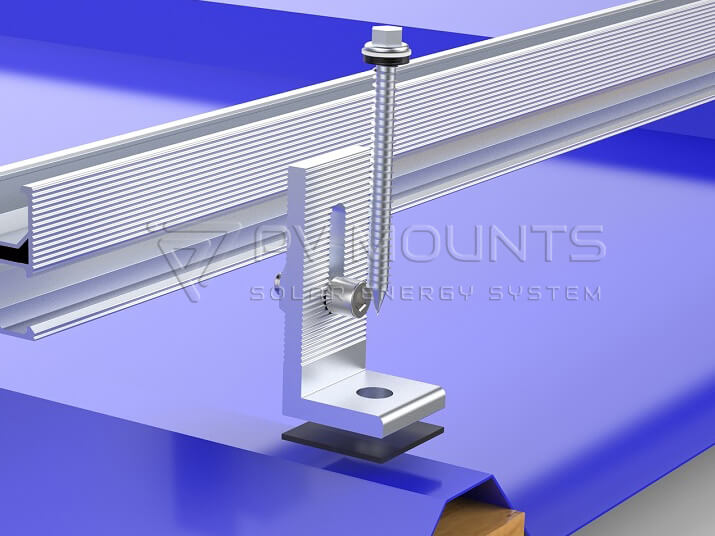
Screws must transfer load into the structural support beneath the sheet (purlin or beam).
Common Mistake
- Fixing only into thin metal sheet ❌
- Missing the structural support ❌
👉 This reduces load capacity and increases risk of failure.
4.Where to Fix on Different Metal Roof Types
4.1. Trapezoidal Metal Roof
Recommended Position:
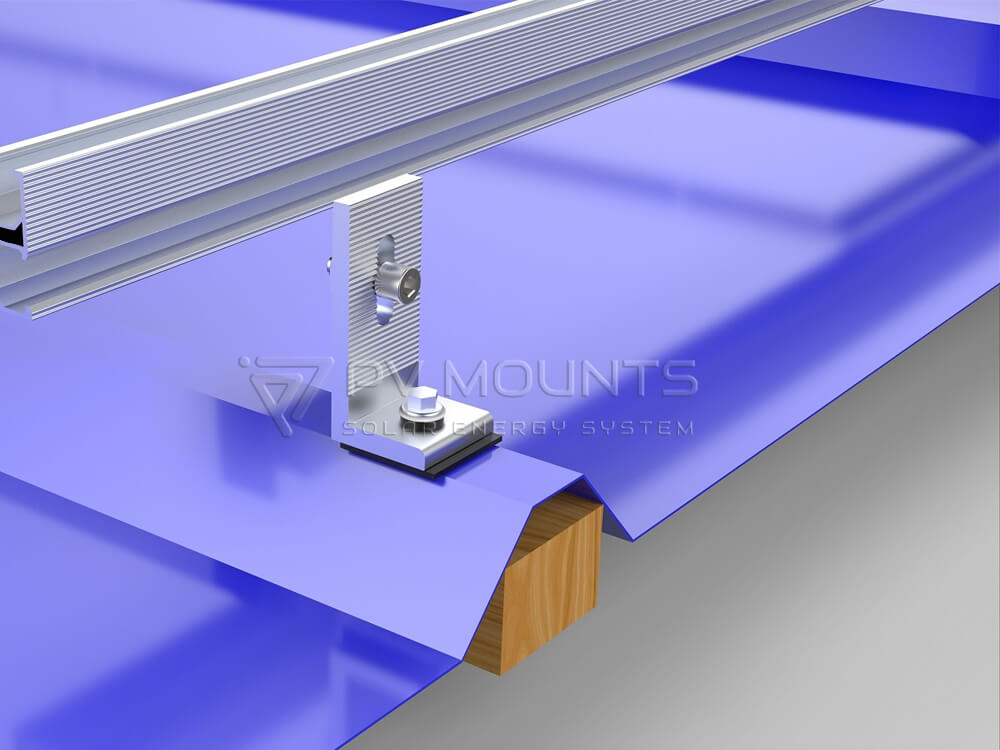
👉 Crown (top of the rib)
Why?
- Higher position reduces water accumulation
- Lower risk of leakage
- Better load distribution
When Valley Fixing is Used
In some cases (depending on design):
- Valley fixing may be applied
- Requires enhanced waterproof sealing
👉 Insight:
Most standard solar mounting solutions for trapezoidal roofs prefer crown fixing for safety and waterproofing.
4.2. Corrugated Roof
Recommended Position:
👉 Crown (wave peak)
Reason:
- Avoids water flow area
- Reduces corrosion risk
- Improves sealing reliability
4.3. Standing Seam Roof
Fixing Method:
👉 No screws into roof sheet

Instead:
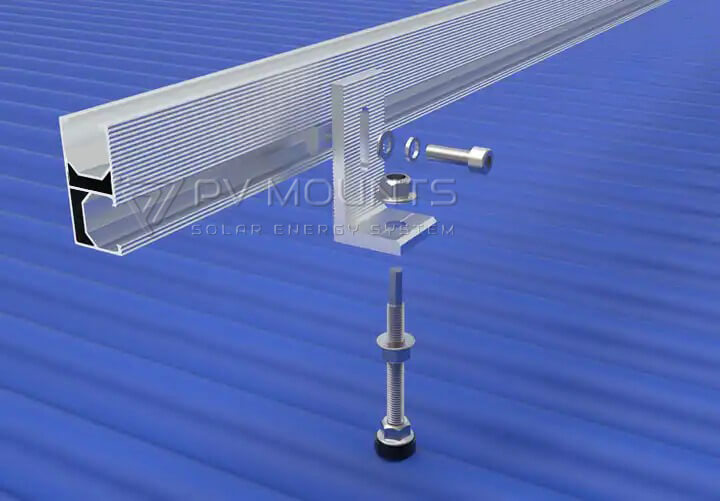
- Use clamp systems
- Fix directly onto seam
- No penetration
- Maintains roof integrity
5.Waterproofing: The Hidden Risk in Screw Fixing
Even correct positioning requires proper sealing.
Essential Components:
- EPDM rubber washers
- Sealing screws
- Correct torque control
Common Mistakes:
- Over-tightening → damages sealing
- Under-tightening → leakage risk
- Wrong washer material

👉 Waterproofing is not just about location — it’s about execution.
6.Load Consideration: Why Position Affects Strength
Different fixing positions result in different load behavior.
Factors:
- Wind uplift
- Snow load
- Sheet thickness
- Purlin spacing
Fixing into purlin vs sheet only can result in significantly higher pull-out strength.
7.When You Should Reconsider Your Fixing Method
You may need a different approach if:
- Roof sheet is too thin
- Purlin spacing is large
- High wind load area
- Roof condition is old or weak
👉 In these cases:
- Reinforced fixing
- Alternative mounting systems
may be required
8.Practical Recommendation (Based on Project Experience)
In most metal roof projects:
- Use crown fixing for trapezoidal/corrugated roofs
- Always fix into purlins
- Use high-quality sealing components
- Avoid over-engineering unless required
Not sure where to fix your mounting system?
Send us your roof type or drawing — we’ll help you determine the safest and most cost-effective solution.
9.FAQ: Screw Position for Metal Roof Solar Mounting
❓ Should solar screws be installed on the ridge or valley?
In most cases, screws should be installed on the ridge (crown) to reduce water exposure and improve waterproofing.
❓ Can I fix solar mounting directly to the metal sheet?
No. Fixing only to the sheet is not recommended. Screws must anchor into structural support like purlins.
❓ How do I prevent roof leaks when installing solar mounts?
Use proper sealing washers, correct torque, and install screws at appropriate positions (usually the crown).
❓ Is drilling always required for metal roof solar installation?
Not always. Standing seam roofs allow clamp-based installation without drilling.
❓ Does screw position affect system strength?
Yes. Incorrect positioning can significantly reduce load capacity and increase failure risk.
10.Conclusion
Correct screw positioning is one of the most critical factors in ensuring a safe and durable solar mounting system on metal roofs.
In most cases, the best practice is to:
- Fix screws on the crown (top of the rib) for trapezoidal and corrugated roofs
- Always anchor into structural supports such as purlins
- Use proper sealing components to maintain waterproof performance
At the same time, it’s important to understand that there is no one-size-fits-all solution. Roof structure, load conditions, and installation requirements can all influence the final fixing method.
👉 The key is not just where to fix — but how to ensure the fixing method is structurally reliable and waterproof over the long term.
If you’re unsure about the correct fixing position for your project, feel free to share your roof details or drawings.
We can help you determine the safest and most cost-effective mounting solution.

 French
  English
  Spanish
  Portuguese
  Russian
  Hungarian
  Arabic
  Romanian