
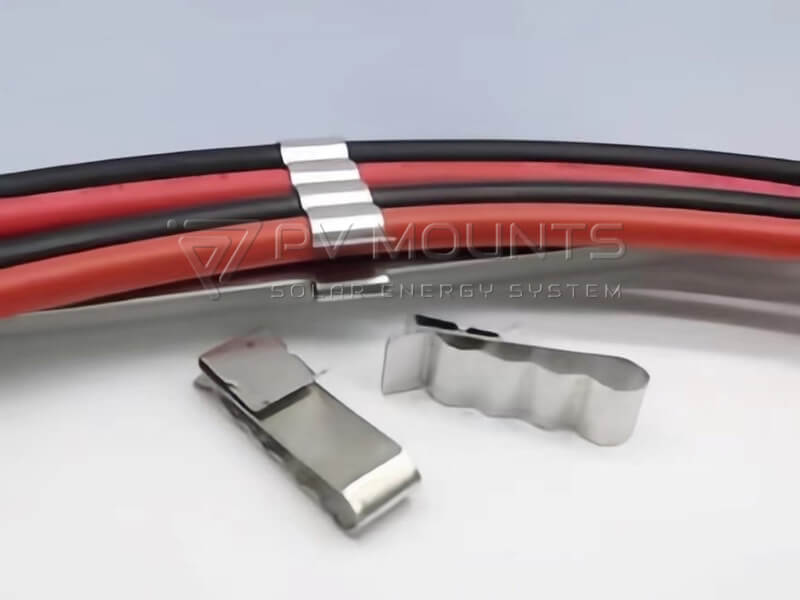
(PV Cable Routing System for EPC Solar Projects)
🧠 System Definition
A solar cable management system is an integrated photovoltaic wiring system designed to route, fix, and protect DC cables using engineered mounting components such as cable clips, rails, ties, and junction box routing structures to ensure long-term electrical safety and mechanical stability in PV installations.
🔧 1. Introduction
Solar cable management systems are essential photovoltaic (PV) wiring solutions used to ensure safe, structured, and long-term reliable DC cable routing in solar installations.
They are widely applied in:
- Rooftop solar systems
- Ground-mounted solar farms
- Utility-scale EPC solar projects
- Carport PV structures
👉 A properly designed solar cable management system ensures mechanical stability, electrical safety, and reduced lifecycle maintenance cost across the entire PV plant.
🧠 2. Why Solar Cable Management Systems Are Critical in PV Projects
Solar PV systems operate in harsh outdoor environments for 20–30 years.
Without proper cable management, systems face risks such as:
- Cable abrasion and insulation damage
- Wind-induced vibration failure
- UV degradation of exposed cables
- Increased maintenance cost
- Electrical safety hazards
👉 A proper solar cable management system directly improves:
- System safety
- Installation efficiency
- EPC reliability
- Long-term O&M cost reduction
🏗️ 3. Key Components of a Solar Cable Management System
| Component | Funkció | Anyag | EPC Importance |
|---|---|---|---|
| Solar cable clips | Fix PV DC cables on modules/rails | SUS304 / Plastic | ⭐ High (critical) |
| Cable ties | Bundle cable groups | UV-resistant nylon | ⭐ Medium |
| Mounting rails | Structural routing path | Aluminum alloy | ⭐ High |
| Junction box routing | Cable entry protection | PC / ABS housing | ⭐ High |
👉 SUS304 cable clips are the most critical mechanical fixation component in PV cable routing systems.
⚙️ 4. Solar Cable Routing System Design Principles
A professional PV cable routing system must follow these engineering principles:
✔ Minimize cable exposure
Reduce UV and weather exposure to extend lifespan.
✔ Avoid sharp bending
Prevent internal conductor damage.
✔ Maintain separation
Keep DC and AC cables separated.
✔ Ensure mechanical stability
Prevent vibration and wind movement.
✔ Standardized spacing
Ensure consistent cable fixation across arrays.
Solar cable routing design in EPC projects follows industry-standard photovoltaic installation engineering practices to ensure mechanical stability, UV protection, and long-term electrical safety compliance.
🔧 5. Solar Cable Clip Role in Cable Management System
Solar cable clips are the core fastening component in PV cable management systems.
They:
- Secure DC cables on module frames or rails
- Prevent cable movement under wind load
- Protect insulation from abrasion
- Maintain clean wiring layout
👉 SUS304 stainless steel clips are widely used in EPC projects due to long-term durability.
For example, In a 1MW rooftop solar project, hundreds of meters of DC cable require organized routing to prevent cable sagging, abrasion, and long-term insulation damage. SUS304 stainless steel cable clips are commonly selected because they maintain stable mechanical performance throughout the PV system lifecycle.
🌞 6. Types of Solar Cable Management Systems
🟢 Rooftop PV Cable Management System
- Short cable runs
- High routing precision required
- Frame-mounted clips preferred
🟡 Ground-Mounted Solar Cable System
- Long cable routes
- Rail-mounted routing required
- High mechanical stability needed
🔵 Utility-Scale EPC Cable System
- High-voltage DC string wiring
- Strict engineering standards
- SUS304 cable clips mandatory
🟣 Carport Solar Cable System
- Structural beam routing
- Hidden cable design
- Aesthetic requirements higher
💰 7. Cost and Lifecycle Analysis (EPC Perspective)
A solar cable management system is evaluated based on:
- Installation efficiency
- Maintenance frequency
- Cable replacement risk
- System downtime cost
👉 SUS304-based systems reduce long-term lifecycle cost despite higher initial investment.
⚠️ 8. Common Cable Management Mistakes in Solar Projects
- Using non-UV resistant plastic clips → High risk failure
- Over-stretching cable bundles → Medium risk
- Poor routing near sharp edges → High risk
- Mixing DC and AC cable paths → Critical risk
- Inconsistent clip spacing → Medium risk
🏢 9. PV Mounts Solar Cable Management Solution
PV Mounts is a professional manufacturer and global supplier of solar cable management systems and PV mounting accessories in China, specializing in SUS304 stainless steel solar cable clips for EPC solar projects.
We support:
- EPC solar cable management solutions
- OEM manufacturing for PV mounting accessories
- Wholesale supply for distributors
- Utility-scale solar project hardware supply
👉 Our SUS304 solar cable clips are widely used in rooftop, ground-mounted, and utility-scale PV systems worldwide.
📊 10. Solar Cable Clip Spacing Recommendation (Engineering Table)
| System Type | Recommended Spacing | EPC Risk Level |
|---|---|---|
| Rooftop PV | 30–50 cm | Medium |
| Commercial PV | 40–60 cm | Low |
| Ground-mounted PV | 50–80 cm | Low |
| Utility-scale EPC | Wind-load based design | Critical |
❓ FAQ
A photovoltaic wiring system used to route and secure DC cables in solar installations.
Cable clips, cable ties, mounting rails, and junction box routing systems.
To ensure safety, stability, and long-term reliability of PV cable routing.
They mechanically secure PV DC cables and prevent movement and abrasion.
SUS304 stainless steel is preferred for EPC solar projects.
Typically 20–25 years in outdoor PV environments.
No, they are only suitable for low-cost residential systems.
Usually 30–100 cm depending on system type and wind load.
Yes, they are standard engineering practice in PV installations.
Yes, they are standard in professional solar installations.
Utility-scale and commercial solar PV systems.
Long-term reliability and reduced lifecycle cost.
🟢 11. Conclusion
A solar cable management system is a critical part of photovoltaic installations, ensuring safe, efficient, and long-term reliable DC cable routing across all types of solar projects.
For EPC contractors and solar installers, using SUS304 stainless steel solar cable clips within a structured cable management system significantly improves system durability, safety, and lifecycle performance.

 Hungarian
  English
  Spanish
  Portuguese
  Russian
  Arabic
  Romanian
  French