
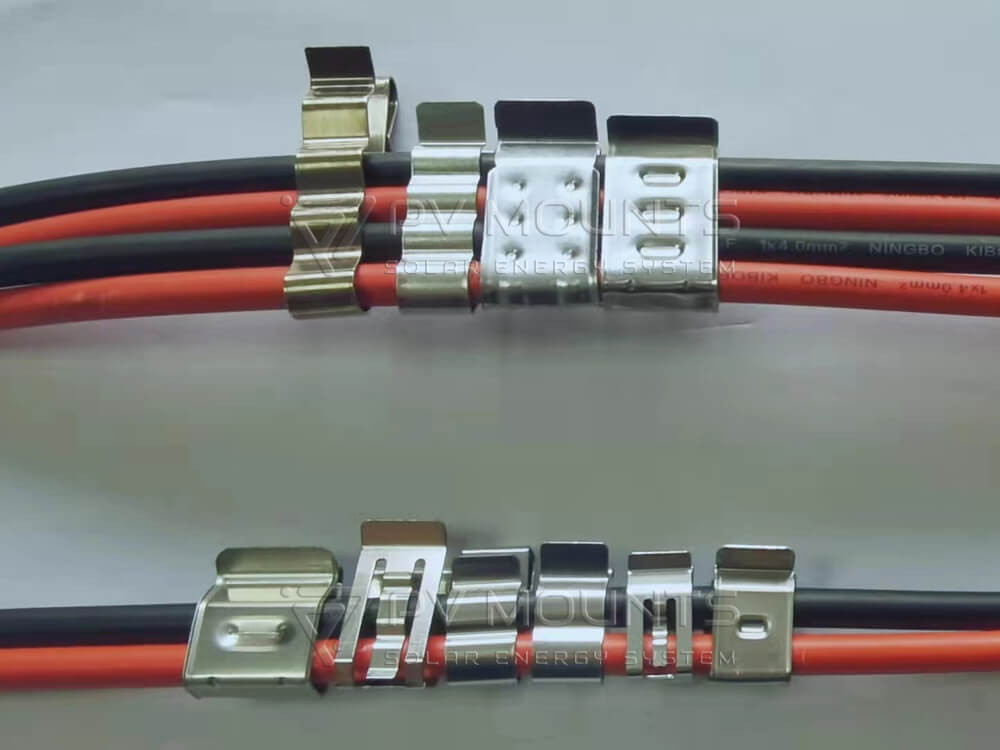
Solar cable clips are small components, but they play an important role in the long-term performance and appearance of a PV installation.
Whether the project is a rooftop solar system, ground-mounted array, solar carport, RV installation, or marine solar application, proper cable management helps protect cables from damage, reduces maintenance requirements, and improves overall system reliability.
However, many installers select cable clips based only on appearance or cable quantity. In reality, factors such as cable diameter, module frame thickness, installation environment, and corrosion conditions should also be considered.
This guide explains how EPC contractors, solar installers, and distributors can select the right solar cable clip for different project requirements.
1.Why Clipes para cabos solares Matter in Solar Installations
PV cables are constantly exposed to UV radiation, wind, rain, temperature changes, and vibration.
Without proper cable management, cables may:
- Sag beneath modules
- Contact roof surfaces
- Rub against metal edges
- Accumulate dirt and moisture
- Experience premature insulation wear
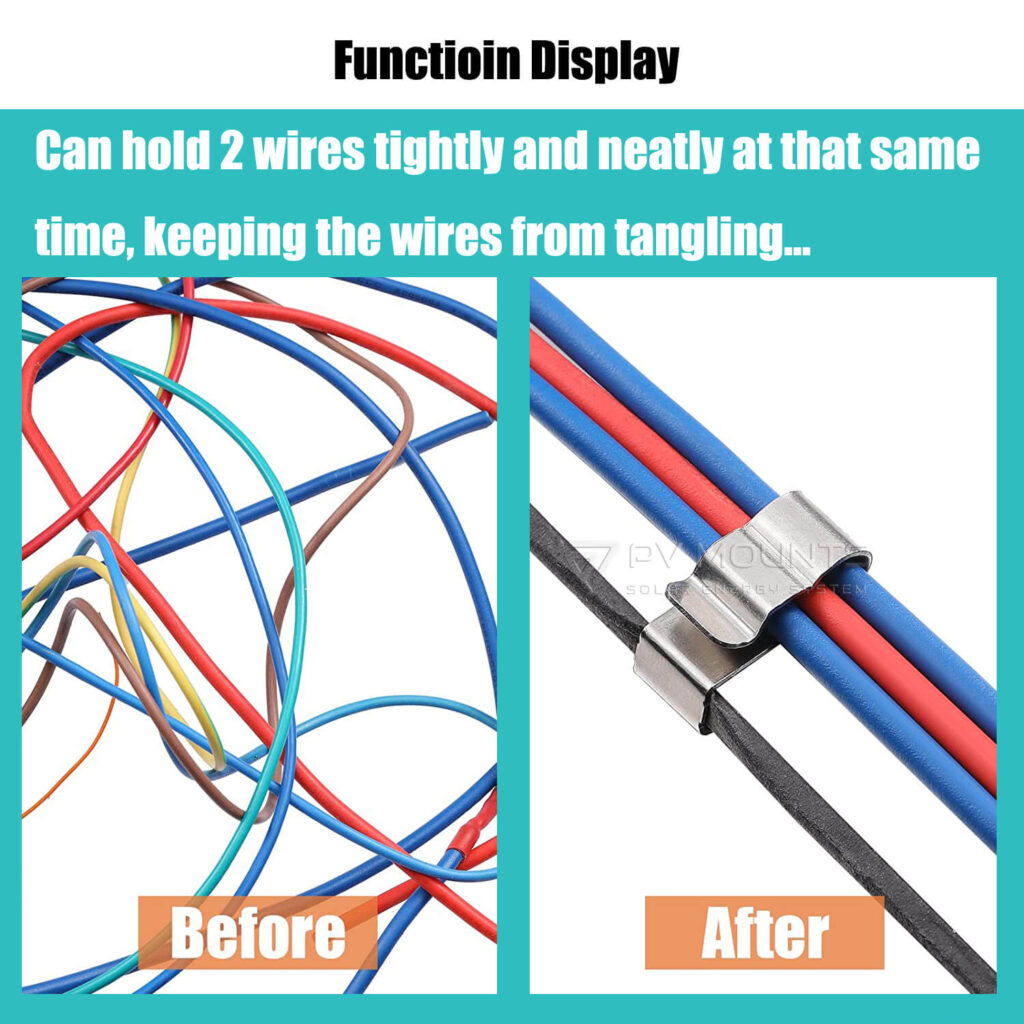
Solar cable clips help secure cables to the module frame or mounting structure, keeping wiring organized while reducing the risk of long-term damage.
2.Key Factors When Selecting Clipes para cabos solares
Choosing the correct cable clip involves more than simply counting cables.
The following factors should be evaluated before procurement.
2.1. Number of Cables
Different clipes para cabos solares are designed to hold different numbers of PV cables.
Typical configurations include:
- Single cable
- Double cable
- Triple cable
- Four-cable designs
Selecting the correct cable capacity prevents excessive cable compression while ensuring secure cable retention.
For larger commercial systems, clips capable of holding multiple cables can reduce installation time and improve cable organization.
2.2. Cable Diameter
Not all solar cables have identical dimensions.
Before selecting a clip, installers should verify:
- Cable outer diameter
- Connector size
- Minimum bending radius
A clip that is too tight may damage cable insulation, while an oversized clip may not hold cables securely.
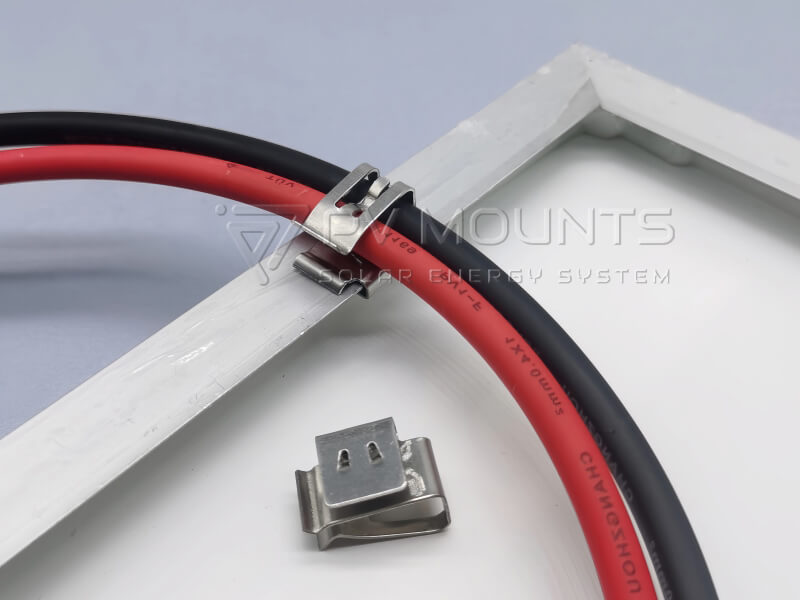
3.3. Solar Module Frame Thickness
Module frame thickness is one of the most overlooked factors when selecting cable clips.
Common frame thicknesses include:
- 30 mm
- 35 mm
- 40 mm
Different clip designs support different frame thickness ranges.
A clip designed for a 30 mm frame may not provide adequate retention on a 40 mm frame.
For this reason, frame thickness should always be confirmed during project planning.
3.4. Installation Environment
Different solar applications create different cable management requirements.
Rooftop Solar Systems
Rooftop systems require clips with strong retention force and excellent UV resistance.
Ground-Mounted Solar Systems
Ground-mounted projects often involve longer cable runs and increased exposure to dust and moisture.
Solar Carports
Cable management is highly visible in carport projects, making appearance and consistency important.
RV Solar Systems
RV installations require compact cable clips that can withstand vibration and movement.
Marine and Coastal Projects
Projects near the ocean require enhanced corrosion resistance due to salt exposure.
4.Stainless Steel vs Plastic Clipes para cabos solares
Although plastic clips are used in some installations, stainless steel cable clips are increasingly preferred in commercial and utility-scale projects.
| Feature | Stainless Steel Cable Clip | Plastic Cable Clip |
|---|---|---|
| UV Resistance | Excellent | Moderate |
| Resistência à corrosão | Excellent | Limited |
| Service Life | Long | Shorter |
| Retention Strength | High | Moderate |
| Suitable for Coastal Projects | Yes | Limited |
| Long-Term Reliability | Excellent | Moderate |
For projects requiring long service life and minimal maintenance, stainless steel cable clips are generally the preferred solution.
Why SUS304 Is the Most Common Material for Clipes para cabos solares
SUS304 stainless steel offers an excellent balance between corrosion resistance, durability, and cost.
For rooftop solar, ground mount systems, solar carports, and RV installations, SUS304 is widely used because it can withstand long-term outdoor exposure while maintaining strong cable retention performance.
Compared with ordinary steel, SUS304 provides significantly better corrosion resistance and requires minimal maintenance throughout the system lifetime.
5.Solar Cable Clip vs Cable Tie: Which Is Better?
| Item | Clipe de cabo | Cable Tie |
| Service Life | Long | Shorter |
| UV Resistance | Excellent | Depends on Material |
| Reusability | Yes | No |
| Appearance | Better | Average |
| Professional Projects | Recommended | Temporary Use |
6.Why Stainless Steel Clipes para cabos solares Are Becoming the Industry Standard
As solar projects are expected to operate reliably for 25 years or more, EPC contractors and installers are placing greater emphasis on long-term cable management solutions. As a result, stainless steel solar cable clips are becoming the preferred choice across residential, commercial, and utility-scale projects.
Compared with plastic clips or cable ties, stainless steel cable clips offer significantly better corrosion resistance and UV resistance, making them suitable for long-term outdoor exposure. They are less likely to become brittle, crack, or deteriorate under harsh weather conditions, helping maintain secure cable routing throughout the system’s service life.
Another important advantage is stronger cable retention. Stainless steel clips can hold PV cables firmly in place, reducing the risk of cable movement caused by wind, vibration, or thermal expansion. This is particularly important for rooftop solar systems, ground-mounted arrays, solar carports, RV installations, and coastal projects where environmental conditions can be more demanding.
With their long service life, low maintenance requirements, and reliable performance, SUS304 stainless steel solar cable clips have become an industry-standard solution for professional solar projects.
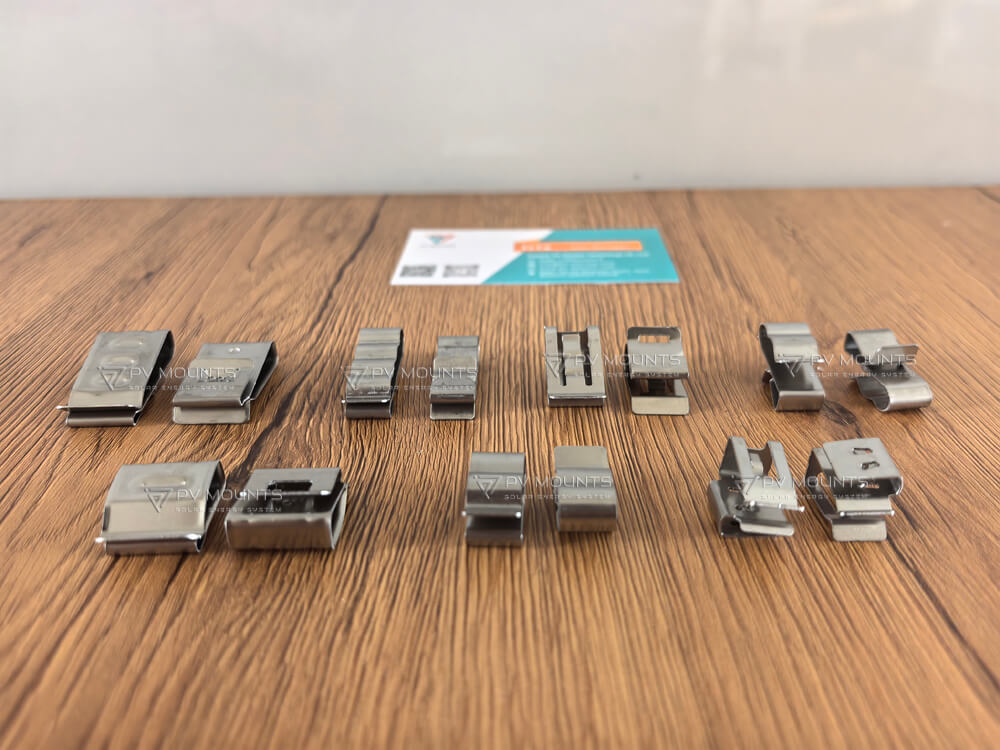
As professional solar cable clip manufacturer in China, XIAMEN PV MOUNTS can provide your variety cable clips for your selection based on your EPC solar project demand. We can also provide technical support, no MOQ required & fast delivery service to you.
7.Common Mistakes When Selecting Clipes para cabos solares
7.1 Choosing Clips Based Only on Cable Quantity
Many installers focus only on how many cables a clip can hold while overlooking frame thickness and environmental conditions.
7.2 Ignoring Module Frame Thickness
Even if cable capacity is correct, improper frame compatibility may result in loose installation.
7.3 Using One Clip Type for Every Project
Different applications may require different cable management solutions.
A clip suitable for a residential rooftop project may not be ideal for an RV or coastal installation.
7.4 Ignoring Corrosion Conditions
Coastal and marine projects often require higher corrosion resistance than standard inland installations.
8.Can Solar Cable Clips Be Customized?
Yes.
Many solar projects involve unique cable routing requirements, special module frame designs, or non-standard cable quantities.
An experienced solar cable clip manufacturer can provide customized solutions based on:
- Cable quantity
- Cable diameter
- Module frame thickness
- Material requirements
- Project-specific installation needs
Customized cable clips are commonly used in OEM projects, RV solar systems, solar carports, and special commercial installations.
9.How EPC Contractors Standardize Cable Clip Selection
Many EPC contractors establish standard specifications for cable management components before procurement. This helps reduce procurement complexity, improve installation efficiency, and maintain consistent quality across multiple projects.
Typical selection criteria include:
- Cable quantity
- Module frame thickness
- Installation environment
- Corrosion exposure level
- Maintenance requirements
Standardizing cable clip selection helps reduce procurement errors, improve installation efficiency, and maintain consistent quality across projects.
10.Conclusion
Although solar cable clips represent only a small portion of a solar installation, selecting the correct clip can significantly improve cable protection, installation quality, and long-term system reliability.
When choosing a solar cable clip, installers should evaluate cable quantity, cable diameter, module frame thickness, and project environment rather than focusing solely on clip appearance or price.
For EPC contractors and distributors, standardized cable management solutions can simplify procurement and improve installation consistency across multiple projects.
11.FAQ
A solar cable clip is a fastening accessory used to secure PV cables to module frames or mounting structures, helping keep wiring organized and protected.
Cable clips prevent cables from sagging, rubbing against surfaces, or being damaged by wind, vibration, and environmental exposure.
Depending on the design, cable clips can hold one, two, three, or multiple PV cables.
Yes. Different cable clips are designed for specific frame thickness ranges. Proper compatibility ensures secure installation.
For most commercial solar projects, stainless steel cable clips offer better durability, corrosion resistance, and service life.
Yes. Solar cable clips are widely used in rooftop, ground-mounted, carport, RV, and marine solar applications.
Stainless steel cable clips are generally preferred because they provide superior corrosion resistance in salt-rich environments.
Yes. Many manufacturers offer customized cable clips based on cable quantity, frame thickness, and project-specific requirements.
High-quality stainless steel cable clips can provide long service life and are designed to withstand harsh outdoor environments.
It is helpful to provide:
*Cable quantity
*Cable diameter
*Module frame thickness
*Installation application
*Estimated order quantity
*Special customization requirements
This allows suppliers to recommend the most suitable cable clip solution.
Yes. Although the initial cost may be slightly higher, stainless steel cable clips typically provide longer service life, better corrosion resistance, and lower maintenance costs over the lifetime of the solar system.


 Portuguese
  English
  Spanish
  Russian
  Hungarian
  Arabic
  Romanian
  French