
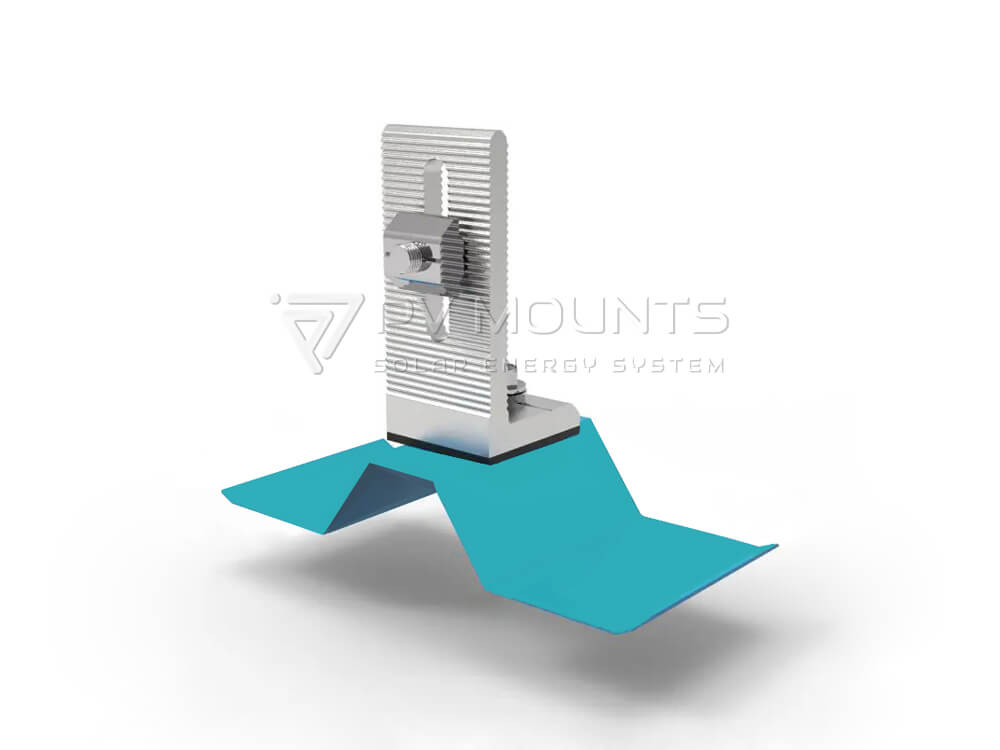
Introduction: Aluminum Solar L Feet Specifications for PV Mounting Systems
Aluminum solar L feet are L-shaped mounting brackets made from AL6005-T5 aluminum alloy and are essential components of aluminum solar mounting systems. They connect solar rails with corrugated and trapezoidal metal roof structures in rooftop photovoltaic (PV) projects.
As a key connection component between solar rails and roof structures, the specification of aluminum solar L feet directly affects:
- installation reliability
- structural performance
- resistência à corrosão
- long-term durability
- overall mounting system stability
For EPC contractors, solar installers, and solar mounting hardware distributors, selecting the correct aluminum solar L feet requires evaluation of:
- aluminum alloy grade
- extrusion quality
- surface treatment
- bracket dimensions
- thickness
- roof compatibility
- wind load requirements
This technical guide explains aluminum solar L feet specifications for PV mounting systems, including AL6005-T5 material characteristics, standard dimensions, thickness selection, engineering considerations, and EPC procurement requirements.
What are aluminum solar L feet?
Aluminum solar L feet are structural mounting brackets used to connect photovoltaic rails with metal roof structures. They provide a stable connection point between rooftop surfaces and solar mounting systems.
Quick Specification Summary of Aluminum Solar L Feet
Before selecting aluminum solar L feet for a rooftop PV project, engineers usually review the following parameters:
| Item | Typical Specification |
|---|---|
| Product Type | Aluminum Solar L Foot Bracket |
| Main Material | AL6005-T5 Aluminum Alloy |
| Processo de fabricação | Aluminum Extrusion |
| Tratamento de superfície | Anodized Finish |
| Espessura | 4mm–6mm |
| Base Length | 50mm–70mm |
| Base Width | 40mm–60mm |
| Vertical Height | 40mm–120mm |
| Mounting Slot | 9mm–11mm |
| Aplicativo | Corrugated & trapezoidal metal roofs |
| Connection | Mini rail / aluminum solar rail |
| Main Benefit | Lightweight and corrosion resistant |
AL6005-T5 aluminum is widely selected for solar L feet because it provides a favorable balance between lightweight design, corrosion resistance, and mechanical performance for rooftop PV mounting systems.
1. Aluminum Solar L Feet Specification Overview
Standard Technical Data of Aluminum Solar L Feet
Professional solar mounting manufacturers normally provide technical specifications covering material, dimensions, thickness, and compatibility.
| Parameter | Specification |
|---|---|
| Product Type | Aluminum Solar L Foot Bracket |
| Main Material | AL6005-T5 Aluminum Alloy |
| Tratamento de superfície | Anodized Aluminum |
| Espessura | 4mm–6mm |
| Base Plate Length | 50mm–70mm |
| Base Plate Width | 40mm–60mm |
| Height Range | 40mm–120mm |
| Mounting Slot | 9mm–11mm |
| Aplicativo | Corrugated & trapezoidal metal roofs |
| Rail Compatibility | Mini Rail / Aluminum Solar Rail |
| Fastener | Self-tapping Screws / Hanger Bolts |
The final aluminum L feet specification depends on:
- roof profile
- solar module layout
- rail design
- environmental conditions
- project structural requirements
2. Why AL6005-T5 Aluminum Is Used for Solar L Feet?
AL6005-T5 Aluminum Material Characteristics
AL6005-T5 is an aluminum-magnesium-silicon alloy widely used in solar mounting structures and extruded aluminum profiles.
The T5 temper indicates that the aluminum has been:
- cooled after extrusion
- artificially aged
- strengthened for improved mechanical properties
For solar mounting applications, AL6005-T5 is commonly selected because it combines:
- lightweight construction
- resistência à corrosão
- structural performance
- manufacturing consistency
Advantages of AL6005-T5 Aluminum Solar L Feet
2.1 Lightweight Structure
One major advantage of aluminum solar L feet is weight efficiency.
Compared with steel mounting components, aluminum reduces:
- transportation weight
- handling difficulty
- rooftop dead load
This makes aluminum solar L feet suitable for:
- commercial rooftop PV
- industrial warehouse solar systems
- distributed generation projects
2.2 Corrosion Resistance
Anodized aluminum provides additional surface protection for outdoor solar applications.
Benefits include:
- improved corrosion resistance
- better surface durability
- reduced maintenance requirements
Aluminum solar L feet are widely used in:
- commercial buildings
- industrial facilities
- rooftop PV installations
2.3 Strength-to-Weight Performance
The performance of aluminum solar L feet depends on both material properties and structural design.
AL6005-T5 provides a balanced combination of:
- mechanical strength
- lightweight structure
- resistência à corrosão
This makes it suitable for:
- solar rails
- clamps
- L feet brackets
- rooftop mounting accessories
3. Aluminum Solar L Feet Dimensions Guide
3.1 What Are the Standard Dimensions of Aluminum solar L Feet?
Solar L feet dimensions determine:
- rail height
- module clearance
- roof compatibility
- installation flexibility
Typical aluminum L feet dimensions include:
| Dimensão | Typical Range |
|---|---|
| Base Length | 50mm–70mm |
| Base Width | 40mm–60mm |
| Vertical Height | 40mm–120mm |
| Espessura | 4mm–6mm |
| Slot Width | 9mm–11mm |
3.2 How Does L Feet Height Affect Solar Mounting Design?
The height of aluminum solar L feet determines the distance between the roof surface and solar rails.
Higher L feet may be required for:
- cable routing space
- roof drainage requirements
- ventilation clearance
- roof insulation thickness
However, increasing bracket height may also increase wind exposure.
Therefore, EPC engineers should balance:
- clearance requirements
- structural stability
- wind load conditions
4. Aluminum Solar L Feet Thickness Selection Guide
What Thickness Should Aluminum Solar L Feet Be?
The typical thickness range of aluminum solar L feet is:
4mm–6mm
The correct thickness depends on:
- wind load
- roof structure
- installation spacing
- connection design
| Espessura | Common Reference Application |
|---|---|
| 4mm | Light-duty rooftop applications Such as residential rooftop solar systems |
| 5mm | Commercial and industrial rooftop PV projects |
| 6mm | Higher wind load or heavy-duty applications Projects requiring higher mechanical margin |
Thickness alone does not determine structural performance.
Engineering evaluation should also consider:
- alloy grade
- extrusion profile design
- bracket geometry
- fastener strength
- roof sheet thickness
- mounting spacing
5. Aluminum Solar L Feet Surface Treatment Specification
Why Is Surface Treatment Important?
Solar mounting systems are designed for long-term outdoor operation.
For aluminum solar L feet, anodizing is the most common surface treatment.
Advantages of Anodized Aluminum:
- improves corrosion resistance
- increases surface hardness
- protects aluminum surface
- maintains long-term appearance
For EPC projects, surface treatment quality should be evaluated together with:
- material grade
- installation environment
- expected service life
6. Engineering Factors Affecting Aluminum Solar L Feet Selection
6.1 Wind Load Requirements
Solar L feet must resist wind uplift forces generated on rooftop PV arrays.
Important design parameters include:
- project wind speed
- building height
- roof edge location
- module inclination
- mounting spacing
- design wind pressure
- uplift force
- bracket spacing
- fastener pull-out resistance
The structural design normally follows applicable regional standards, such as:
- EN 1991-1-4 Wind Actions
- ASCE 7 Wind Load Requirements
Actual design requirements depend on local regulations and project-specific calculations.
The required aluminum solar L feet specification should be verified based on project-specific structural calculations.
6.2 Roof Structure Compatibility
Aluminum L feet are mainly designed for:
- corrugated metal roofs
- trapezoidal sheet metal roofs
Engineers should evaluate:
- roof sheet thickness
- rib spacing
- fixing position
- screw pull-out resistance
- waterproofing requirements
Correct roof compatibility is essential for maintaining:
- structural safety
- installation reliability
- roof protection
6.3 Environmental Conditions
Aluminum performs well in outdoor environments, but project conditions should still be considered.
Important factors include:
- coastal exposure
- humidity
- industrial pollution
- salt spray conditions
For extreme marine environments, project-specific material evaluation may be required.
6.4 Aluminum Mechanical Considerations
The performance of aluminum L feet depends not only on alloy grade but also on:
- extrusion profile design
- thickness distribution
- connection method
- installation conditions
A complete PV mounting design should evaluate the entire load path from:
solar module → clamp → rail → L foot → roof structure
7. Aluminum Solar L Feet Selection Guide for EPC Projects
When selecting aluminum L feet for commercial PV projects, EPC contractors should evaluate:
| Evaluation Item | Why It Matters |
|---|---|
| Aluminum Grade | Confirms material performance |
| Extrusion Quality | Ensures dimensional accuracy |
| Anodizing Quality | Improves outdoor durability |
| Espessura | Affects structural capability |
| Technical Drawings | Supports engineering approval |
| Roof Compatibility | Ensures safe installation |
| Load Verification | Confirms project suitability |
| OEM Capability | Supports customization |
| Production Capacity | Ensures supply reliability |
A professional solar mounting hardware supplier should provide:
- product drawings
- material specifications
- quality inspection documents
- engineering support
- customization capability
EPC contractors usually source aluminum solar mounting components from manufacturers that can provide technical drawings, material specifications, and engineering support.
8. PV-MOUNTS Aluminum Solar L Feet Specification
PV-MOUNTS aluminum L feet are designed for corrugated and trapezoidal metal roof solar mounting systems.
Aluminum L Feet Manufacturing Quality Considerations
- extrusion tolerance
- anodizing quality
- dimensional accuracy
- slot machining precision
Especificações técnicas
| Parameter | Specification |
|---|---|
| Material | AL6005-T5 Aluminum Alloy |
| Tratamento de superfície | Anodizado |
| Espessura | 4mm–6mm |
| Aplicativo | Metal Roof Solar Mounting |
| Compatible System | Mini Rail / Solar Rail |
| Instalação | Self-tapping Screws / Hanger Bolts |
| Personalização | Disponível |
As an aluminum solar mounting components manufacturer, PV-MOUNTS supplies AL6005-T5 aluminum L feet for EPC contractors, distributors, and solar installers requiring reliable metal roof mounting solutions.
Supplier Documentation Required for EPC Projects
| Document | Purpose |
| Technical Drawing | Engineering approval |
| Material Specification | Confirm AL6005-T5 |
| Quality Inspection Report | Production consistency |
| Load Test Data | Structural verification |
| Guia de instalação | Project execution |
9. Frequently Asked Questions About Aluminum Solar L Feet
Most professional solar L feet are made from AL6005-T5 aluminum alloy because it provides lightweight construction, corrosion resistance, and suitable mechanical performance for rooftop PV systems.
AL6005-T5 aluminum alloy is commonly used for solar mounting components, including rails, clamps, and aluminum L feet.
Aluminum solar L feet typically use 4mm–6mm thickness. The final selection depends on wind load, roof structure, mounting spacing, and project requirements.
Yes. Aluminum L feet are widely used in commercial and industrial rooftop PV projects because they provide lightweight design, corrosion resistance, and efficient installation.
Typical aluminum solar L feet have a base length of 50–70mm, width of 40–60mm, height of 40–120mm, and thickness of 4–6mm.
AL6005-T5 provides a balance of strength, lightweight performance, corrosion resistance, and extrusion suitability for solar mounting applications.
Yes. Aluminum L feet are commonly used for corrugated and trapezoidal metal roof solar mounting systems.
EPC contractors evaluate aluminum grade, dimensions, thickness, roof compatibility, wind load requirements, fixing method, and supplier technical capability.
Yes. Aluminum L feet can be customized according to project requirements, including dimensions, slot design, and rail compatibility.
Most aluminum solar L feet use anodized surface treatment to improve corrosion resistance and outdoor durability.
For commercial and industrial PV projects, aluminum L feet selection should be verified based on project-specific structural calculations, including wind load and roof conditions.
Aluminum L feet are lightweight and commonly used for rooftop PV systems, while stainless steel L feet are mainly selected for special environments requiring higher corrosion resistance.
10. Key Takeaways
- AL6005-T5 is the standard material for aluminum solar L feet.
- Typical thickness range is 4-6mm.
- Final selection depends on wind load and roof structure.
- EPC projects should verify drawings and load requirements.
11. Conclusion
Aluminum solar L feet are essential components in metal roof solar mounting systems. Selecting the correct specification requires careful evaluation of:
- AL6005-T5 aluminum material
- dimensions
- thickness
- anodized surface treatment
- roof compatibility
- wind load requirements
For EPC contractors, installers, and distributors, choosing an experienced aluminum solar mounting components manufacturer helps ensure reliable product quality, engineering support, and long-term PV system performance.
For more blogs about solar L feet,
how to choose solar L feet for metal roofs

 Portuguese
  English
  Spanish
  Russian
  Hungarian
  Arabic
  Romanian
  French