
1. Introduction
In RV solar installations, most people focus on solar panels, batteries, and mounting brackets.
However, one of the most failure-prone areas is often much smaller: the cable entry point.
Every solar cable entering an RV roof creates a potential exposure point for:
- Water intrusion
- UV damage
- Cable vibration
- Long-term roof stress
- Wiring movement during travel
Unlike residential solar systems, RV and marine solar installations operate in constantly moving environments.
Highway vibration, thermal roof expansion, wind pressure, and outdoor moisture can gradually weaken poorly protected cable entry points over time.
This is why waterproof cable entry glands have become a standard component in professional RV & marine solar systems.
2. Quick Answer
A waterproof cable entry gland protects solar wiring where cables pass through the RV roof by reducing water intrusion, cable movement, and UV exposure.
For long-term off-grid reliability, a good RV solar cable gland should provide:
- Waterproof sealing
- UV-resistant material
- Stable cable support
- Vibration resistance
- Outdoor durability
3. Why Cable Entry Protection Matters More in RV Solar
In stationary rooftop solar systems, wiring remains relatively stable after installation.
RV solar systems are completely different.
During travel, the roof and wiring system experience continuous:
- Highway vibration
- Wind turbulence
- Temperature changes
- Vehicle movement
- Roof flexing on uneven roads
Over time, unsupported wiring may gradually create stress around roof penetration points.
Many long-term RV solar problems are not caused by the solar panel itself, but by poorly managed cable routing and waterproof protection.
4. What Is a Waterproof Solar Cable Entry Gland?
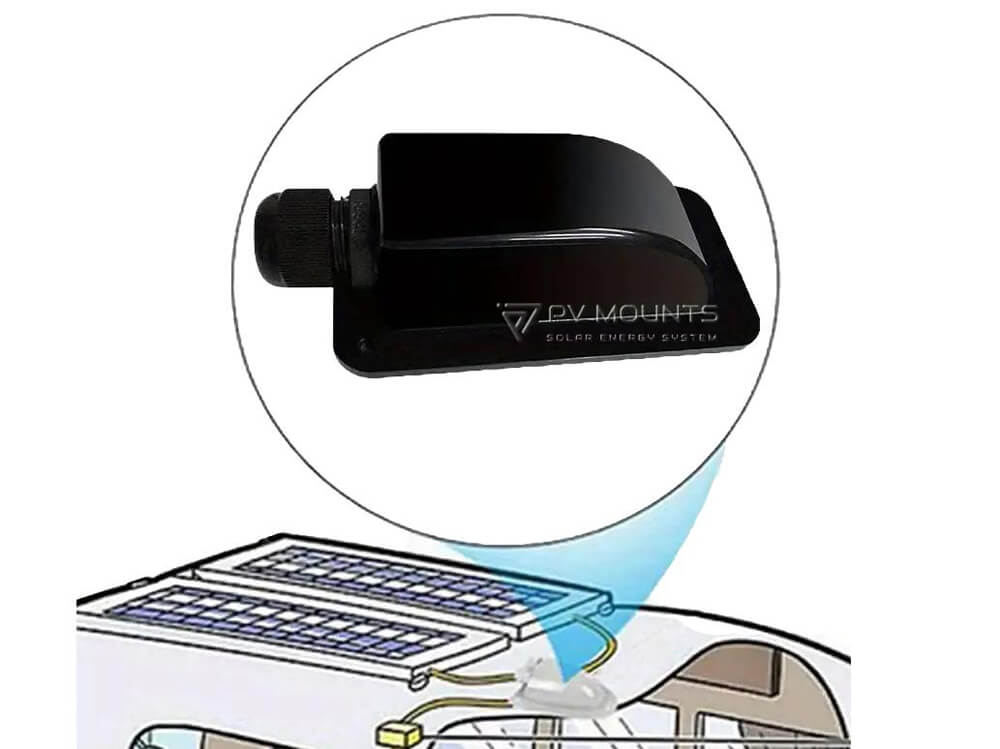
A solar cable entry gland is a protective housing designed to route solar cables safely through the roof surface while maintaining waterproof sealing.
These cable glands are widely used in:
- RV solar systems
- Campervan solar installations
- Marine solar systems
- Caravans
- Off-grid cabins
- Bus and cargo solar systems
Most modern cable glands use UV-resistant ABS or PC materials combined with waterproof rubber seals for outdoor durability.
5. The Difference Between Residential and Mobile Solar Wiring
One of the biggest mistakes in RV solar installation is treating mobile wiring like residential rooftop wiring.
Residential solar systems experience minimal movement after installation.
RV solar systems constantly move.
This changes everything about cable management.
6.Mobile Solar Systems Require:
- Better cable strain relief
- Vibration-resistant cable routing
- Waterproof roof penetration protection
- UV-resistant outdoor materials
- Flexible cable management during movement
This is why dedicated RV solar cable glands are commonly recommended in vanlife and camper conversion communities.
7. Key Features of a Good RV Solar Cable Entry Gland
☀️Waterproof Sealing
The primary function of a cable gland is protecting roof penetration areas from water intrusion.
Many outdoor-rated RV cable glands use IP68 waterproof protection for harsh weather exposure.
☀️UV-Resistant Material
RV roofs remain exposed to sunlight for years.
UV-resistant ABS and PC materials help reduce cracking, discoloration, and material aging over time.
☀️Cable Stability During Travel
Loose solar cables may gradually move during highway driving.
Cable glands help reduce unnecessary cable movement and vibration stress around entry points.
☀️Cleaner Cable Routing
Professional cable management improves both waterproof reliability and long-term maintenance accessibility.
Well-routed wiring systems are easier to inspect and troubleshoot later.
8. Single Cable vs Dual Cable Entry Gland
| Type | Best Application |
|---|---|
| Single Cable Gland | Small solar systems or separate cable routing |
| Dual Cable Gland | Standard RV solar installations |
Dual cable glands are widely used because they simplify positive and negative PV cable routing into one sealed entry point.
However, some RV builders prefer separate single-entry glands on ribbed van roofs for better fitment and sealing flexibility.
9. Common Mistakes During RV Solar Cable Installation
☀️Using Indoor Cable Fittings Outdoors
Indoor cable fittings are not designed for UV exposure, rain, or long-term vibration.
☀️Poor Surface Preparation
Dust, oil, or uneven roof surfaces may reduce adhesive bonding strength.
☀️Unsupported Cable Movement
Loose cables may continuously move during travel, increasing long-term wear around roof entry points.
☀️Incorrect Cable Gland Size
Oversized cable openings may weaken waterproof sealing performance.
10. Common RV Solar Cable Routing Mistakes
☀️Leaving Cables Unsupported
Loose solar cables may continuously move during highway travel, increasing long-term wear and vibration stress.
☀️Using Oversized Gland Holes
Oversized cable openings may weaken waterproof sealing performance and increase the risk of moisture intrusion over time.
☀️Routing Cables Near Sharp Metal Edges
Sharp roof edges or unfinished metal surfaces may gradually damage cable insulation during vehicle movement and vibration.
☀️Exposing Cables to Direct UV Without Protection
Continuous outdoor UV exposure may accelerate cable aging, hardening, and insulation cracking in long-term RV applications.
11. Adhesive vs Screw Mounting
Many RV solar cable glands support:
- Adhesive installation
- Screw fixing with sealant
- Combined installation methods
Adhesive mounting is common in campervan and caravan installations because it reduces additional roof penetrations.
However, installation quality matters more than mounting type itself.
Poor surface preparation or weak sealant application may still create long-term waterproofing problems.
Several RV builders recommend combining outdoor-grade adhesive with waterproof sealant for improved durability.
12. How Highway Travel Affects RV Solar Wiring
Continuous highway driving creates dynamic stress on solar wiring systems.
This includes:
- Wind pressure
- Roof vibration
- Thermal expansion
- Cable flexing during movement
Over time, unsupported cable routing may gradually loosen or create stress around roof openings.
This is one reason why professional RV solar installations rarely leave exposed cable pass-through holes without dedicated cable protection.
13. Why Marine Solar Systems Need Better Cable Protection
Marine solar environments are even more demanding than RV applications.
Marine cable entry systems must handle:
- Salt exposure
- High humidity
- Constant movement
- UV intensity
- Corrosion risk
This is why marine-grade cable glands typically prioritize waterproof sealing and UV-resistant materials for long-term outdoor durability.
14. Practical Recommendations Before Installation
Before installing a solar cable entry gland:
- Choose UV-resistant outdoor materials
- Match cable size correctly
- Clean the roof surface thoroughly
- Secure loose cables properly
- Avoid excessive cable bending
- Use outdoor-rated waterproof sealant when necessary
Proper cable routing is not only about waterproofing.
It also affects long-term system stability and maintenance reliability.
15. Conclusion
A waterproof cable entry gland is a small component, but it plays a major role in protecting RV solar wiring systems.
In mobile solar applications, cable entry points must handle:
- Outdoor moisture
- UV exposure
- Highway vibration
- Roof movement
- Long-term cable stress
For RV, campervan, caravan, and marine solar systems, proper cable protection is just as important as solar panel mounting itself.
❗In off-grid mobile solar systems, long-term reliability often depends on how well the wiring system handles movement, vibration, and weather exposure.
16. FAQ about Solar Cable Entry Gland
It protects and seals solar cables where they pass through the RV roof or other outdoor surfaces.
Most outdoor-rated cable glands use waterproof seals and UV-resistant materials for weather protection.
Strain relief helps reduce cable movement and vibration stress during travel.
Yes, when installed with proper surface preparation and outdoor-grade adhesive.
Yes. Continuous vibration may gradually loosen unsupported cables over time.
UV-resistant ABS and PC materials are commonly used for outdoor durability.
Dual cable glands are common for standard RV solar systems, while single cable glands may fit better on narrow or ribbed roofs.
Yes. Marine environments expose wiring systems to moisture, salt, and continuous movement, making waterproof cable protection especially important.
For more information about Z Bracket vs ABS Mount for RV Solar, please check:
Z Bracket vs ABS Mount for RV Solar: Which Mounting Solution Is Better for Mobile Off-Grid Systems?
As a professional Solar RV Z bracket and ABS Mount hardware manufacturer in China, We can offer your suitable solution based on your detailed requirements. Please contact for more details. mailto:info@pv-mounts.com

 French
  English
  Spanish
  Portuguese
  Russian
  Hungarian
  Arabic
  Romanian